Vegetable soup only works when the broth tastes like more than hot water with vegetables floating in it. The best bowls have a clear, savory base and vegetables that still taste distinct, not mushy and blended together. This version gets there by building flavor in layers: first the onion, carrot, and celery, then garlic, then the broth and herbs, and finally the quicker-cooking vegetables near the end so they keep their shape and color.
That order matters. Potatoes need enough time to turn tender, but peas and corn need only a few minutes or they lose their sweetness and pop. I also like using diced tomatoes for a little acidity, because it wakes up the whole pot and keeps the soup from tasting flat. A bay leaf and dried thyme do a lot of quiet work here, giving the broth a rounded, homemade taste without turning it heavy.
Below you’ll find the little timing details that keep the vegetables from overcooking, plus a few ways to adapt the pot depending on what you have on hand. It’s the kind of soup that tastes even better the next day, which is exactly why I keep it in the regular rotation.
The broth had so much more flavor than I expected, and the potatoes stayed tender without falling apart. I added a little extra parsley at the end and my husband went back for seconds right away.
Save this vegetable soup for the nights when you want a clear, brothy pot packed with tender potatoes, sweet corn, and plenty of herbs.
The Secret to Vegetable Soup That Doesn’t Taste Thin
The difference between a good vegetable soup and a forgettable one usually comes down to layering. If every vegetable goes in at the same time, the softer ones collapse before the potatoes are tender, and the broth never gets a chance to pick up flavor from the aromatics. Starting with onion, carrot, and celery gives you a sweet, savory base before the liquid even hits the pot.
The other trap is overcooking the final vegetables. Frozen peas and corn don’t need long enough in the pot to turn sleepy and dull; they need just enough heat to come through warm and bright. Add them at the end, after the potatoes and green beans are done, and the soup keeps its clean color and fresher taste.
What Each Ingredient Is Actually Doing in This Pot
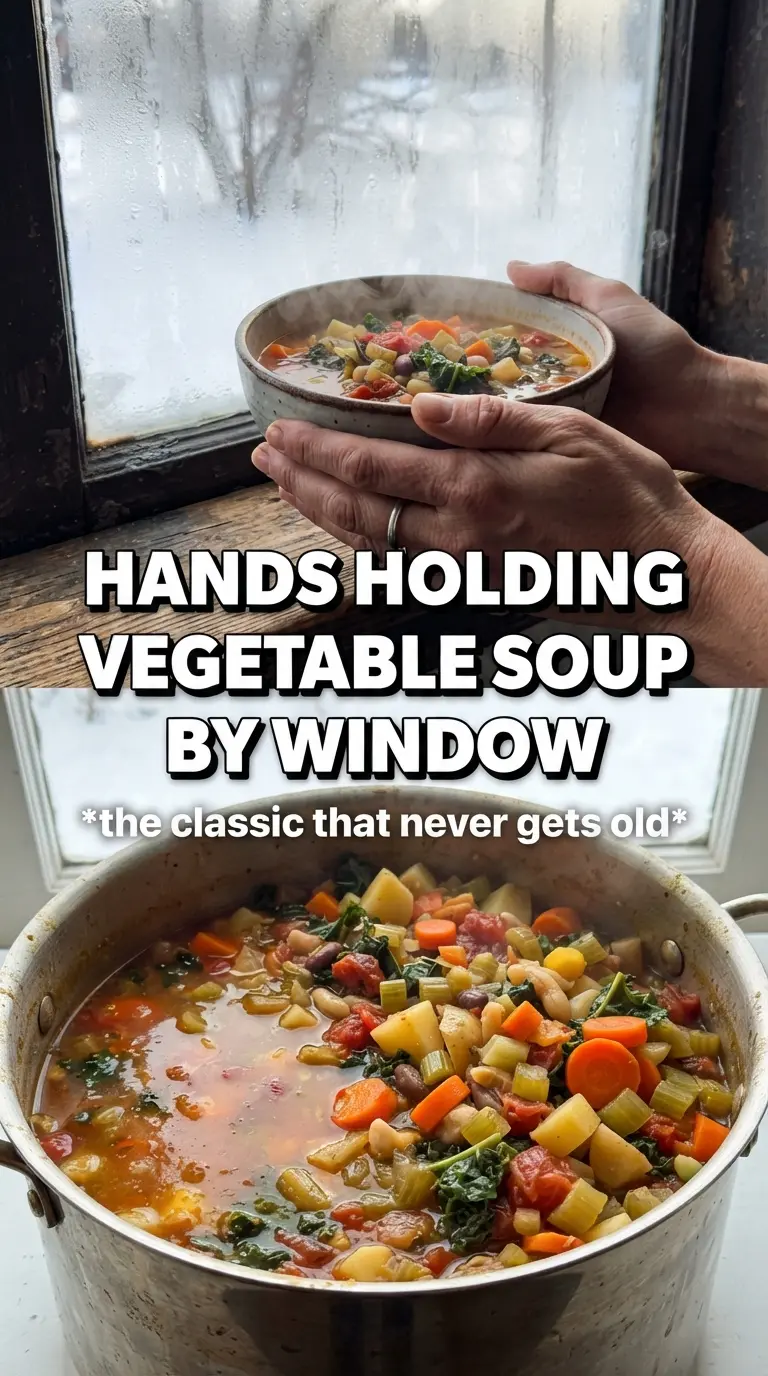
- Potatoes — These give the soup body and make it feel like a meal. Peel them if you want a clean broth with a softer texture; leave the skins on if you want a more rustic bowl.
- Carrots, celery, and onion — This is the base that gives the broth depth. Let them soften in the oil first; skipping that step leaves the soup tasting flat.
- Garlic — It only needs a minute. If it browns, it turns bitter, so add the broth soon after it becomes fragrant.
- Diced tomatoes — They add acidity and a little sweetness, which keeps the soup from tasting one-note. Fire-roasted tomatoes work too if you want a slightly deeper flavor.
- Vegetable broth — Use a broth you actually like to sip, because it sets the tone for the whole pot. If yours is very salty, hold back on the seasoning until the end.
- Green beans, peas, and corn — These are the texture and color finishers. Frozen vegetables are perfect here and often better than tired fresh ones, since they hold their shape and sweetness well.
- Thyme, parsley, and bay leaf — Thyme gives the broth a savory backbone, parsley keeps it fresh, and the bay leaf adds quiet depth. Don’t skip the bay leaf if you want the soup to taste rounded instead of plain.
Building the Soup So Every Vegetable Stays in Its Lane
Starting the Aromatics
Heat the olive oil in a large pot over medium heat, then add the onion, carrots, and celery. Cook them until the onion turns translucent and the carrots start to soften at the edges, about 5 minutes. That first stage lays down the flavor for the whole pot, so don’t rush it or you’ll end up with a broth that tastes thin.
Adding the Broth and the Long-Cooking Vegetables
Stir in the garlic and cook it just until fragrant, about 1 minute, then add the broth, tomatoes, potatoes, thyme, parsley, and bay leaf. Bring the pot to a boil, then lower the heat so it simmers gently. A hard boil can break the potatoes apart before the centers turn tender, so keep the bubbles low and steady.
Finishing in Stages
Add the green beans and cook until the potatoes are fork-tender and the beans still have a little snap, about 8 minutes. Then stir in the corn and peas for just 3 minutes more. Pull the bay leaf before seasoning, then taste and add salt and pepper until the broth tastes bright, not flat.
How to Adapt This for What’s in Your Kitchen
Make It Heartier with Beans
A can of rinsed cannellini beans or great northern beans fits in well if you want more protein and a thicker, stew-like bowl. Stir them in with the potatoes so they pick up the broth and herb flavor instead of tasting like a separate add-in.
Keep It Gluten-Free and Dairy-Free
This soup is naturally both as written, which is part of why it’s such an easy pantry meal. Just check that your vegetable broth is gluten-free if you’re serving someone sensitive, because that’s where hidden wheat is most likely to show up.
Use Fresh Green Beans Instead of Frozen
Fresh green beans work fine if they’re trimmed and cut evenly, but they usually need a few extra minutes to turn tender. Add them with the potatoes and check them with a fork before you add the peas and corn.
Storage and Reheating
- Refrigerator: Store in an airtight container for up to 4 days. The potatoes soften a little more as it sits, but the flavor gets better.
- Freezer: It freezes well for up to 3 months. Let it cool completely first, and leave a little headspace in the container because the broth will expand.
- Reheating: Warm it gently on the stove over medium-low heat until just steaming. A hard boil can make the potatoes break down and turn the broth cloudy.
Answers to the Questions Worth Asking
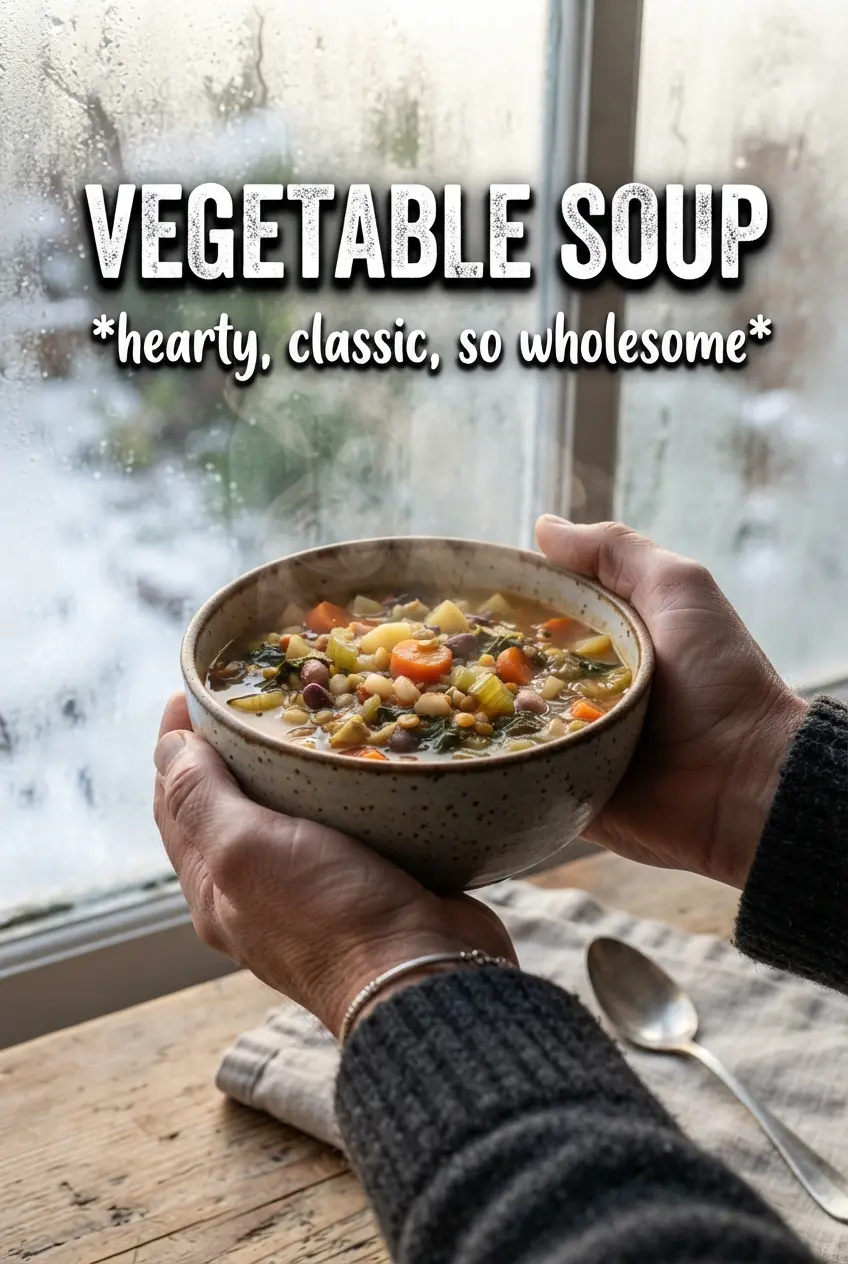
Vegetable Soup
Ingredients
Equipment
Method
- Heat the olive oil in a large pot over medium heat and sauté the onion, carrots, and celery for 5 minutes, stirring until the vegetables start to soften and look glossy.
- Add the garlic and cook for 1 minute, stirring constantly until fragrant.
- Add the vegetable broth, diced tomatoes, potatoes, dried thyme, dried parsley, and bay leaf, then stir to combine.
- Bring the soup to a boil, then reduce the heat to maintain a gentle simmer and cook for 15 minutes.
- Add the green beans and simmer for 8 minutes, until the potatoes are tender and the beans are crisp-tender.
- Stir in the frozen corn and frozen peas and simmer for 3 more minutes, until warmed through and bright in color.
- Remove the bay leaf, then season the soup with salt and pepper to taste.
- Garnish with fresh parsley and serve hot.