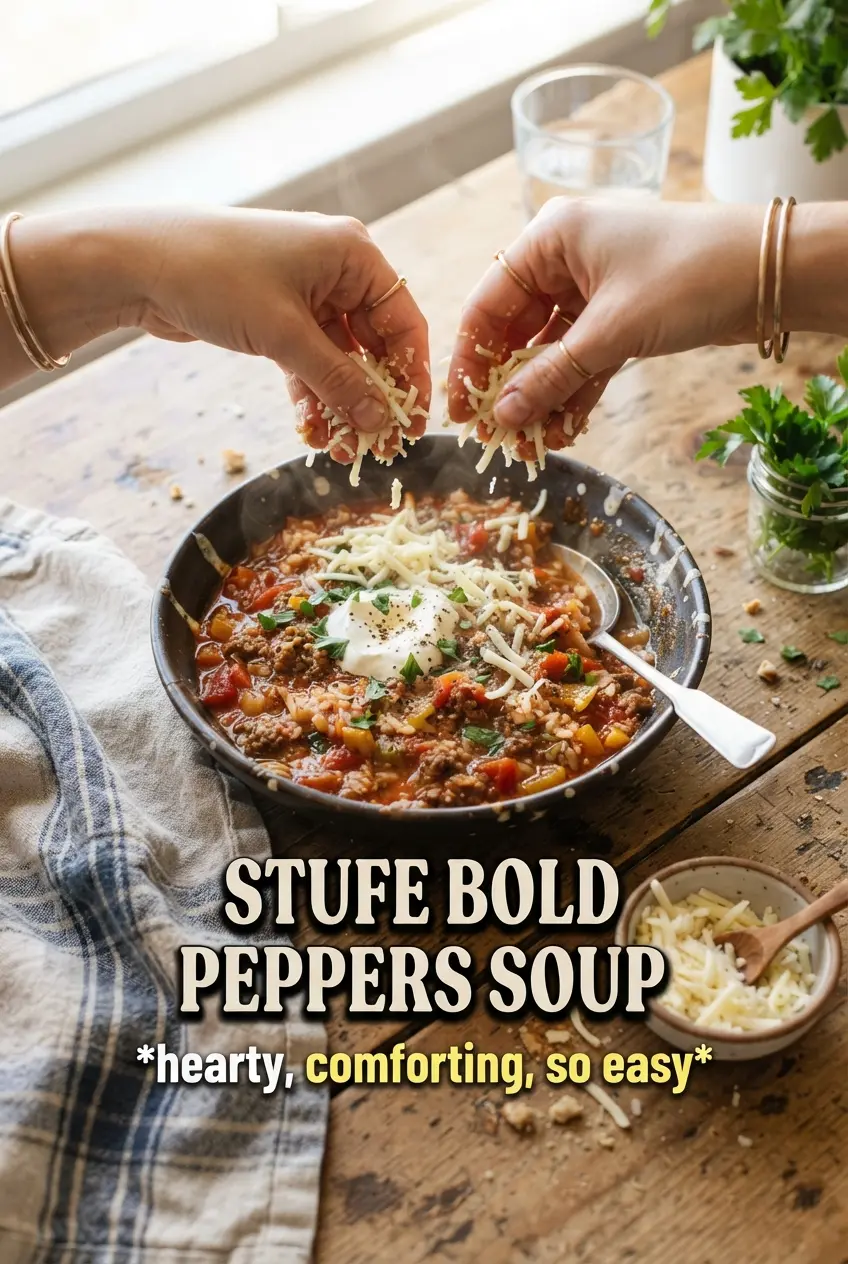
Stuffed peppers soup gives you all the cozy, savory comfort of classic stuffed peppers without the fussy part of hollowing, filling, and baking each one. The broth turns rich and tomato-forward, the peppers soften just enough to stay recognizable, and the rice soaks up all that seasoned beef flavor so every spoonful tastes like the finished dish, not a shortcut. Topped with cheddar and parsley, it lands somewhere between weeknight dinner and the kind of bowl people keep going back to for “just one more.”
The trick here is building the soup in layers instead of dumping everything in at once. Browning the beef first gives the pot a deep base, then the onion, peppers, garlic, and tomato paste cook long enough to lose their raw edge and turn sweeter. That extra minute or two with the tomato paste matters because it takes the soup from flat to full-bodied. Using uncooked rice in the pot keeps the texture close to classic stuffed peppers, but it also means the simmer has to stay gentle so the rice cooks through without turning mushy.
If you like dinners that taste even better after a short rest, this one gives you that. Below, you’ll find the part that keeps the rice tender, the swaps that work when you need to stretch ingredients, and the storage notes that make leftovers just as useful as the first bowl.
The rice stayed tender without getting mushy, and the tomato broth thickened up into that perfect stuffed pepper taste by the end. I added a little extra cheddar on top and my husband had two bowls before dinner was even over.
Love the savory tomato broth and cheesy stuffed pepper flavor? Save this Stuffed Peppers Soup for a hearty bowl that comes together fast and tastes even better the next day.
The Secret to Keeping the Rice Tender Instead of Bloated
The biggest mistake in stuffed peppers soup is treating the rice like an afterthought. Once it goes into the pot, it keeps drinking liquid, which means a hard boil or a long hold on the stove can turn the whole soup thick, starchy, and pasty. A gentle simmer is what keeps the broth spoonable while the rice cooks through.
The other thing that matters is when the rice goes in. It belongs near the end, after the tomato base has already developed flavor and the broth is hot enough to cook it steadily. If you add it too early, it sits in the pot soaking up liquid before the soup has fully come together, and you end up with soft rice and not enough broth left to call it soup.
- Browned beef — This gives the soup its backbone. Don’t rush the browning; you want some real color in the bottom of the pot because that’s where the depth comes from.
- Tomato paste — It’s small, but it does heavy work. Cooking it for a minute or two in the hot pot deepens the tomato flavor and pulls the sharp edge off the canned tomatoes.
- Long grain white rice — This is the texture anchor. Long grain holds up better than quick-cooking rice, which can go mushy before the soup finishes.
- Beef broth — Use a broth you’d actually drink on its own. A weak broth makes the soup taste thin, and this recipe depends on the liquid for most of its flavor.
What Each Ingredient Is Doing in the Pot

- Ground beef — This is the main savory note. An 80/20 blend gives you enough flavor without making the soup greasy, and draining the fat keeps the broth clean.
- Bell peppers — Use a mix of green and red for balance. The green peppers bring the classic stuffed pepper flavor, while the red ones soften into sweetness and round out the tomato base.
- Onion and garlic — These build the background flavor that makes the soup taste finished. If your onion is cooked until translucent and the garlic only goes in briefly, you get sweetness instead of bitterness.
- Crushed and diced tomatoes — The combination gives you both body and texture. Crushed tomatoes thicken the broth while diced tomatoes leave little bites of tomato in the spoon.
- Italian seasoning, garlic powder, and smoked paprika — These season the pot without taking it away from stuffed pepper territory. The paprika adds a faint smokiness that keeps the soup from tasting flat.
- Cheddar and parsley — These are for the finish, not the base. The cheddar melts into the hot soup and gives it a little richness, while parsley cuts through the heaviness so the bowl still feels bright.
Build the Flavor Before the Rice Goes In
Browning the Beef Properly
Start with a hot pot and let the beef sit long enough to brown before you stir it apart. If you keep moving it too early, it steams instead of sears and you lose the deep, meaty base that makes the soup taste like more than tomato and rice. Drain off excess fat once the meat is cooked through, but leave the browned bits stuck to the pot. Those are flavor, not mess.
Softening the Vegetables
Add the onion and peppers next and cook them until the onions turn translucent and the peppers lose their raw crunch. This step is about sweetness and texture; the vegetables should still have shape, but not bite back. Garlic goes in near the end of this stage so it smells fragrant without scorching, which can make the whole pot taste harsh.
Simmering the Soup to Finish
Once the tomatoes, broth, and seasonings are in, bring the pot to a boil only long enough to get everything hot, then drop it to a steady simmer. Add the rice, cover the pot, and let it cook until the grains are tender and the broth has thickened slightly. If it looks too thick before the rice is done, add a splash of broth; if it’s too loose at the end, uncover it and let it sit at a bare simmer for a few minutes.
Three Practical Ways to Adjust This Soup
Make it dairy-free without losing comfort
Leave off the cheddar or use your favorite dairy-free shreds at the end. The soup itself doesn’t rely on dairy, so the flavor stays bold and tomato-rich; you’re just swapping the creamy finish for a lighter bowl.
Use ground turkey for a lighter version
Ground turkey works well, but it needs a little help because it’s leaner than beef. Add a small splash of olive oil when browning and keep the tomato paste step in place so the soup still has enough depth.
Swap the rice if you need a gluten-free bowl
This soup is naturally gluten-free as written, but if you want a different grain, cooked brown rice or quinoa can stand in. Quinoa gives a firmer bite and browns the flavor slightly, while brown rice needs a longer simmer and a bit more broth.
Stretch it for a bigger crowd
Add an extra can of tomatoes and another cup of broth if you want more servings without changing the character of the dish. The soup stays balanced because the beef, peppers, and rice scale up naturally with the liquid.
Storage and Reheating
- Refrigerator: Store for up to 4 days. The rice will keep absorbing liquid, so expect a thicker soup on day two.
- Freezer: It freezes well, but the rice softens a bit after thawing. Freeze in portions for the best texture and add a splash of broth when reheating.
- Reheating: Warm it gently on the stove over low to medium-low heat, stirring often. A hard boil can break down the rice and make the soup gluey, so add a little broth or water if it looks too thick.
Answers to the Questions Worth Asking
Stuffed Peppers Soup
Ingredients
Equipment
Method
- In a large pot over medium-high heat, brown the ground beef, then drain the fat.
- Continue to keep the heat at medium-high so the beef browns rather than steams.
- Add the diced onion and both bell peppers, sauté for 4-5 minutes until starting to soften, then add garlic and tomato paste.
- Cook for 2 minutes, stirring, until the tomato paste darkens slightly and smells fragrant.
- Add the crushed tomatoes, diced tomatoes, beef broth, Italian seasoning, garlic powder, and smoked paprika, then bring the mixture to a boil.
- Once boiling, keep stirring briefly to fully combine and prevent sticking at the bottom.
- Add the uncooked long grain white rice, cover, and simmer for 18-20 minutes until the rice is cooked through.
- If the soup looks too thick before the time is up, add a splash of water or broth and continue simmering covered.
- Season with salt and pepper to taste, then ladle into bowls.
- Top each serving with shredded cheddar and fresh parsley so the cheese melts from the hot soup.