Slow cooker chicken stew earns its place on the weeknight rotation because it turns a short list of humble ingredients into a bowl with deep gravy, tender chicken, and vegetables that hold their shape instead of collapsing into mush. The broth thickens into something spoon-coating and rich, and the chicken thighs stay juicy enough to shred without drying out.
The trick is starting with bone-in thighs and putting the vegetables underneath them so they cook in the seasoned juices instead of steaming in plain broth. Cream of chicken soup brings body and a savory base, while tomato paste adds a little roundness that keeps the stew from tasting flat. The cornstarch goes in at the end, after the chicken is out and shredded, so the gravy thickens cleanly without turning pasty.
Below, I’ve included the timing that keeps the potatoes intact, the one step that keeps the stew from getting watery, and a few easy swaps if you want to adapt it to what’s in your kitchen.
The gravy thickened up beautifully at the end, and the chicken thighs were so tender I barely had to shred them. The potatoes held their shape, which never happens when I make stew on the stove.
Save this slow cooker chicken stew for a night when you want fall-apart chicken, thick gravy, and almost no active cooking.
The Reason This Stew Stays Thick Instead of Watery
Most slow cooker stews get thin because the vegetables dump out a lot of moisture and the lid traps every bit of it. This version handles that by keeping the broth to a sensible amount and using cream of chicken soup and tomato paste as the built-in base for body. You’re not relying on flour at the beginning, which can leave a raw taste, or on a long uncovered simmer at the end, which isn’t practical in a slow cooker.
Chicken thighs matter here. They stay tender through a long cook and bring enough richness to stand up to the gravy. Breasts can work in a pinch, but they dry out faster and don’t give the stew the same hearty texture. The final cornstarch slurry is the last insurance policy: it thickens fast, stays smooth, and lets the broth cling to the potatoes and carrots instead of pooling at the bottom of the bowl.
What Each Ingredient Is Actually Doing in This Stew
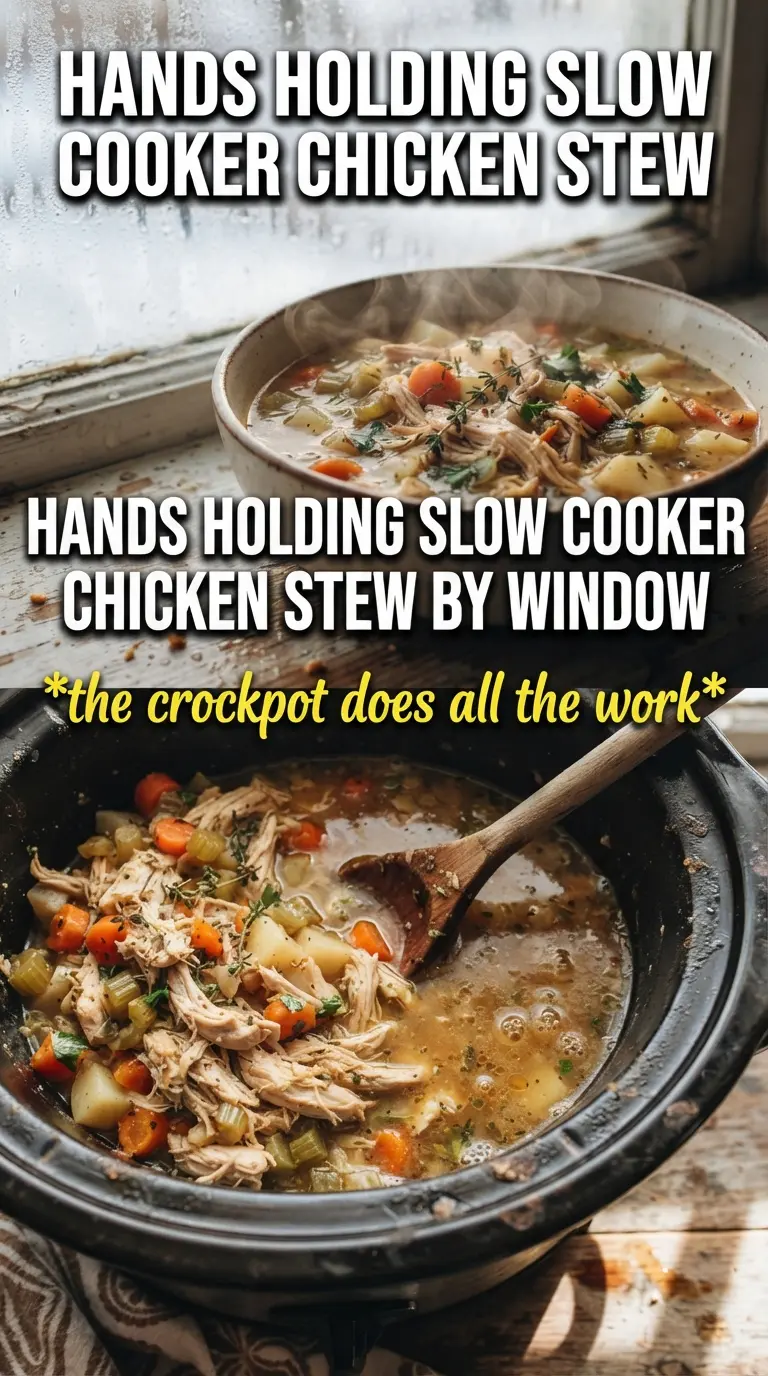
- Bone-in chicken thighs — These give the stew more flavor than boneless thighs or breasts, and the bones help the meat stay juicy during the long cook. If you want to use boneless thighs, reduce the cook time a little and check them early so they don’t go stringy.
- Baby potatoes — They hold their shape better than russets and turn creamy instead of mealy. Halving them keeps them from taking forever to soften, but don’t cut them too small or they’ll break apart before the chicken is done.
- Carrots, celery, and onion — This is the backbone of the stew. The onion melts into the broth, the carrots bring sweetness, and the celery keeps the flavor from getting too heavy.
- Cream of chicken soup — This is what gives the gravy its body without making you build a roux in a separate pan. A good-quality store brand works fine here because it’s doing the thickening and savory work in the background.
- Tomato paste — You won’t taste tomato in a bright, obvious way. It just deepens the broth and keeps the stew from tasting one-note.
- Cornstarch slurry — Stir it in at the end, after the chicken has been shredded and returned. If you add it too early, it can lose some thickening power over a long cook.
Building the Stew So the Chicken Stays Tender and the Vegetables Don’t Turn to Mush
Start with the vegetables on the bottom
Layer the potatoes, carrots, celery, and onion in the slow cooker first. They need the longest exposure to heat, and putting them underneath keeps the chicken from sitting in the liquid and getting a boiled texture. If you pile everything together haphazardly, the bottom vegetables cook faster than the top and you end up with uneven texture.
Let the chicken cook on top of the broth
Set the thighs over the vegetables, then pour in the broth, soup, tomato paste, thyme, rosemary, garlic, and bay leaf. The chicken doesn’t need to be submerged to cook through; the covered slow cooker creates enough steam and gentle heat for everything to soften evenly. Resist the urge to stir at this stage, because that just breaks up the layering and can leave the vegetables floating in the wrong order.
Thicken after shredding, not before
When the chicken is very tender and pulls apart easily, lift it out and remove the skin and bones. Stir the slurry into the hot stew, then put the lid back on and cook on High for about 20 minutes until the broth turns glossy and coats the back of a spoon. If the stew looks a little loose at first, give it time; cornstarch needs heat to activate, and stirring constantly can keep it from settling into a smooth gravy.
Return the chicken and season at the end
Shred the meat, add it back in, and finish with salt, pepper, and parsley. This is where the stew comes alive, because the final seasoning lands on the thickened broth instead of disappearing into the liquid. Taste before you serve it. Slow cooker recipes often need more salt at the end than people expect, especially if the broth and soup were low-sodium.
How to Adapt This for What’s in Your Kitchen
Gluten-Free Version
Use a gluten-free cream of chicken soup or swap in a homemade thickened base with gluten-free broth and a cornstarch slurry. The texture stays just as hearty, but you’ll want to check the seasoning carefully because some gluten-free versions are a little less salty and less savory than standard canned soup.
Boneless Chicken Thighs Instead of Bone-In
Boneless thighs cut down the mess and are easier to shred, but they lose a little depth because you’re giving up the bones. Start checking for tenderness closer to the 5-hour mark on Low so the meat stays moist and doesn’t start to dry out around the edges.
Dairy-Free Approach
The standard version is dairy-free as written only if your cream of chicken soup is dairy-free, so check the label carefully. If you need a completely dairy-free stew, use a dairy-free cream-style soup or thicken with extra broth and cornstarch while leaning harder on the herbs for flavor.
Storage and Reheating
- Refrigerator: Store in an airtight container for up to 4 days. The gravy will thicken as it chills.
- Freezer: It freezes well for up to 3 months, though the potatoes soften a little after thawing. Cool it completely before freezing and leave a little room at the top of the container.
- Reheating: Warm it gently on the stove over medium-low heat or in the microwave in short bursts, stirring between each one. Add a splash of broth if the stew has tightened up too much in the fridge, because the thick gravy can look heavier than it actually is once chilled.
Questions I Get Asked About This Recipe
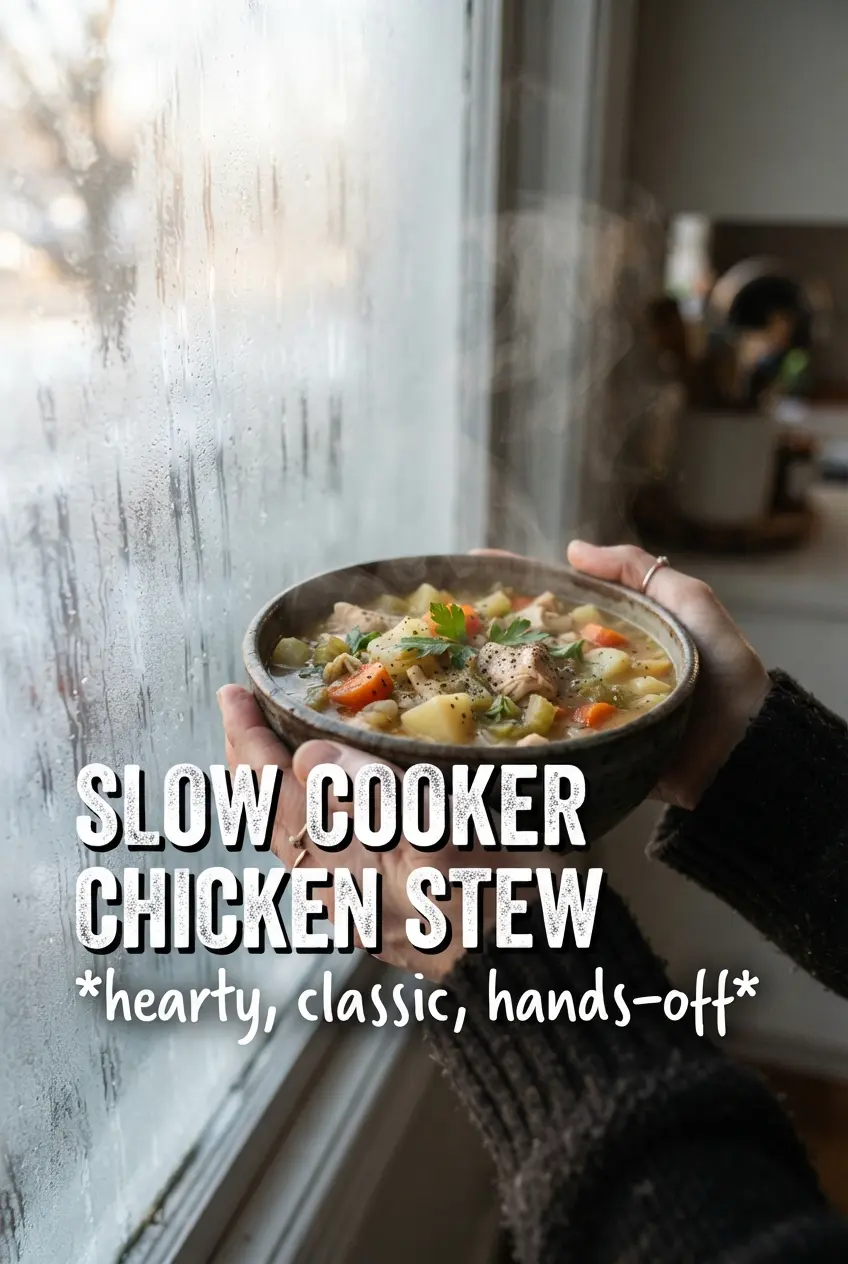
Slow Cooker Chicken Stew
Ingredients
Equipment
Method
- Add the baby potatoes, carrots, celery, and onion to the bottom of the slow cooker in an even layer.
- Nestle the bone-in chicken thighs on top of the vegetables.
- Add the minced garlic, chicken broth, cream of chicken soup, tomato paste, dried thyme, dried rosemary, and the bay leaf over the chicken.
- Cover and cook on Low for 6–8 hours, or on High for 3–4 hours, until the chicken is very tender and easily pulls apart.
- Transfer the chicken to a plate, discard the skin and bones, and shred the meat.
- Remove the bay leaf from the stew, then stir the cornstarch slurry into the liquid.
- Cook on High for 20 minutes, until the stew thickens to a gravy-like consistency.
- Return the shredded chicken to the slow cooker and season the stew with salt and black pepper to taste.
- Garnish with fresh parsley and serve hot.