Sheet pan sausage and fall veggies hit that sweet spot where dinner tastes like you spent all afternoon on it, even though the oven does most of the work. The sausage turns browned and crisp at the edges, the squash softens into little caramelized cubes, and the Brussels sprouts pick up those toasty outer leaves that always disappear first. The apple and balsamic glaze keep the whole pan from tasting heavy, so every bite lands savory, sweet, and a little tangy.
What makes this version work is the balance. The glaze goes on before roasting, but it’s built with olive oil, Dijon, maple, and vinegar so it coats the vegetables without turning them soggy. Cutting the squash and Brussels sprouts into similar-sized pieces matters more than people think; when the vegetables cook at the same pace, you get browned edges instead of a pan full of overdone onion and undercooked squash.
The method below keeps everything moving toward the same finish. You’ll also find the timing cue that tells you when to broil, because those last few minutes are what turn a good sheet pan dinner into one you’ll want to make again next week.
The glaze coated everything evenly and the Brussels sprouts got those crispy edges without the sausage drying out. I added the broil at the end and it made the whole pan taste roasted in the best way.
Save this sheet pan sausage and fall veggies dinner for a night when you want caramelized edges, cozy flavors, and only one pan to wash.
The Secret to Roasting Everything Evenly on One Pan
The trick with a sheet pan dinner like this is not just tossing everything together and hoping the oven sorts it out. Different vegetables release moisture at different speeds, and sausage needs enough space to brown instead of steam. If the pan is crowded, the squash softens before it caramelizes and the Brussels sprouts lose the crisp edges that make them worth roasting in the first place.
The other thing that matters is the cut. Squash cubes should be small enough to cook through in 30 to 35 minutes, and the Brussels sprouts need to be halved so the cut sides can hit the pan. That flat surface is where the browning happens. The sausage slices do their part by rendering a little fat as they cook, which helps flavor the vegetables without needing a separate skillet.
What Each Ingredient Is Actually Doing in This Dish
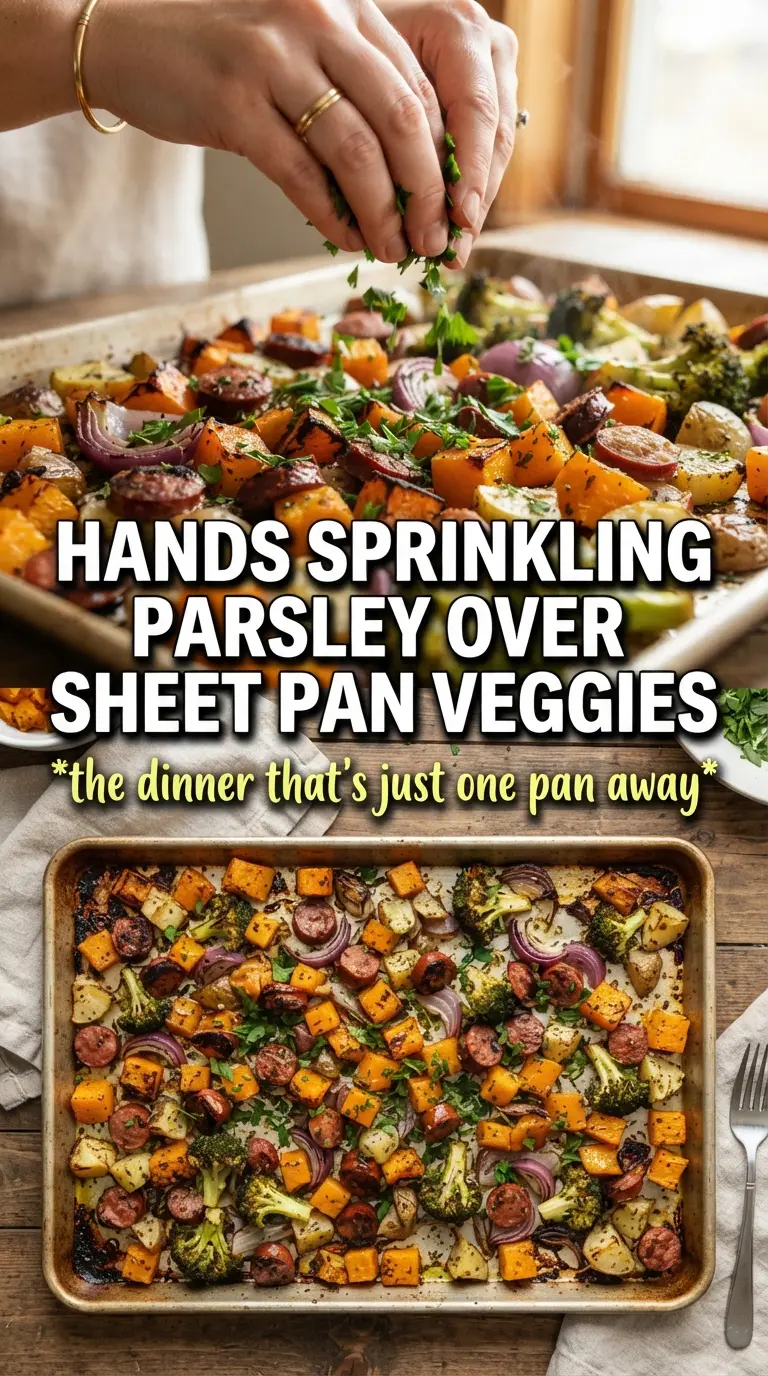
- Italian sausage links — Slice them into rounds so the edges brown fast. Links with fennel or a little spice work best here because they stand up to the sweetness from the squash and apple. If you use fully cooked sausage, it still works, but the browning will be lighter and you’ll rely more on the oven for flavor.
- Butternut squash — This is the ingredient that turns the pan from savory to layered and a little sweet. Fresh-cut squash roasts better than pre-cut if the cubes are too wet or uneven, but either works if the pieces are close in size. Sweet potato can take its place, though it cooks with a slightly firmer bite.
- Brussels sprouts — Halving them gives you more browned surface area and keeps the centers tender. If some of the outer leaves fall off, leave them on the pan; they crisp up like little chips. Frozen Brussels sprouts are too wet for this recipe and usually steam instead of roasting cleanly.
- Apple and red onion — These soften into the glaze and keep the pan from tasting one-note. A firm apple like Honeycrisp or Granny Smith holds its shape better than a mealy one. The red onion gets sweet at the edges and adds depth without overpowering the rest.
- The glaze — Olive oil, balsamic, maple, Dijon, garlic, rosemary, and Italian seasoning do more than season the pan; they help everything brown evenly. Dijon is especially useful because it helps the glaze cling instead of sliding off. If you skip it, the flavor is still good, but the coating won’t be as balanced.
Getting the Roasting Pan to Caramelize Instead of Steam
Build the Glaze First
Whisk the olive oil, balsamic vinegar, maple syrup, Dijon, garlic, rosemary, Italian seasoning, salt, and pepper in a large bowl before anything touches the pan. The Dijon should disappear into the mixture and the garlic should look evenly suspended, not clumped at the bottom. If the glaze sits while you prep the vegetables, whisk it again right before tossing so the oil doesn’t separate.
Spread Everything in a Single Layer
Dump the sausage, squash, Brussels sprouts, onion, peppers, and apple onto the parchment-lined sheet pan, then toss with the glaze until everything is coated. Spread it out so the pieces are touching only a little; if they pile up, they trap steam and the edges stay pale. The cut sides of the Brussels sprouts and onion wedges should face down where possible, because that contact is what gives you color.
Roast Until the Edges Brown
Roast at 425°F for 30 to 35 minutes, stirring once halfway through so the sausage doesn’t stick and the vegetables brown on more than one side. You’re looking for squash that gives easily when pierced, Brussels sprouts with deep brown edges, and sausage that’s cooked through with some crisped spots. If the pan looks cooked but not deeply colored, broil for 2 to 3 minutes and watch it closely; that last step goes from perfect to burnt fast.
Three Ways to Make This Pan Dinner Fit Your Table
Make It Dairy-Free Without Changing the Texture
This recipe is already dairy-free as written, which is one reason it works so well for a mixed crowd. The glaze still feels rich because the sausage fat and maple-balsamic coating carry the flavor. If you serve it with a finishing drizzle, keep it dairy-free with a little extra olive oil and vinegar rather than adding butter.
Use Chicken Sausage for a Lighter Pan
Chicken sausage works if you want something a little leaner, but choose one with enough seasoning to stand up to the vegetables. Because it renders less fat than pork sausage, the pan will taste slightly cleaner and a little less rich, so the glaze matters even more. Browned edges still happen, but they’re a bit gentler.
Swap the Apple for Pear When You Want It Softer
A pear gives you a softer, more mellow sweetness that blends into the glaze instead of standing out. Use a firm pear and add it toward the middle of the pan so it doesn’t collapse before the vegetables finish roasting. The result is a little more delicate and less tart than the apple version.
Stretch It for a Bigger Crowd
Double the recipe only if you use two sheet pans. One overloaded pan won’t brown properly, no matter how hot the oven is. Rotate the pans halfway through roasting and switch their oven positions so the top and bottom surfaces cook at the same pace.
Storage and Reheating
- Refrigerator: Store in an airtight container for up to 4 days. The vegetables soften a little, but the flavor holds up well.
- Freezer: It freezes, though the squash and Brussels sprouts will be softer after thawing. Freeze in portions for up to 2 months and expect a less crisp texture.
- Reheating: Reheat on a sheet pan in a 375°F oven until hot, about 10 to 15 minutes. The microwave works in a pinch, but it softens the roasted edges, which is the part most worth keeping.
Answers to the Questions Worth Asking
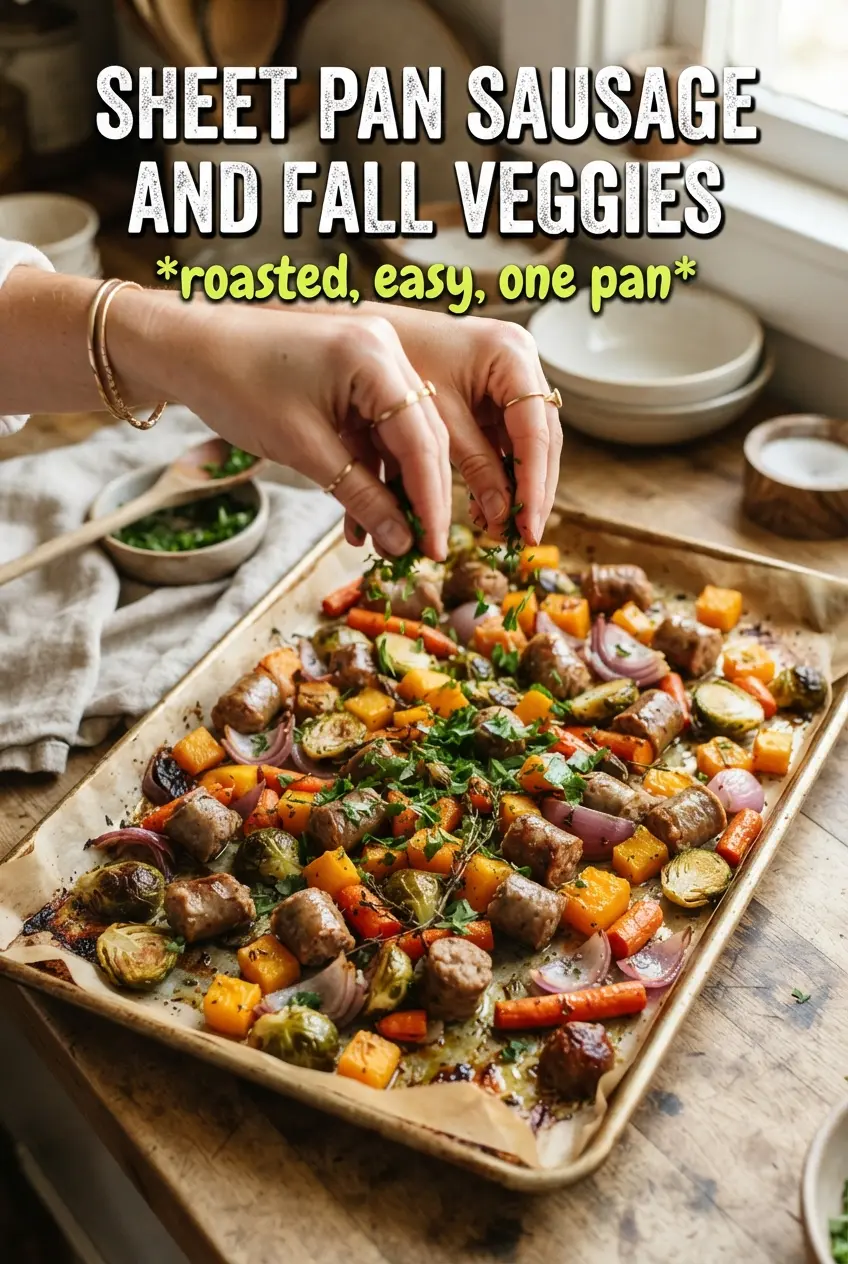
Sheet Pan Sausage And Fall Veggies
Ingredients
Equipment
Method
- Preheat oven to 425F and line a large rimmed baking sheet with parchment for easy release and cleanup.
- Whisk olive oil, balsamic vinegar, maple syrup, Dijon mustard, garlic, fresh rosemary, Italian seasoning, salt, and pepper until smooth.
- Arrange sausage, butternut squash, Brussels sprouts, red onion, bell peppers, and apple in an even layer so they roast instead of steam.
- Drizzle the glaze over everything, then toss until all vegetables and sausage are lightly coated.
- Roast at 425F for 30-35 minutes, stirring once halfway, until vegetables are caramelized and sausage is cooked through (no pink inside).
- Broil for 2-3 minutes to deepen browning and add extra caramelization, watching closely to prevent burning.