Pear potato soup lands in that sweet spot between familiar and surprising: it eats like a classic creamy potato soup, but the pears give it a soft floral note that makes the whole bowl taste a little more refined. The texture matters here. When the potatoes and pears cook down together, you get a silky, pale-golden soup that feels rich without turning heavy.
The key is keeping the sweetness balanced instead of letting it take over. Yukon gold potatoes give the soup body and a naturally buttery finish, while onion, garlic, thyme, and a small pinch of nutmeg keep the flavor grounded. The pears should be ripe, but not mushy or bruised beyond use, because you want their perfume and gentle sweetness, not an assertive fruit puree.
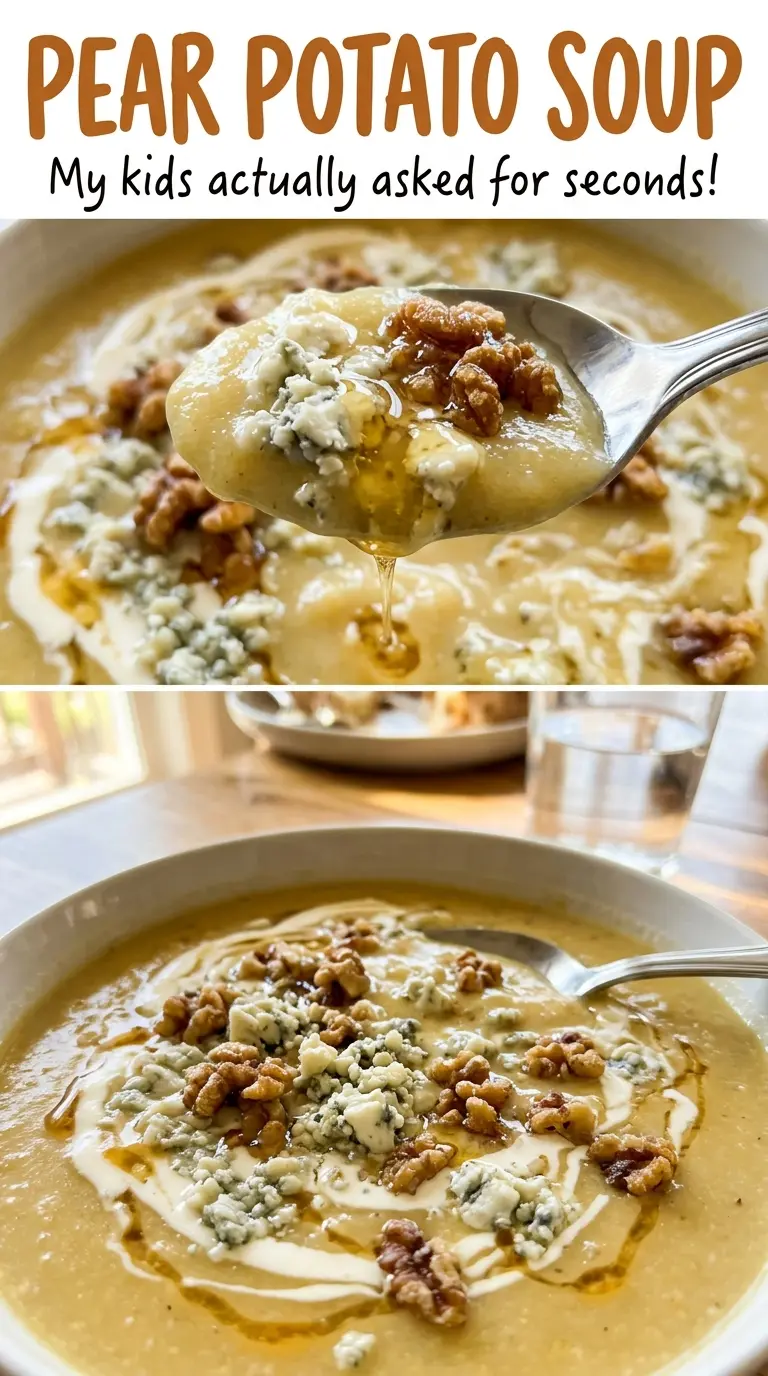
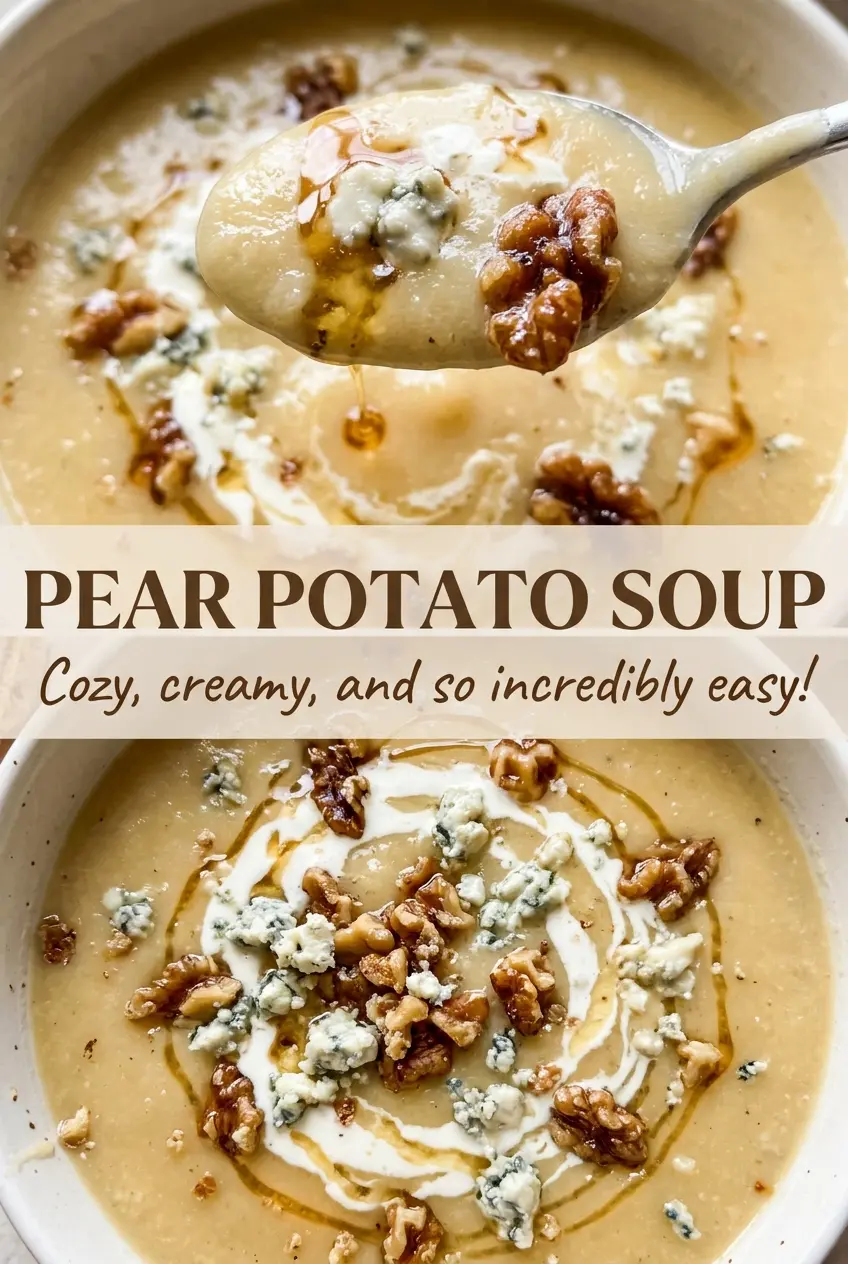
Below, I’ll show you how to keep the soup smooth, how to finish it so the cream stays velvety, and why the gorgonzola, honey, and candied walnuts on top work better than they sound on paper.
The pears melted right into the potatoes and the soup turned out silky without being heavy. I loved the way the blue cheese and honey changed each spoonful.
Save this pear potato soup for the night you want something silky, elegant, and a little unexpected with blue cheese, honey, and walnuts on top.
The Reason Pears Belong in Potato Soup at All
The biggest mistake with fruit in soup is treating it like dessert. Pears bring more than sweetness here; they soften into the potatoes and help create a round, almost buttery body that makes the soup taste richer than the ingredient list suggests. If the pears are underripe, they stay sharp and thin. If they’re overripe, the flavor turns flat. You want pears that give slightly when pressed and smell fragrant at the stem.
The other thing that matters is the simmer. Once the broth, potatoes, and pears go in, keep the heat steady but not violent. A hard boil can break the vegetables down unevenly and make the soup taste muddy before it ever gets blended. Gentle heat lets everything finish at the same pace, which is what gives you that clean, smooth puree instead of a grainy one.
- Yukon gold potatoes — These are the best choice because they blend into a naturally creamy texture without going gluey. Russets will work, but they can make the soup a little fluffier and less velvety.
- Pears — Bartlett or Anjou pears are the easiest fit here. They turn soft and fragrant without taking over, while firmer pears like Bosc keep a stronger shape and less sweetness.
- Vegetable or chicken broth — Use a broth you’d actually sip. Since the soup is built from only a few main ingredients, a bland broth makes the finished bowl taste thin.
- Heavy cream — This finishes the soup and gives it that polished, restaurant-style texture. Half-and-half can work, but the soup won’t have the same plush finish.
What Each Ingredient Is Actually Doing in This Recipe
- Primary ingredient (the star) — Quality matters most. Choose the best you can find.
- Cooking medium (oil, butter, or broth) — This carries flavors and prevents dryness.
- Seasonings (salt, pepper, spices, herbs) — Layer flavors so nothing overpowers. Build depth gradually.
- Aromatics (garlic, onion, herbs) — Cook with fat to bloom flavors. Become the foundation.
- Supporting ingredients — Complement the main ingredient without overpowering it.
- Sauce or liquid (if applicable) — Brings flavors together. Balance richness with acid.
- Acid (lemon, vinegar, wine, or other) — Brightens and prevents flat-tasting results.
- Final finish (garnish, glaze, or sauce) — Prevents one-dimensional taste and adds visual appeal.
Building a Silky Soup Without Letting the Pear Flavor Take Over
Sautéing the Onion Until It Turns Sweet
Start the butter and onion over medium heat and let the onion go until it turns soft and lightly golden at the edges. That first stage matters because raw onion would fight with the pears instead of supporting them. Once the garlic goes in, give it only about a minute. If it browns, it turns bitter fast and the soup loses that clean, mellow base.
Cooking the Pears and Potatoes Together
Add the broth, potatoes, pears, and thyme, then bring the pot to a boil before dropping it to a simmer. You’re waiting for both the potatoes and pears to be completely tender, not just passable with a fork. The potatoes should crush with almost no resistance, and the pears should look translucent around the edges. If one ingredient is still firm, the soup won’t blend evenly and you’ll end up chasing lumps later.
Blending Until the Texture Looks Like Velvet
An immersion blender makes this soup especially easy because you can control the texture as you go. Blend until the soup looks glossy and completely smooth, with no pear fibers or potato bits left behind. If you’re using a countertop blender, work in batches and leave space for steam to escape. Hot soup expands fast, and a sealed blender can turn into a messy problem in seconds.
Finishing With Cream and Seasoning
Stir in the cream after blending, then season with nutmeg, white pepper, and salt. Don’t boil hard once the cream goes in. That’s the quickest way to dull the flavor and risk a broken texture. White pepper keeps the soup visually smooth, and nutmeg gives it a warm background note that makes the pears taste more elegant instead of sweeter.
How to Adapt This Soup for Different Tables
Make it dairy-free
Swap the butter for olive oil or a plant-based butter and use full-fat coconut milk or unsweetened oat cream in place of the heavy cream. Coconut milk gives the soup a faint tropical note, so oat cream is the closer match if you want to keep the pear flavor front and center.
Make it vegetarian
Use vegetable broth and keep the garnish with gorgonzola, walnuts, and honey. The soup still tastes full and savory because the potatoes carry the body and the cheese adds enough sharpness to balance the pears.
Skip the blue cheese topping
If blue cheese isn’t your thing, top the bowl with shaved Parmesan or a spoonful of plain crème fraîche. You’ll lose the punchy saltiness, but the soup will taste softer and more crowd-friendly.
Storage and Reheating
- Refrigerator: Store in an airtight container for up to 4 days. The soup thickens as it chills, so it may look a little denser on day two.
- Freezer: Freeze without the cream if you want the best texture later. Dairy can separate after thawing, so stir in the cream after reheating.
- Reheating: Warm slowly over low heat and thin with a splash of broth if needed. A hard simmer can make the cream look broken and can flatten the pear flavor.
Answers to the Questions Worth Asking
Pear Potato Soup
Ingredients
Equipment
Method
- Melt the butter in a large pot over medium heat, then sauté the onion for 5 minutes until soft and golden, stirring occasionally so it browns evenly.
- Add the garlic and cook for 1 minute, then add the broth, potatoes, and chopped pears.
- Add the thyme leaves, bring the mixture to a boil, and simmer for 25 minutes until both the potatoes and pears are completely tender.
- Blend the soup completely smooth using an immersion blender until no chunks remain.
- Stir in the heavy cream, then season with nutmeg, white pepper, and salt to taste.
- Ladle the soup into bowls and top each serving with crumbled gorgonzola or blue cheese, candied walnuts, a drizzle of honey, and fresh thyme.