Tender meatballs tucked into a dark onion gravy and spooned over mashed potatoes hit that perfect comfort-food line: hearty without being heavy, savory without tasting flat. The meatballs stay juicy because they’re mixed just until combined, then browned before they ever hit the gravy. That little bit of color on the outside gives the finished dish a deeper, richer taste than simmering them raw right in the sauce.
The gravy matters just as much as the meatballs. Sliced onion cooks in butter until it softens and takes on a little color, then flour cooks briefly before the broth goes in. That step keeps the gravy from tasting pasty and gives it the kind of savory depth that clings to every bite. A small spoonful of Dijon and Worcestershire pulls everything together without making it taste like either one stands out on its own.
Below, I’ve included the little details that keep the meatballs tender and the gravy smooth, plus the swaps that still work if you need to adjust the recipe for what’s in the kitchen.
The gravy thickened up beautifully and the meatballs stayed tender even after simmering. I served it over mashed potatoes, and my husband said it tasted like something from a diner in the best way.
Save these meatballs and gravy for the kind of dinner that needs a rich pan sauce and a pile of mashed potatoes.
The Trick to Keeping the Meatballs Tender While the Gravy Simmeres
The biggest mistake with meatballs like these is working the mixture too much. Once the beef gets packed and squeezed, the texture turns dense before it ever hits the pan. Mix until the ingredients are distributed, then stop. The egg and breadcrumbs are there to hold the meatballs together and keep them soft, not to turn the mixture into paste.
The second place people go wrong is skipping the browning step or rushing the onion gravy. Those browned bits in the skillet are the base of the sauce, and the onions need time to cook down before the flour goes in. If the gravy tastes thin or flat, it usually means the onions didn’t soften enough or the broth was whisked in before the flour had a chance to cook for a full minute.
What Each Ingredient Is Actually Doing in This Dish

- Ground beef — Use 80/20 if you can. It has enough fat to keep the meatballs tender and flavorful without making the gravy greasy. Leaner beef works, but the meatballs will be a little firmer and less rich.
- Breadcrumbs and egg — This is the binder that keeps the meatballs from falling apart. Dry breadcrumbs absorb moisture and the egg sets as the meatballs cook, giving you a soft texture that still holds together when it simmers in the gravy.
- Parmesan — It adds salt and a quiet savory note that makes the meatballs taste fuller. If you don’t have it, skip it before you reach for a strong substitute like cheddar; the flavor shift will be obvious. A little finely grated Pecorino works well if that’s what you’ve got.
- Worcestershire — There’s a little in the meatballs and a little in the gravy for a reason. It deepens the beef flavor without making the dish taste smoky or sweet. You can use soy sauce in a pinch, but keep it light because it brings more salt and less complexity.
- Onion and butter — This is the heart of the gravy. The butter carries the onions as they soften, and the onions bring sweetness and body once they’ve cooked down. Don’t rush this part; pale, undercooked onion gives the gravy a raw edge.
- Dijon mustard — It doesn’t make the gravy taste like mustard. It sharpens the sauce just enough so the beef broth doesn’t taste heavy or muddy.
Building the Gravy in the Same Pan
Browning the Meatballs First
Roll the meatballs gently, then brown them in a large skillet over medium-high heat until you get a deep golden crust on several sides. They don’t need to cook through here. The goal is color and flavor, plus enough structure that they’ll finish simmering without breaking apart. If the pan is crowded, the meatballs will steam instead of sear, so work in batches if needed.
Cooking the Onions Until They Taste Sweet
After the meatballs come out, keep the same pan on the heat and add the butter and sliced onion. Let the onions cook until they soften, turn translucent, and pick up a little color around the edges. That’s when they start tasting round and sweet instead of sharp. If they’re still crunchy when the flour goes in, the gravy will taste thin and unfinished.
Whisking the Gravy Smooth
Sprinkle the flour over the onions and cook it for a minute so the raw taste fades. Then add the broth gradually, whisking as you go so the flour dissolves into a smooth sauce instead of forming little lumps. Once the Worcestershire and Dijon go in, let the gravy simmer until it coats a spoon. If it seems too thick, loosen it with a splash of broth; if it seems thin, give it a few more minutes.
Finishing the Meatballs in the Sauce
Slide the browned meatballs back into the gravy and simmer them gently until they’re cooked through. The heat should be steady, not aggressive; a hard boil can toughen the meatballs and break the gravy. By the end, the sauce should cling to the meatballs and look glossy, not greasy. Serve right away over mashed potatoes so the gravy has something soft to sink into.
How to Adapt This for Different Kitchens and Different Eaters
Make It Gluten-Free
Use gluten-free breadcrumbs in the meatballs and replace the flour with a gluten-free all-purpose blend or cornstarch slurry for the gravy. The texture stays close to the original, though cornstarch gives the sauce a slightly glossier finish and a cleaner, lighter body.
Swap in Ground Turkey
Ground turkey works if you want a lighter version, but it needs the fat and seasoning the beef already has. Add a tablespoon of olive oil to the mixture and don’t overcook the meatballs, or they’ll turn dry fast. The gravy helps, but turkey still tastes best with a generous spoonful of sauce.
Dairy-Free Version
Leave out the parmesan and use olive oil or dairy-free butter for the gravy base. You lose a little savory depth, so lean harder on the Worcestershire and onion browning to build flavor. The result is still rich and satisfying, just a touch less rounded.
Make It Ahead for Dinner Later
Brown the meatballs and cook the gravy a day ahead, then store them together so the flavors meld. Reheat gently with a splash of broth to loosen the sauce. This dish tastes even better the next day because the onion gravy gets a little more time to settle in around the meatballs.
Storage and Reheating
- Refrigerator: Store in an airtight container for up to 4 days. The gravy thickens as it chills, so it will look tighter when cold.
- Freezer: Freezes well for up to 2 months. Cool completely first, then pack the meatballs and gravy together so they reheat evenly.
- Reheating: Warm gently on the stovetop over low heat with a splash of beef broth or water. Don’t blast it in the microwave on high or the meatballs can tighten up and the gravy can split.
Answers to the Questions Worth Asking
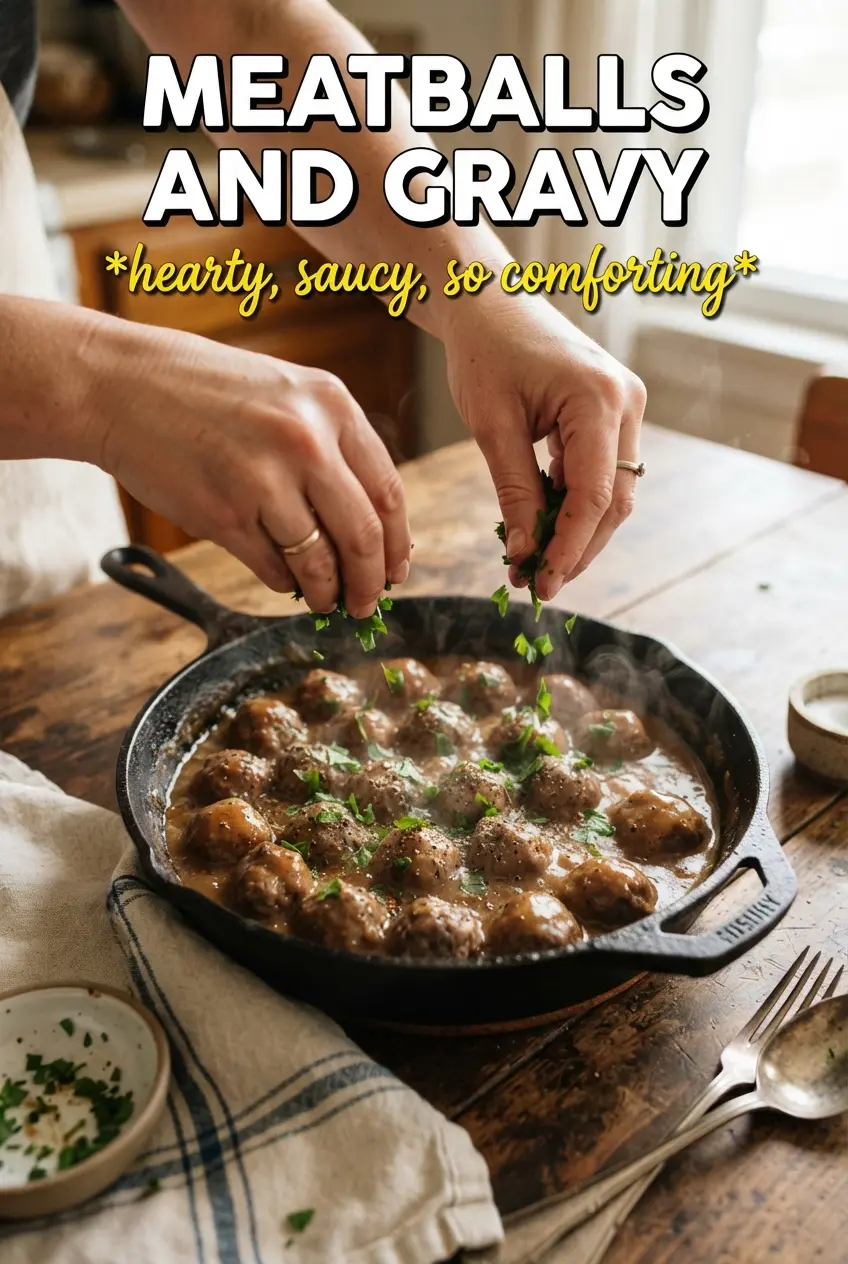
Meatballs and Gravy
Ingredients
Equipment
Method
- Mix ground beef, breadcrumbs, parmesan, egg, garlic, onion powder, Worcestershire sauce, salt, and pepper just until combined; roll into 1.5-inch balls.
- Brown the meatballs in a large skillet over medium-high heat until golden on the outside, about 6-8 minutes, then remove and set aside.
- Melt butter in the same skillet and caramelize the sliced onion until soft and golden, about 10 minutes.
- Whisk in the flour and cook for 1 minute, scraping the browned bits to keep the gravy flavorful.
- Gradually add beef broth, Worcestershire, and Dijon mustard, whisking as you pour to smooth out any lumps.
- Simmer the gravy until thickened, about 5 minutes, then return the browned meatballs to the skillet.
- Simmer the meatballs in the gravy until cooked through, 15 minutes, until the centers are no longer pink.
- Serve the meatballs and gravy over mashed potatoes and scatter fresh parsley on top.