Golden, juicy chicken breasts with garlic, oregano, basil, and Parmesan are one of those dinners that earn a permanent spot in the rotation because they taste like much more than the effort they ask for. The outside gets a light savory crust, the inside stays tender, and the lemon keeps the herbs from tasting flat or heavy.
What makes this version work is the combination of pounding the chicken to an even thickness and letting it sit in a quick herb marinade before it hits the pan. That means the breasts cook at the same rate instead of drying out at the edges while the middle catches up. A short sear is enough here; the goal is color first, then a quick finish to keep the meat juicy.
Below, you’ll find the exact timing that keeps the chicken from going from browned to dry, plus a few smart swaps if you need to work with dried herbs or turn this into a dairy-free dinner.
The chicken stayed so juicy, and the Parmesan at the end melted into the herbs without burning. I also loved that the skillet sauce picked up all the garlic from the pan.
Save Italian Herb Chicken for the nights when you want juicy skillet chicken with garlic, lemon, and Parmesan in about 30 minutes.
The Reason This Chicken Stays Juicy Instead of Turning Stringy
The biggest mistake with chicken breasts is treating them like they all cook the same. A thick end and a thin end don’t finish together, so the thinner side dries out while the rest is still catching up. Pounding the breasts to an even 1/2-inch thickness fixes that problem before the pan ever heats up.
The second detail that matters is the marinade, but not because it “soaks in” deeply. The oil helps the herbs and garlic cling to the surface, the lemon wakes up the seasoning, and the short rest gives the salt time to start seasoning the meat. Push the marinating time too far and the lemon can tighten the texture, so 20 minutes to 2 hours is the useful window here.
What Each Ingredient Is Actually Doing in This Dish
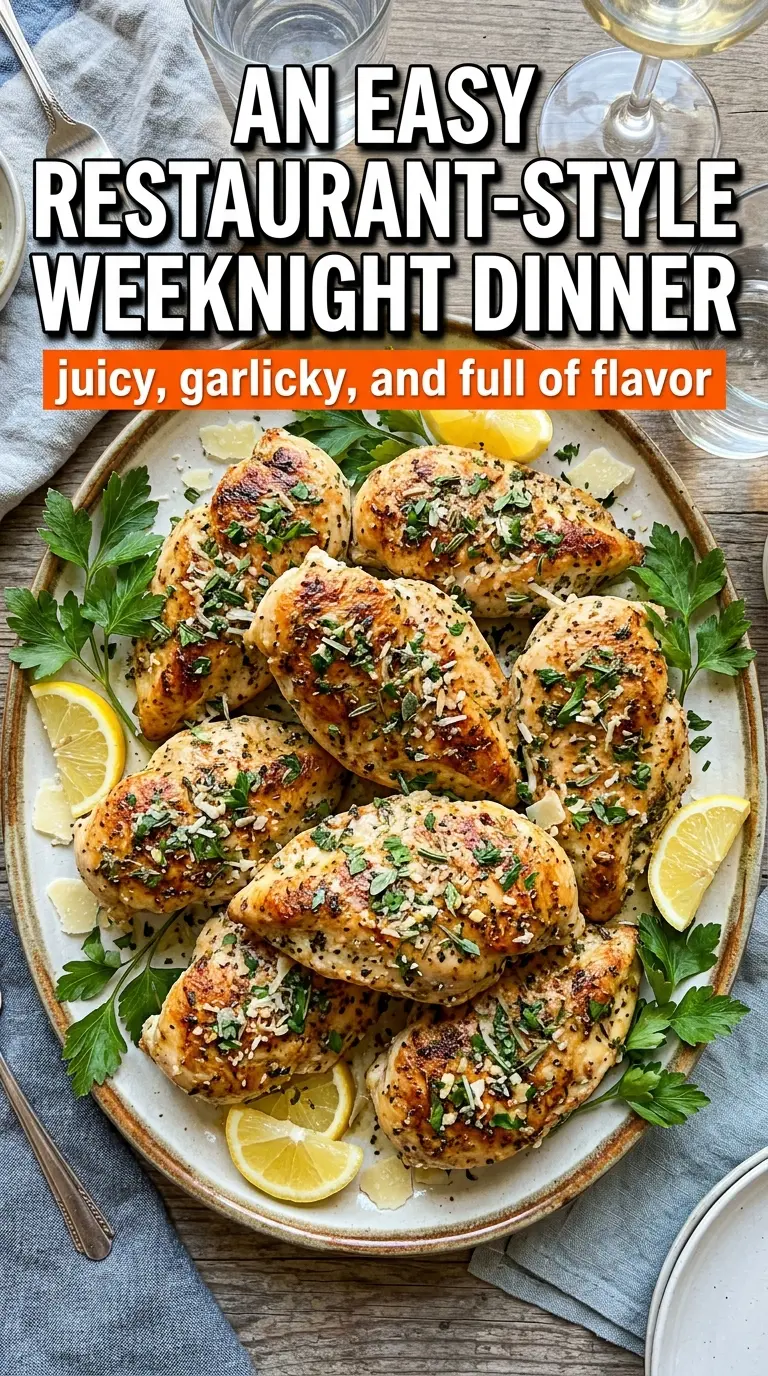
- Chicken breasts — Boneless, skinless breasts are the right cut here because they cook fast and take on the herb coating cleanly. Pound them to even thickness or the outside will overcook before the center reaches 165°F.
- Olive oil — This carries the garlic and herbs across the surface and helps the chicken brown in the skillet. A good everyday olive oil is fine; save the expensive finishing oil for another dish.
- Garlic, oregano, basil, and Italian seasoning — These build the herb flavor without needing a long braise. Fresh oregano and basil give the most lift, but dried oregano works well if that’s what you have; just don’t skip the garlic, because it anchors the whole marinade.
- Lemon juice — The acid brightens the herbs and keeps the chicken from tasting one-note. Use fresh lemon if you can, since bottled juice can taste flat here.
- Parmesan — The cheese adds a salty finish and melts into the surface during the last minute of cooking. Grate it finely so it softens instead of sitting in clumps.
How to Sear the Chicken Without Losing the Juices
Build the Marinade First
Whisk the olive oil, garlic, herbs, Italian seasoning, salt, pepper, and lemon juice in a small bowl until the garlic is spread through the oil instead of sitting in one wet pile. That even coating matters because it keeps the seasoning from scorching in the pan. If the garlic clumps, it tends to burn on contact with the skillet before the chicken is done.
Let the Chicken Sit Just Long Enough
Coat the pounded chicken and let it rest for at least 20 minutes. That short rest seasons the surface and helps the herbs cling, but it doesn’t have time to push the texture into cured-chicken territory. If you refrigerate it longer than 2 hours, the lemon starts doing more work than you want.
Cook for Color, Then Check the Temperature
Heat the skillet over medium-high until the oil shimmers, then lay the chicken in without crowding the pan. You want an audible sizzle and a steady golden crust after about 5 to 6 minutes per side. If the pan is too cool, the chicken steams and turns pale; if it’s too hot, the herbs burn before the center is cooked. Pull it as soon as the thickest part hits 165°F.
Finish with Parmesan and Parsley
Scatter the Parmesan over the chicken during the last minute so it melts just enough to cling to the top. The cheese should soften, not brown into a hard crust. Finish with parsley after the chicken comes off the heat so the herb stays fresh and green instead of turning dull in the pan.
How to Adapt This for Different Nights and Different Diets
Make It Dairy-Free
Skip the Parmesan and finish with a little extra salt and lemon zest instead. You lose the salty melt on top, but the chicken still tastes bright and herb-forward.
Use Dried Herbs When Fresh Herbs Aren’t Around
Replace the fresh oregano and basil with 1 teaspoon of each dried herb, or lean on the Italian seasoning alone if that’s what you have. Dried herbs are more concentrated, so the flavor stays strong even without the fresh garnish.
Turn It Into a Meal Prep Protein
Cook the chicken, cool it, and slice it before packing it for lunches with rice, roasted vegetables, or salad. The texture holds up well for a few days, especially if you reheat it gently instead of blasting it in the microwave.
Swap in Chicken Thighs
Boneless thighs work if you want a richer, more forgiving cut. They need a few extra minutes in the skillet, but they stay juicy even if your timing is a little loose.
Storage and Reheating
- Refrigerator: Store leftovers in an airtight container for up to 4 days. The chicken stays tender, though the herb coating softens a bit.
- Freezer: Freeze cooked chicken for up to 2 months, wrapped tightly and tucked into a freezer bag. Slice before freezing if you want faster thawing and easier reheating.
- Reheating: Warm it gently in a covered skillet over low heat with a splash of water or broth, or use the microwave at half power. High heat dries out chicken breasts fast, which is the quickest way to lose the texture you worked for.
Questions I Get Asked About This Recipe
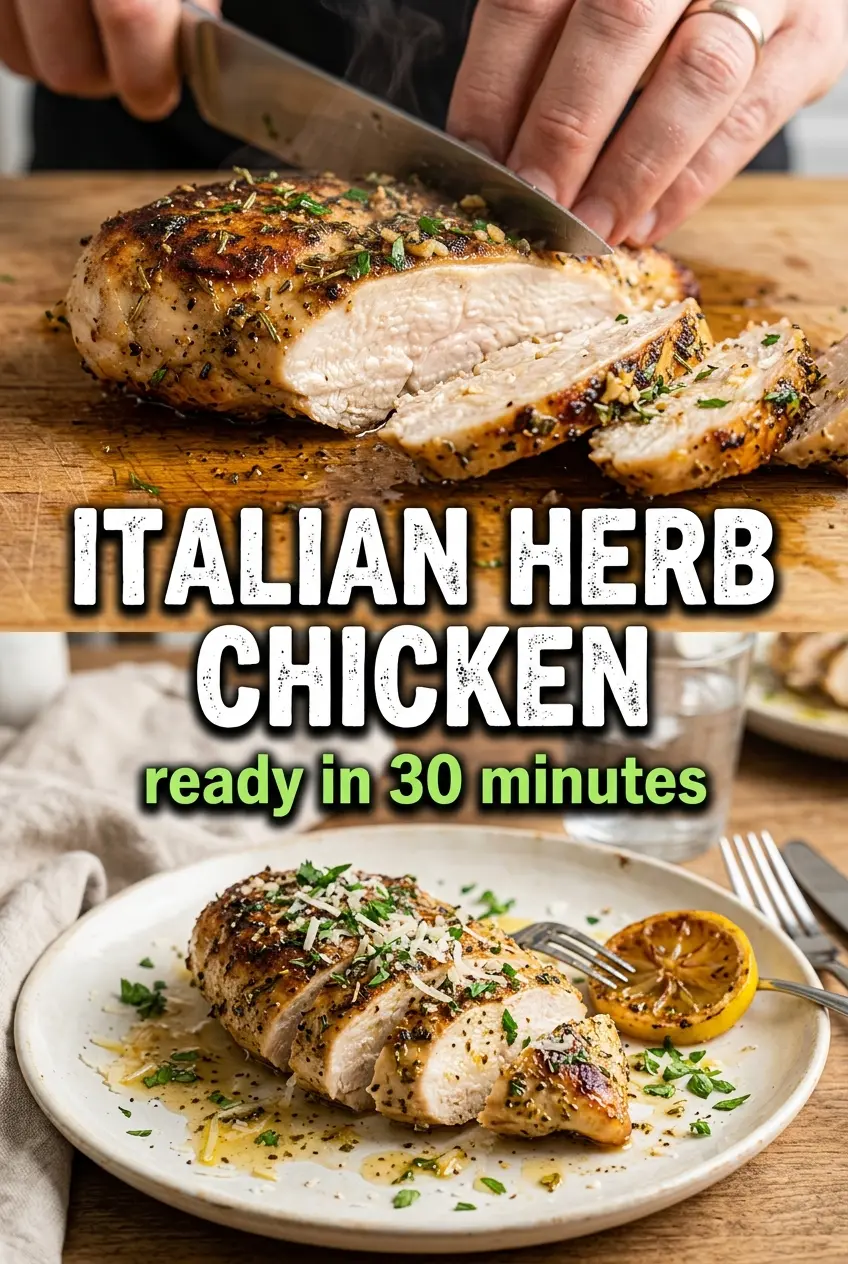
Italian Herb Chicken
Ingredients
Equipment
Method
- Pound the chicken breasts to an even ½-inch thickness so they cook evenly.
- Whisk the olive oil, garlic, oregano, basil, Italian seasoning, salt, black pepper, and lemon juice in a small bowl until combined.
- Pour the marinade over the chicken and let sit in the fridge for at least 20 minutes or up to 2 hours.
- Heat a large skillet over medium-high heat until hot.
- Sear the chicken for 5–6 minutes per side, until golden and the internal temperature reaches 165°F.
- Sprinkle the Parmesan over the chicken during the last minute of cooking so it melts slightly.
- Garnish with fresh parsley and serve immediately with your favorite side.