French onion meatballs hit that sweet spot between cozy and a little dramatic: browned beef, deeply caramelized onions, and a broiled cheese top that turns golden and bubbly in the oven. The sauce clings to the meatballs instead of thinning out into a bland broth, and every bite tastes like the best part of French onion soup turned into dinner.
What makes this version work is patience with the onions and restraint with the heat. Caramelizing three onions takes time, but it’s what gives the sauce its deep savory-sweet base. Browning the meatballs first gives the whole dish more flavor from the start, and the short simmer in the onion broth finishes them gently so they stay tender instead of tough.
Below you’ll find the step that matters most if your onions tend to burn instead of soften, plus a few smart swaps for the cheese and broth. The broiled top is worth the extra minute, and once you see how the sauce thickens around the meatballs, this one earns a regular spot.
The onions turned into a deep, sweet sauce and the meatballs stayed tender even after the broil. I used provolone on top and my husband said it tasted like French onion soup and meatloaf had the best possible dinner together.
Save these French Onion Meatballs for the night you want a broiled Gruyere topping and a rich onion gravy without a lot of fuss.
The Onion Step You Can’t Rush If You Want Real French Flavor
The difference between French onion meatballs that taste flat and ones that taste layered comes down to the onions. If they’re rushed over high heat, they brown at the edges before they soften all the way through, and you end up with sharp onion flavor instead of the sweet, jammy base this dish needs. Medium-low heat gives the moisture time to cook off slowly, which is how the natural sugars concentrate without turning bitter.
That slow caramelization also helps the broth thicken later. The onions melt into the sauce, so you don’t need flour or cornstarch to make it cling. If the pan looks dry partway through, add a small splash of broth or water and keep going; dry pan bottoms are what cause scorching, not better browning.
What Each Ingredient Is Actually Doing in This Dish
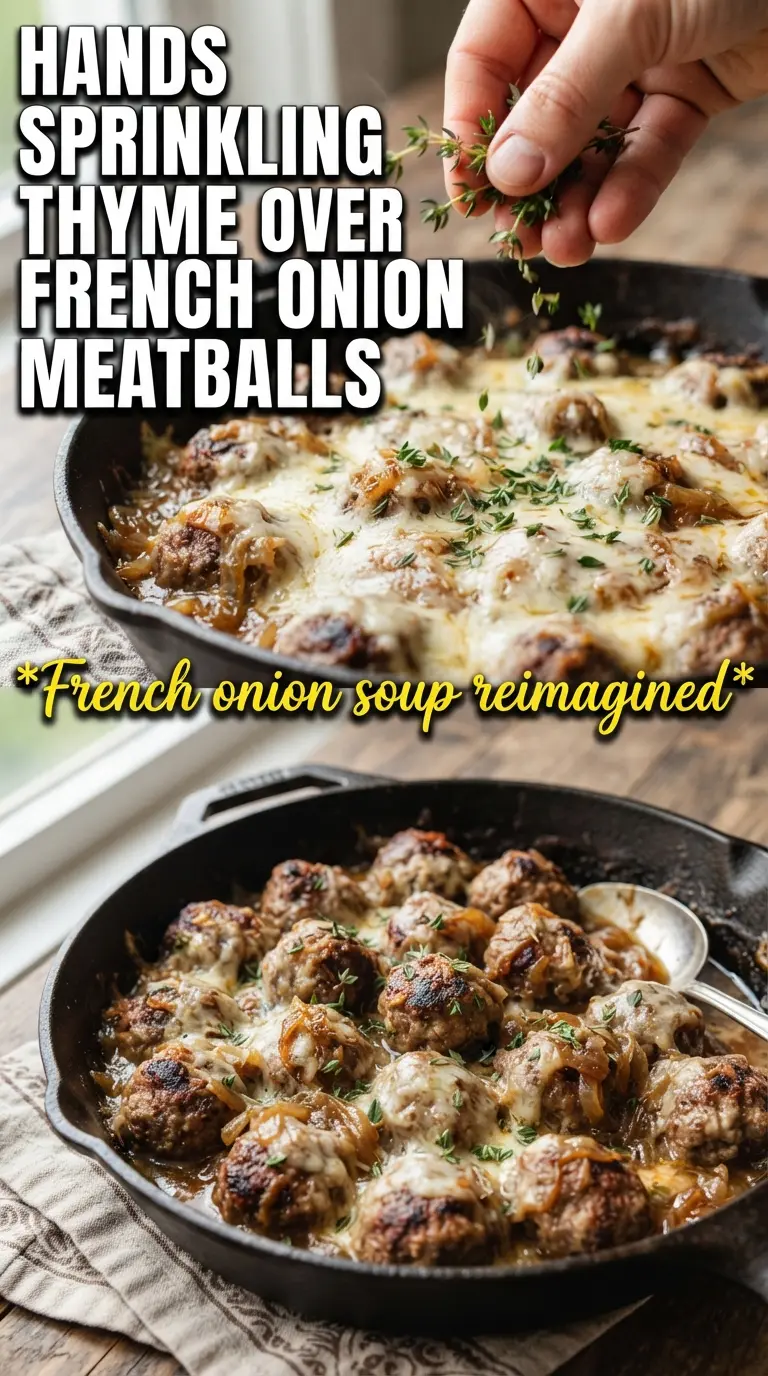
- Ground beef — A 15% to 20% fat blend gives the meatballs enough richness to stand up to the onion sauce. Extra-lean beef can work, but the texture is drier and the flavor needs more help from the Worcestershire and cheese.
- Breadcrumbs and egg — These hold the meatballs together and keep them tender after simmering. If you skip either one, the meatballs are more likely to tighten up and fall apart in the sauce.
- Worcestershire — This adds the savory backbone that makes the sauce taste deeper without needing extra steps. There isn’t a clean substitute for the exact tangy, umami note, but soy sauce can step in if that’s what you have, using a little less because it’s saltier.
- Onions — These are the real sauce, not just an add-in. Yellow onions are the best choice here because they turn sweet and silky as they cook; red onions stay a little sharper and don’t give the same classic French onion taste.
- Dry white wine or beef broth — Wine brings brightness and helps lift the browned bits from the pan, but broth works if you want to keep it alcohol-free. If you use broth only, let it reduce a minute or two longer so the sauce doesn’t taste thin.
- Gruyere or provolone — Gruyere gives the most classic French onion flavor and a nutty melt, while provolone melts beautifully and keeps the dish a little more familiar and mild. Either one should be shredded from a block if you want that smooth, broiled finish.
How to Build the Sauce Without Losing the Meatballs
Browning for Flavor First
Mix the meatballs just until the ingredients come together, then roll them into even 1.5-inch balls. If you pack them too tightly, they turn dense after simmering. Brown them in butter until they have a good crust on the outside, then pull them out while the center is still underdone. That first sear adds flavor to both the meatballs and the pan.
Caramelizing the Onions Slowly
Cook the sliced onions in the same skillet over medium-low heat and give them time. Stir often enough to keep them from sticking, but not so much that they never get a chance to soften and brown. You’re looking for a deep amber color and a soft, almost spreadable texture. If they start to catch before they’re fully sweet, lower the heat and add a small splash of broth to loosen the fond.
Finishing in the Onion Broth
Deglaze with the wine or broth and scrape up every browned bit from the pan. Those bits are the base of the sauce. Stir in the remaining broth, Worcestershire, and thyme, then return the meatballs to simmer gently for about 15 minutes. Keep the heat at a quiet simmer, not a hard boil, or the meatballs can tighten before they finish cooking.
The Broil That Makes It Taste Like French Onion Soup
Move everything to a baking dish only if the skillet isn’t oven-safe, then cover the top with the shredded cheese. Broil just until the cheese is melted, bubbling, and turning spotty gold around the edges. Walk away for even a minute and it can go from bronze to burnt fast, so stay close and use the oven light if you have one.
Three Smart Ways to Adapt These Meatballs
Make It Gluten-Free Without Losing the Binder
Use gluten-free breadcrumbs in the meatballs and check that your Worcestershire and broth are gluten-free. The texture stays close to the original, and the onions still carry the whole dish.
Swap the Cheese for a Milder Melt
Use provolone if Gruyere feels too sharp or too expensive. You lose some of the nutty depth, but you get a softer, creamier melt that still browns well under the broiler.
Turn It Into a Dairy-Free Onion Skillet
Use olive oil instead of butter and skip the cheese topping. The dish will still be rich from the onions and beef, but it becomes more broth-forward and less gratin-style, so finish with extra thyme for balance.
Stretch It for a Bigger Crowd
Add another pound of meatballs and increase the onions and broth by half. The sauce gets even better as it scales, but use a wide pan if you can so the onions still caramelize instead of steaming.
Storage and Reheating
- Refrigerator: Store in an airtight container for up to 4 days. The sauce thickens as it chills, and the onions deepen in flavor.
- Freezer: Freeze the meatballs and sauce without the cheese topping for up to 2 months. Thaw overnight in the fridge before reheating so the onions don’t break down too much.
- Reheating: Warm gently on the stovetop over low heat or in a covered baking dish at 325°F until hot. Don’t blast it in the microwave on high; the meatballs can go rubbery and the sauce can split.
Answers to the Questions Worth Asking
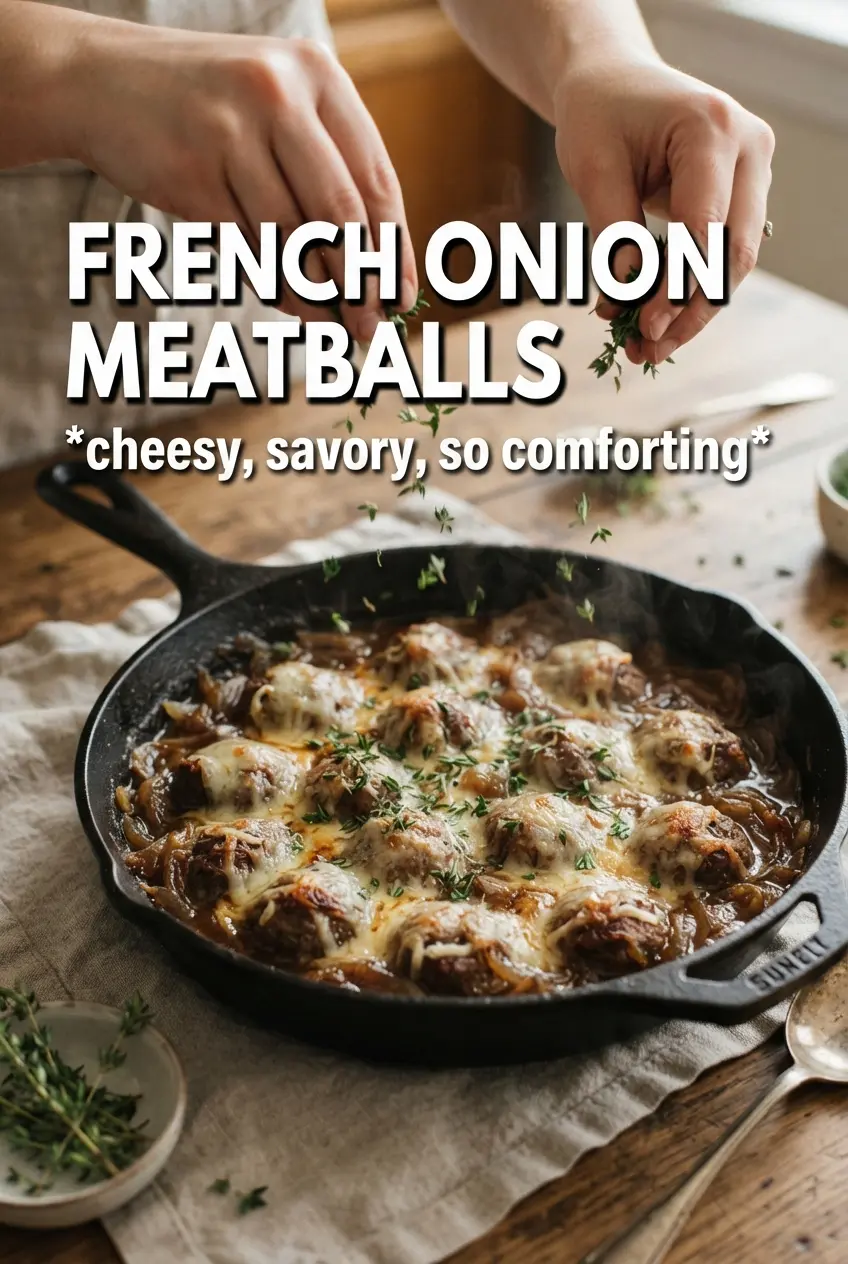
French Onion Meatballs
Ingredients
Equipment
Method
- Mix ground beef, breadcrumbs, egg, Worcestershire, garlic powder, onion powder, and salt and pepper until just combined, then roll into 1.5-inch balls. Keep the mixture compact so the meatballs stay tender and hold together.
- Brown the meatballs in butter over medium heat, turning as needed, until browned on the outside and set aside. Transfer them to a plate while you caramelize the onions.
- In the same skillet, caramelize the onions in butter over medium-low heat for 30-35 minutes, stirring occasionally, until deep golden and jammy. Scrape up any browned bits as the onions soften.
- Deglaze with dry white wine or beef broth, then add beef broth, Worcestershire, and fresh thyme. Simmer briefly to bring the sauce together.
- Return the meatballs to the sauce and simmer for 15 minutes, turning once so they absorb the onion broth. Cook until the meatballs are heated through and the sauce thickens slightly.
- Transfer to a baking dish if the skillet is not oven-safe, then scatter Gruyere or provolone over everything. Make an even layer so the crust melts into a golden top.
- Broil for 3-4 minutes until the cheese is golden and bubbly. Watch closely so the crust browns without burning.