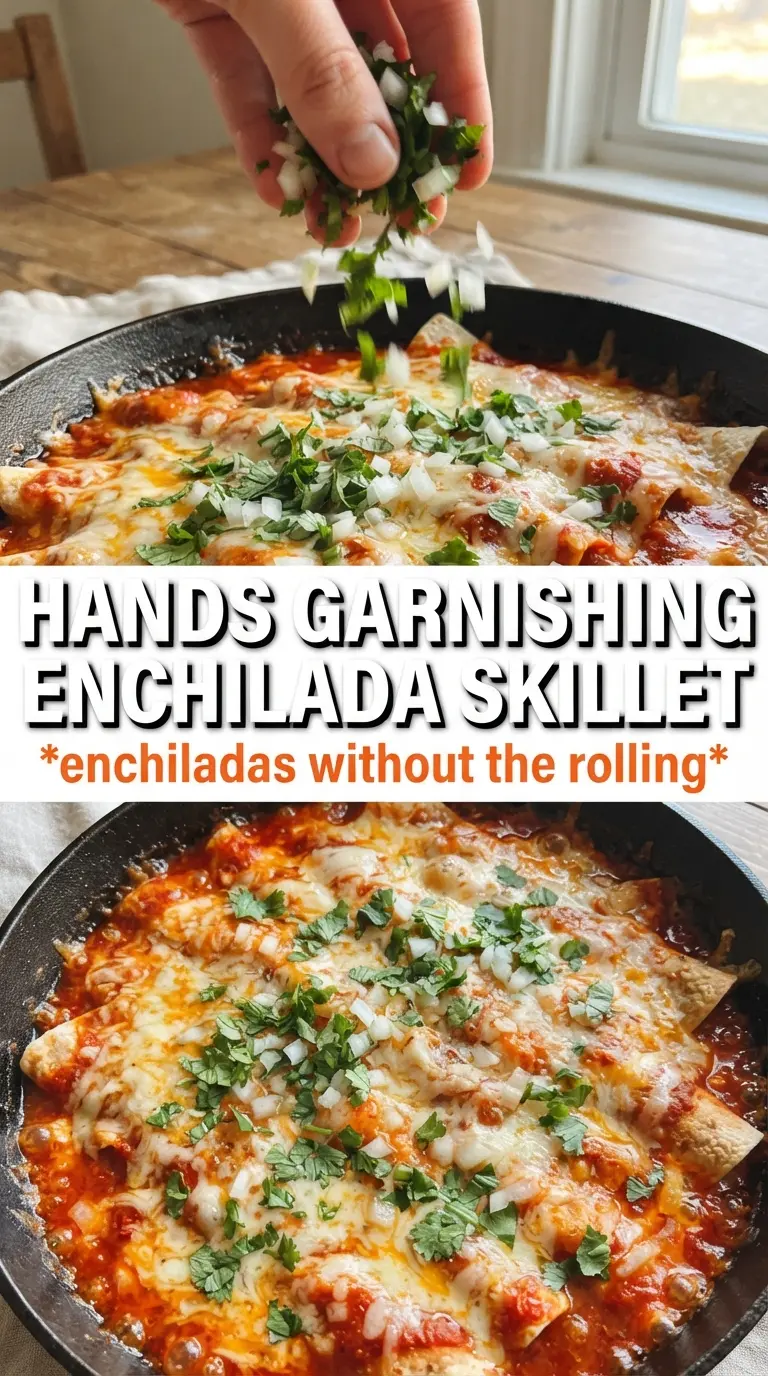
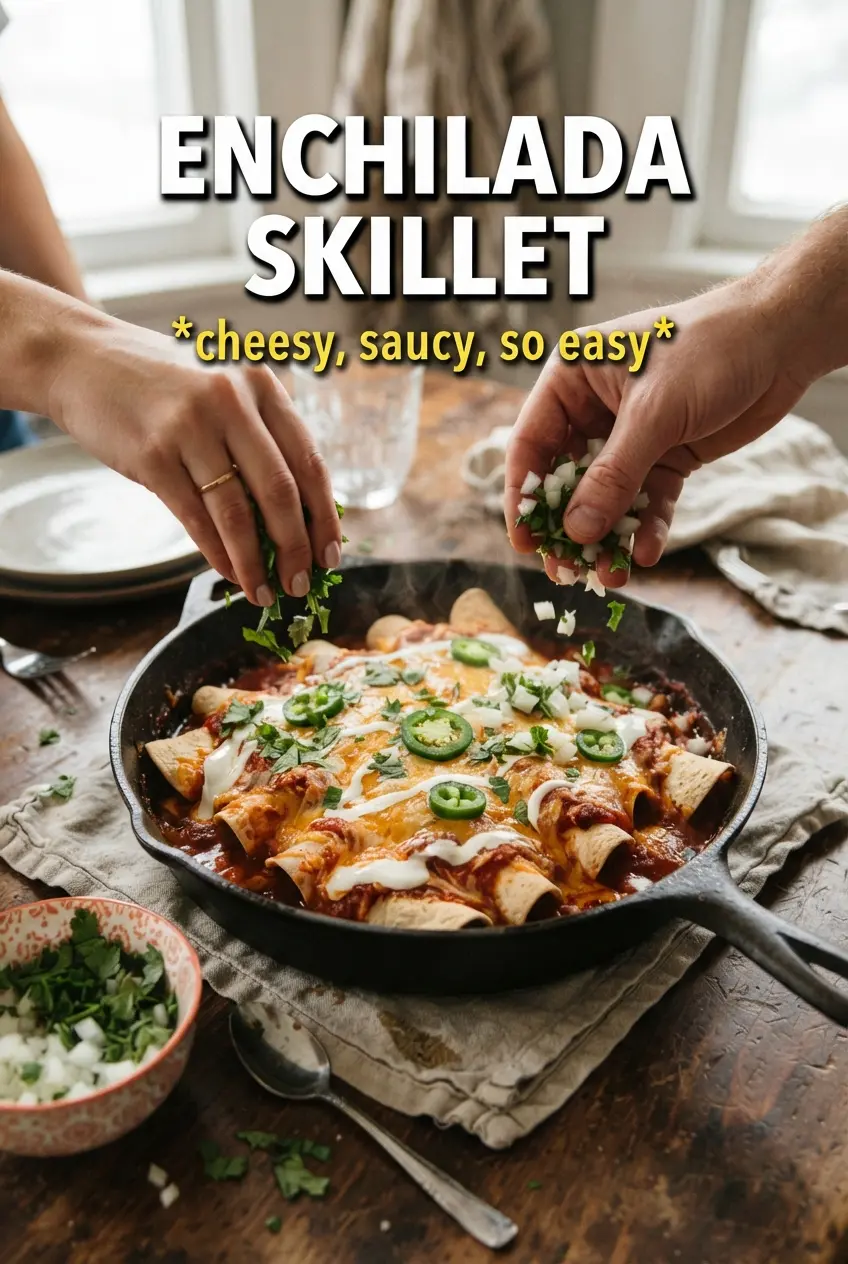
Deep red enchilada sauce, tender tortilla strips, and browned beef come together in one skillet and turn into the kind of dinner that disappears fast. The tortillas soften just enough to thicken the sauce without falling apart, the beans and corn stretch the pan into a full meal, and the melted cheese on top gives it that bubbling, spoonable finish people expect from a good Tex-Mex bake.
The trick is building flavor in stages instead of dumping everything in at once. Browning the beef first gives you a savory base, then the onion and spices cook in the same pan so the cumin and chili powder bloom before the sauce goes in. Once the tortillas hit the skillet, they start soaking up the enchilada sauce and tomato juices, which is what makes this feel hearty instead of soupy.
Below, I’ve included the details that matter most: how to keep the skillet from turning watery, what to swap if you need a different protein, and the reheating method that keeps the tortillas from going gummy.
The tortillas softened perfectly without getting mushy, and the sauce thickened up into this saucy, scoopable skillet dinner. My husband went back for seconds and asked if I could make it again next week.
Save this enchilada skillet for a fast one-pan dinner with saucy beef, tender tortillas, and a golden cheese top.
The Part Most Skillet Enchiladas Get Wrong
The difference between a skillet that eats like enchiladas and one that turns watery is timing. If you add the tortillas too early, they break down before the sauce has a chance to thicken. If you add them too late, they stay chewy and separate from the rest of the pan. The sweet spot is after the sauce has come together with the beef, beans, corn, and tomatoes, then simmered long enough for the liquid to mellow and concentrate.
Another thing that matters here is the pan itself. A wide, heavy skillet gives the sauce enough surface area to reduce and lets the cheese melt into a proper blanket instead of trapping steam. If the mixture looks loose when the tortillas go in, that’s fine; the sauce should still be glossy and spoonable. It will tighten as it simmers and again as the cheese melts.
- Ground beef — Use an 80/20 or 85/15 blend for the best flavor. Leaner beef works, but you’ll lose some richness unless you add a little extra oil while cooking the onion.
- Red enchilada sauce — This carries most of the flavor, so use a brand you already like. If yours tastes flat, a pinch more cumin and a little salt at the end will wake it up.
- Corn tortillas — They soften into the sauce and give the skillet its enchilada feel. Flour tortillas turn pasty here, so stick with corn if you want the right texture.
- Cheddar and mozzarella — Cheddar brings the sharp, savory edge; mozzarella gives you that stretchy melt. You can use all cheddar, but the top will be less silky.
What Each Ingredient Is Actually Doing in This Recipe
- Primary ingredient (the star) — Quality matters most. Choose the best you can find.
- Cooking medium (oil, butter, or broth) — This carries flavors and prevents dryness.
- Seasonings (salt, pepper, spices, herbs) — Layer flavors so nothing overpowers. Build depth gradually.
- Aromatics (garlic, onion, herbs) — Cook with fat to bloom flavors. Become the foundation.
- Supporting ingredients — Complement the main ingredient without overpowering it.
- Sauce or liquid (if applicable) — Brings flavors together. Balance richness with acid.
- Acid (lemon, vinegar, wine, or other) — Brightens and prevents flat-tasting results.
- Final finish (garnish, glaze, or sauce) — Prevents one-dimensional taste and adds visual appeal.
Building the Skillet in the Right Order
Browning the Beef First
Start with a hot skillet and break the beef into small crumbles so it browns instead of steaming. You want some deeper color on the meat before you drain the fat, because that browned fond becomes part of the sauce. If there’s a lot of grease left behind, pour it off before the onion goes in or the finished dish will feel heavy.
Waking Up the Spices
Add the onion and cook it until it turns soft and translucent, then stir in the garlic, cumin, and chili powder. That short minute in the pan matters because dry spices need heat and fat to bloom. If the garlic starts to brown hard or smell sharp, the pan is too hot and you’re past the point where it tastes sweet and round.
Turning It Into a Saucy Fill
When the beans, corn, enchilada sauce, and tomatoes go in, stir until the mixture looks evenly coated and the pan starts to bubble around the edges. This is the point where the skillet should smell rich and tomato-forward, not thin or brothy. Fold in the tortilla strips and press them down so they catch the sauce; that contact is what softens them evenly.
Melting the Top Without Drying the Pan
Let the skillet simmer until the tortillas soften and the sauce thickens around them, then scatter the cheese over the top. Broil just long enough to melt and blister the cheese in spots. If you walk away too long, the top will go from bubbling to dry in a hurry, so keep your eyes on it the whole time.
How to Adapt This Enchilada Skillet
Make It With Ground Turkey
Ground turkey works well if you want a lighter skillet, but it needs help from the seasoning and sauce because it brings less built-in richness than beef. Use the same method, then add a small drizzle of oil with the onion if the pan looks dry. The final dish will still be saucy and satisfying, just a little cleaner and leaner in flavor.
Make It Vegetarian Without Losing Body
Skip the beef and use an extra can of black beans, or add pinto beans for a softer texture. You’ll want to sauté the onion a little longer so the base tastes fuller, and a splash of broth can replace the moisture the meat would have added. The result is a little less hearty, but still filling and deeply savory.
Make It Gluten-Free or Dairy-Free
This dish is already naturally gluten-free if your enchilada sauce is certified GF, and corn tortillas stay right in the safe zone. For dairy-free, skip the cheese on top and finish with avocado, cilantro, and a spoonful of dairy-free sour cream. The skillet will still have plenty of flavor from the beef, sauce, and spices, even without the cheese blanket.
Storage and Reheating
- Refrigerator: Store leftovers in an airtight container for up to 4 days. The tortillas will keep soaking up sauce, so the skillet gets a little thicker by day two.
- Freezer: It freezes well for up to 2 months, though the tortilla texture softens more after thawing. Freeze in portions for the easiest reheating.
- Reheating: Warm gently on the stove over medium-low with a splash of water or broth to loosen the sauce, or microwave in short bursts. The common mistake is blasting it on high heat, which dries out the beef and makes the cheese go oily.
Answers to the Questions Worth Asking
Enchilada Skillet
Ingredients
Equipment
Method
- Brown the ground beef in a large oven-safe skillet over medium-high heat, then drain fat as needed. Visual cue: the beef should lose its pink color and look slightly crumbled.
- Sauté the onion for 3 minutes, then add the garlic, cumin, and chili powder and cook for 1 minute. Visual cue: the onion should soften and the spices should smell toasted.
- Add the black beans, corn, red enchilada sauce, and diced tomatoes, then stir to combine. Visual cue: the mixture should turn a deep red and start bubbling at the edges.
- Fold in the tortilla strips, press them into the sauce, and simmer for 8-10 minutes until the tortillas soften. Visual cue: the strips should look tender and coated with sauce.
- Scatter the shredded cheddar and mozzarella over the top of the skillet. Visual cue: the cheese should form an even layer across the surface.
- Broil for 3-4 minutes until bubbly and golden. Visual cue: the cheese should brown in spots and bubble actively.
- Serve hot with sour cream, avocado, and cilantro. Visual cue: add toppings right before eating for fresh color and contrast.