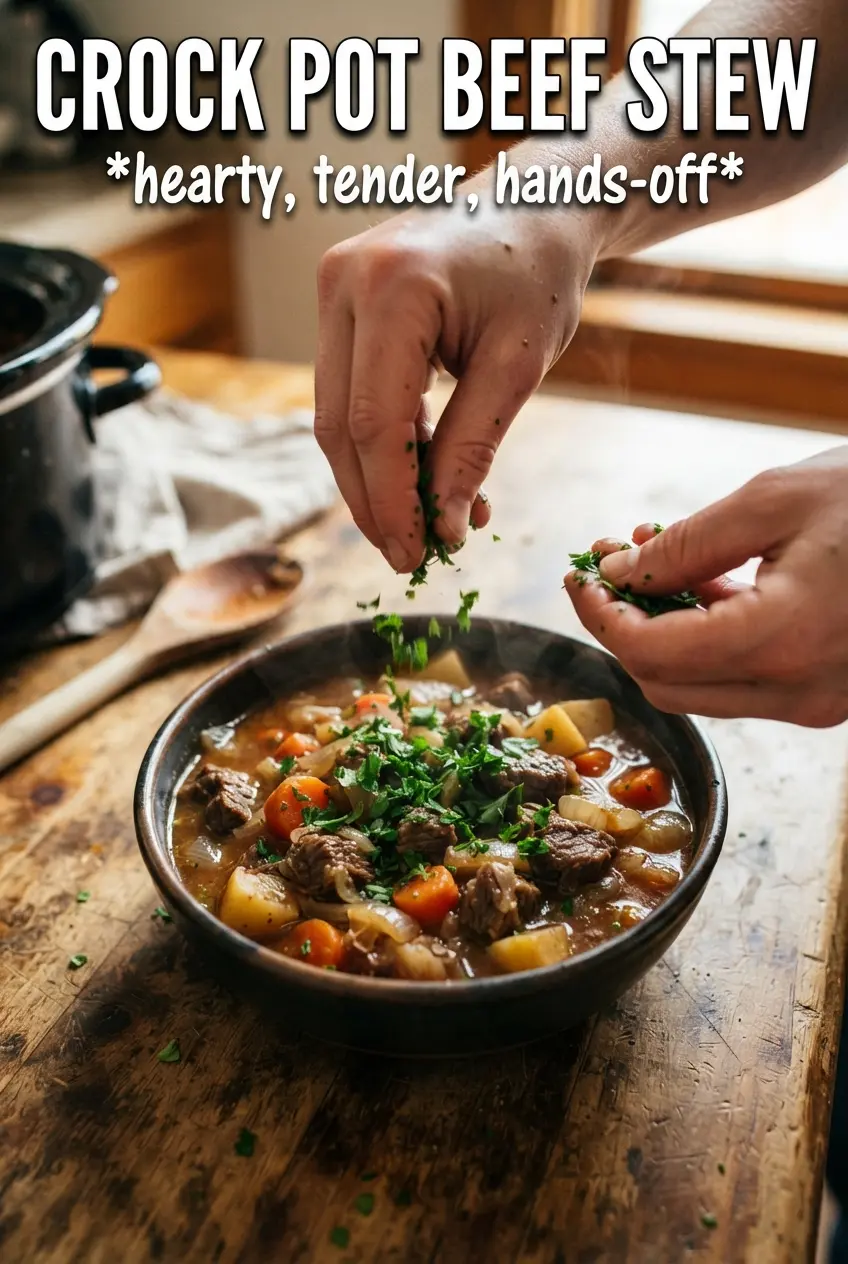
Deep, rich Crock Pot beef stew earns its place in the dinner rotation because it turns a tough cut of beef into spoon-tender chunks without babysitting a pot all afternoon. The broth settles into that dark, savory place that tastes like it cooked for hours, and the vegetables hold just enough shape to give every bite some texture.
The key is layering the ingredients so the vegetables sit low where they can soften in the broth while the beef stays on top and slowly collapses into the liquid. Tomato paste, Worcestershire, and a little red wine build a deeper base than broth alone, and the cornstarch slurry goes in at the end so the stew thickens without turning cloudy or pasty.
You’ll also find the timing cues that matter most here, plus a couple of practical swaps for making this work with what you already have on hand. If you’ve had stew turn out thin, bland, or dry before, this version fixes those problems one by one.
The broth thickened up beautifully at the end and the beef was shredding with a fork after 8 hours on low. I loved that the potatoes held their shape and didn’t get mushy.
Love a stew with deep broth and fall-apart beef? Save this Crock Pot Beef Stew for the nights when you want dinner to cook itself.
The Reason the Beef Stays Tender Instead of Turning Dry
The biggest mistake with slow cooker stew is putting the beef in a way that lets it sit too high and dry out before the liquid has time to do its work. Here, the vegetables form a bed at the bottom, the beef sits above them, and the broth surrounds everything as it cooks. That setup keeps the meat in a moist environment while the connective tissue slowly breaks down into something soft and rich.
Chuck is the cut you want. It has enough fat and collagen to turn silky after a long cook, while leaner stew meat can go stringy if it goes too long. The other thing that matters is not rushing the thickener. If you add cornstarch too early, the stew can tighten up before the vegetables are done and lose that clean, slow-cooked texture.
What Each Ingredient Is Actually Doing in This Stew

- Beef chuck — This is the backbone of the stew. It turns tender and juicy after hours of gentle heat, which is why it beats pre-cut stew meat in both texture and flavor.
- Baby potatoes — Halving them helps them cook through without dissolving. If you use larger potatoes, cut them into chunks that match the beef so everything finishes at the same pace.
- Carrots, celery, and onion — These create the base flavor and give the stew structure. The onion melts into the broth, while the carrots and celery keep enough bite to keep the stew from feeling flat.
- Red wine or extra broth — Wine adds depth and a little acidity that keeps the stew from tasting heavy. If you skip it, use extra broth and add a teaspoon of vinegar at the end if the flavor tastes a little closed in.
- Tomato paste and diced tomatoes — Tomato paste brings concentration and body, while diced tomatoes add a little brightness. They don’t make the stew taste like tomato soup; they just deepen the background.
- Worcestershire sauce — This is the quiet ingredient that makes the broth taste more rounded and savory. There isn’t a perfect substitute, but a little soy sauce and a splash of vinegar can get you close in a pinch.
The 20 Minutes That Set Up the Whole Stew
Seasoning the Beef First
Salt and pepper the beef generously before it goes into the crock pot. That early seasoning matters because the meat has hours to absorb it, and underseasoned beef can taste bland even after a long cook. If the cubes are wet from the package, pat them dry first so the seasoning clings instead of sliding off.
Building the Vegetable Base
Scatter the potatoes, carrots, celery, and onion across the bottom of the slow cooker. This is the part that keeps the stew from turning muddled. The vegetables in the bottom pick up the broth and soften evenly, while the beef above them stays intact long enough to turn fall-apart instead of stringy.
Adding the Broth and Aromatics
Pour in the broth, wine, tomatoes, tomato paste, Worcestershire, thyme, rosemary, and bay leaves. Stir just enough to dissolve the tomato paste and distribute the seasonings without burying the beef completely. The mixture should look loose at this stage; it thickens later, after the starch from the vegetables and the slurry have had time to work.
Finishing with the Thicker Gravy
When the beef breaks apart easily with a fork, pull out the bay leaves and stir in the cornstarch slurry. Cook on High for 20 to 30 minutes so the broth turns glossy and coats the back of a spoon. If the stew looks thin after that, let it go a little longer uncovered instead of adding more slurry all at once, which can make it gluey.
How to Adapt This Stew When You Need a Different Version
Dairy-Free and Naturally Gluten-Free
This stew already lands in a good place for both diets as written, as long as your broth and Worcestershire sauce are certified gluten-free. The cornstarch slurry keeps the gravy thick without flour, so you don’t lose body or richness.
No Wine Version
Use an extra cup of beef broth and stir in 1 teaspoon of red wine vinegar or apple cider vinegar at the end. The stew will still taste deep and savory, but it will lean a little softer and less layered than the wine version.
Make It Heartier
Add a handful of mushrooms or parsnips with the vegetables at the beginning. Mushrooms deepen the savory flavor, while parsnips bring a sweet edge that works well with the tomato and thyme.
Thicker, More Spoonable Gravy
If you like a stew that clings to the potatoes, use an extra tablespoon of cornstarch mixed with cold water. Add it only after the beef is tender, then give it time to come back up to heat so the starch can activate cleanly instead of clumping.
Storage and Reheating
- Refrigerator: Keep in an airtight container for up to 4 days. The broth thickens as it chills, and the potatoes soften a little more overnight.
- Freezer: It freezes well for up to 3 months, though the potatoes will be softer after thawing. Cool completely first and freeze in portions for the best texture.
- Reheating: Warm it gently on the stove or in the microwave with a splash of broth to loosen the gravy. Don’t boil it hard after reheating or the beef can dry out and the potatoes can start breaking apart.
Answers to the Questions Worth Asking
Crock Pot Beef Stew
Ingredients
Equipment
Method
- Season the beef generously with salt and pepper, coating the surface of every cube for deeper flavor.
- Place the potatoes, carrots, celery, and onion in the bottom of the crock pot, then nestle the beef on top so it cooks surrounded by vegetables.
- Add garlic, beef broth, red wine, diced tomatoes, tomato paste, Worcestershire sauce, dried thyme, dried rosemary, and bay leaves to the crock pot.
- Cook on Low for 8-10 hours or High for 4-5 hours until the beef is fall-apart tender.
- Remove the bay leaves, then stir in the cornstarch slurry to thicken the stew.
- Cook on High for 20-30 minutes, stirring once or twice, until the broth thickens and coats the spoon.
- Season with salt and pepper to taste, then serve hot.