Creamy Cajun sausage pasta lands on the table with the kind of heat-and-cream balance that keeps people going back for another forkful. The sauce clings to the penne instead of pooling at the bottom of the bowl, the sausage stays savory and browned, and the peppers bring a little sweetness that keeps the whole dish from feeling heavy.
What makes this version work is the order. The sausage gets browned first, so the pan starts with a layer of flavor right away, and the Cajun seasoning goes into the vegetables for a minute or two before the liquid hits the pan. That step wakes up the spices instead of leaving them flat. The pasta water matters too. A little starch helps the cream and broth turn silky enough to coat the noodles without making the sauce gluey.
Below, I’ll walk through the part most people rush: building the sauce so it stays smooth, not grainy or broken. I’ve also included the swaps that keep this dinner flexible, whether you need a lighter version or just want to use what’s already in the fridge.
The sauce turned out silky and coated every piece of pasta, and the sausage stayed browned even after tossing it back in at the end. I used the full 1/2 cup of pasta water and it made the whole dish come together without getting too thick.
Save this creamy Cajun sausage pasta for nights when you want a bold, one-pan sauce that clings to every bite.
The Trick to Keeping the Sauce Creamy Instead of Greasy
The biggest mistake with Cajun pasta is rushing the cream into a skillet that’s too hot. When the heat is high, the dairy can separate and the sauce starts looking oily instead of smooth. This recipe avoids that by simmering the broth and cream gently after the vegetables soften and the seasoning blooms. That gives the sauce time to thicken without breaking.
The other issue is overloading the pan with too much pasta before the sauce has a chance to cling. Penne works here because the ridges catch the sauce and the shape holds up under a thick cream base. If the pan starts looking tight before everything is coated, the reserved pasta water loosens it just enough to turn glossy again.
- Andouille or smoked sausage — This is where the deepest savory flavor comes from. Andouille gives you a little heat and a smoky finish; smoked sausage is milder but still works well. Slice it on a slight angle so more of the surface browns in the pan.
- Cajun seasoning — This does the heavy lifting for heat, salt, and spice. Different blends vary a lot, so taste before adding extra salt at the end. If yours is salt-heavy, hold back a little until the sauce is finished.
- Heavy cream — This is what gives the sauce body and keeps it from tasting sharp. Half-and-half can work in a pinch, but the sauce will be thinner and more likely to break if you boil it hard.
- Parmesan — Use finely grated parmesan, not big shreds. Fine cheese melts smoothly into the sauce; coarse shreds can stay stringy or turn grainy if the heat is too high.
- Pasta water — Don’t skip this. The starch helps bind the cream, broth, and cheese into one sauce instead of three separate layers. Start with a few tablespoons and add more only if the pasta needs it.
What Each Ingredient Is Actually Doing in This Recipe

- Primary ingredient (the star) — Quality matters most. Choose the best you can find.
- Cooking medium (oil, butter, or broth) — This carries flavors and prevents dryness.
- Seasonings (salt, pepper, spices, herbs) — Layer flavors so nothing overpowers. Build depth gradually.
- Aromatics (garlic, onion, herbs) — Cook with fat to bloom flavors. Become the foundation.
- Supporting ingredients — Complement the main ingredient without overpowering it.
- Sauce or liquid (if applicable) — Brings flavors together. Balance richness with acid.
- Acid (lemon, vinegar, wine, or other) — Brightens and prevents flat-tasting results.
- Final finish (garnish, glaze, or sauce) — Prevents one-dimensional taste and adds visual appeal.
Building the Cajun Base Before the Cream Goes In
Browning the sausage first
Get the sausage into a hot skillet with the butter and let it sit long enough to take on color before stirring. Those browned edges are where the flavor starts. If the pan looks crowded, brown the sausage in two batches so it sears instead of steaming. Once it’s darkened and fragrant, move it out of the skillet so the vegetables can cook in the same seasoned fat.
Softening the vegetables and waking up the spice
Add the onion and bell peppers to the pan and cook them until they’ve softened and picked up a little color around the edges, about 4 to 5 minutes. You want them tender, not mushy. Stir in the garlic and Cajun seasoning and cook for about 2 minutes until it smells warm and a little toasty. If the garlic goes in too early, it can burn before the vegetables are ready.
Finishing the sauce and bringing it all together
Pour in the chicken broth and cream, then let the mixture simmer gently until it thickens enough to coat a spoon. Don’t crank the heat. A steady simmer is enough, and high heat is what causes cream sauces to split. Add the cooked pasta, a splash of pasta water, and the parmesan, then toss until the sauce turns glossy and clings to the noodles. Stir the sausage back in at the end so it stays juicy.
What to Change When You Want a Different Kind of Dinner
Swap in chicken instead of sausage
Use bite-size pieces of boneless chicken thighs or breasts and brown them the same way you would the sausage. You’ll lose some of the smoky sausage flavor, so the Cajun seasoning matters more here. Thighs stay juicier, while breasts cook faster but dry out if they go past opaque in the center.
Make it gluten-free without losing the texture
Use a sturdy gluten-free penne and cook it just to tender, not soft. Gluten-free pasta can break down faster in the sauce, so pull it a minute early and let it finish in the skillet. Keep the pasta water, since that starch helps replace some of the body you’d normally get from wheat pasta.
Dairy-free version with a lighter finish
Swap the cream for full-fat coconut milk and use a dairy-free parmesan-style topping, or leave the cheese out and finish with extra seasoning. The sauce won’t taste identical; it will be a little less rich and a touch sweeter, especially with coconut milk. It still coats the pasta well if you simmer it gently and don’t reduce it too hard.
Make it stretch for a bigger crowd
Add an extra bell pepper, a few more ounces of pasta, and a small splash more broth and cream if you need to feed more people. The sauce should stay loose enough to toss easily; if it gets too tight, pasta water is the fastest fix. Taste at the end, because a bigger batch usually needs a little more seasoning than the original pan.
Storage and Reheating
- Refrigerator: Store in an airtight container for up to 4 days. The sauce will thicken as it chills.
- Freezer: It freezes, but cream sauces can separate a little when thawed. If you freeze it, cool it completely first and thaw overnight in the fridge before reheating.
- Reheating: Warm it slowly in a skillet over low heat with a splash of broth, milk, or water. The common mistake is blasting it in the microwave until the sauce splits and the pasta turns dry.
Answers to the Questions Worth Asking
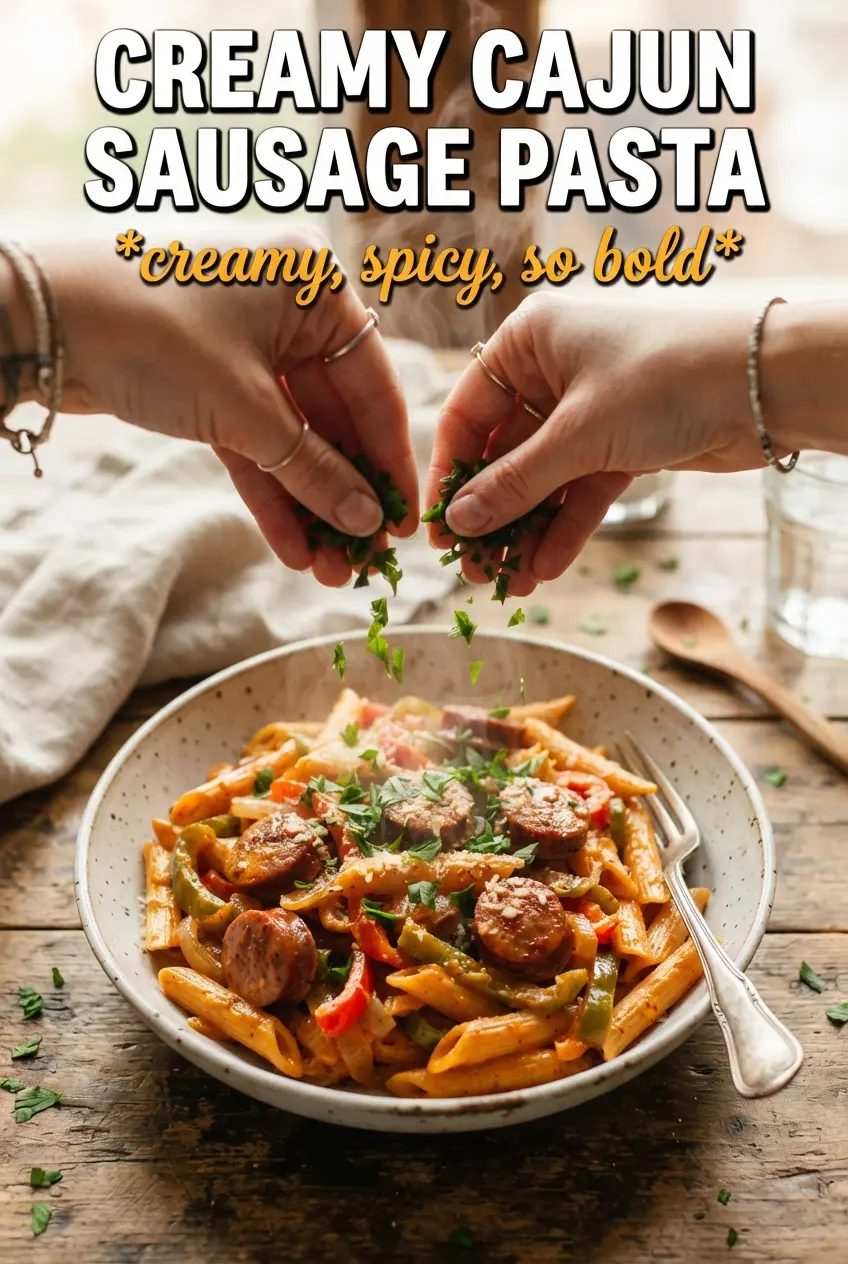
Creamy Cajun Sausage Pasta
Ingredients
Equipment
Method
- Bring a large pot of salted water to a boil and cook the penne until al dente, about 10 minutes. Reserve 1/2 cup pasta water, then drain.
- Heat butter in a large skillet over medium-high heat and brown the andouille or smoked sausage until lightly crisped, about 5-7 minutes. Remove the sausage and set aside.
- In the same skillet, sauté the onion and bell peppers over medium heat for 4-5 minutes until slightly softened. Add the garlic and Cajun seasoning and cook for 2 minutes, stirring to coat.
- Pour in the chicken broth and heavy cream, then simmer over medium heat for 5 minutes until slightly thickened. Stir occasionally to keep the sauce smooth.
- Add the cooked pasta and reserved pasta water, then toss and stir until the sauce clings to the penne. Stir in the parmesan until melted and glossy.
- Return the browned sausage to the skillet and toss to coat. Season with salt to taste.
- Top with green onions and parsley, then serve right away while the sauce is creamy.