Golden, silky sauce clings to every pillow of gnocchi in this bowl, and the sausage gives it enough savoriness to keep the squash from leaning sweet. The fried sage on top isn’t just a garnish. It turns the whole dish from soft and cozy into something with a crisp, fragrant finish that keeps you going back for another forkful.
The trick here is building the sauce in the same skillet where the sausage and sage cooked. That means you pick up flavor from the pan without adding extra steps, and the butter gets perfumed by the sage before the garlic and squash go in. Butternut squash puree can vary a lot in thickness, so the cream helps loosen it into a sauce that coats instead of clumps.
Below you’ll find the exact order that keeps the gnocchi tender, the sauce smooth, and the sage crisp. There are also a few swaps and storage notes worth knowing if you’re making this on a weeknight and want leftovers that still taste good the next day.
The sauce came together so smoothly, and the crispy sage stayed crunchy even after tossing everything with the gnocchi. My husband kept saying the sausage made it taste like something from a restaurant.
Creamy butternut squash gnocchi with sausage and sage is one of those dinners that looks fancy but comes together fast.
The Mistake That Makes Gnocchi Turn Heavy Instead of Silky
Gnocchi can go from tender to gluey fast if it sits too long in a thick sauce on the heat. The move here is to cook it separately and add it at the very end, just long enough to coat it and warm it through. That keeps the dumplings pillowy instead of letting them absorb too much liquid and break down.
The other common problem is a sauce that tastes flat or oddly sweet. Butternut squash needs salt, parmesan, and a little nutmeg to taste complete, and sausage brings the savory edge that keeps the whole dish balanced. If your squash puree is watery, simmer it a few extra minutes before the cheese goes in so the sauce doesn’t turn thin.
What Each Ingredient Is Actually Doing in This Dish
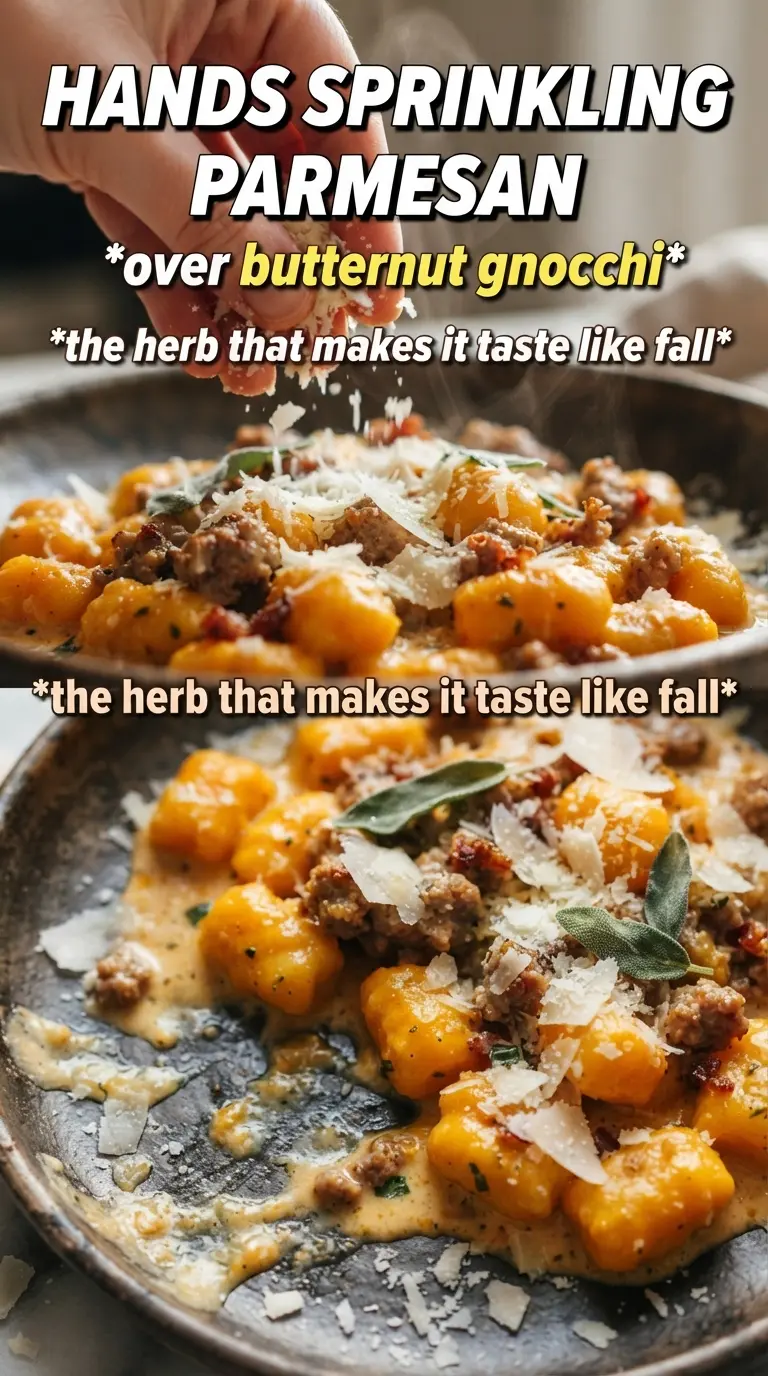
- Potato gnocchi — Shelf-stable or refrigerated gnocchi both work here. They cook quickly and bring the soft, dumpling-like texture that holds the sauce best. If you use homemade gnocchi, boil them gently so they don’t fall apart before they reach the skillet.
- Italian sausage — This is the backbone of the dish. Mild or hot both work; hot sausage adds more heat, while mild keeps the squash front and center. Turkey sausage can be swapped in, but it won’t leave as much fat or as deep a savory finish, so you’ll want to keep the butter in the pan for the sage.
- Butternut squash puree — Roasted squash puree has a deeper, sweeter flavor than canned puree, but canned works in a pinch if it’s plain squash with no added seasoning. If it looks loose, cook it down a little before adding the cream so the sauce doesn’t become watery.
- Heavy cream and parmesan — Cream gives the sauce body, and parmesan sharpens it so the squash doesn’t taste flat. Use finely grated parmesan so it melts smoothly; coarse shreds can turn grainy if the heat is too high.
- Sage, butter, and nutmeg — The butter carries the sage flavor, and frying the leaves first gives you that crisp, aromatic finish. Nutmeg seems small, but it rounds out the squash and cream in a way that tastes complete rather than one-note.
Building the Sauce Before the Gnocchi Goes In
Brown the Sausage First
Cook the sausage until it’s deeply browned and broken into crumbles with crisp edges. That color is flavor, and it gives the finished sauce a richer, meatier base. Drain excess fat if the pan looks greasy, but leave a thin coating behind so the rest of the dish doesn’t taste dry.
Fry the Sage in the Butter
Add the sage leaves to the butter and cook just until they darken and crisp, usually less than a minute. Pull them out as soon as they stop looking soft; if they go too far, they turn bitter fast. The butter should smell nutty and herbaceous, not burned.
Let the Squash and Cream Simmer Together
Stir the garlic into the sage butter for about a minute, just until fragrant, then add the squash puree and cream. Keep the heat at a gentle simmer. If the mixture boils hard, the cream can separate and the sauce loses its smooth finish. Add parmesan, nutmeg, and red pepper flakes after the sauce is hot so the cheese melts instead of clumping.
Finish in the Pan, Not in a Bowl
Cook the gnocchi according to the package directions, then add it straight to the sauce with the sausage. Toss everything together so the sauce coats the gnocchi instead of pooling underneath it. The dish is ready when the sauce looks glossy and thick enough to cling to the dumplings, and the final hit of parmesan and crispy sage goes on right before serving.
What to Change When You Want a Different Version
Make It Dairy-Free Without Losing the Creamy Texture
Use full-fat coconut cream or an unsweetened dairy-free cooking cream in place of heavy cream, then swap the parmesan for a dairy-free parmesan-style topping or a spoonful of nutritional yeast. The sauce won’t taste exactly the same, but it still turns rich and velvety. Keep the heat low, because some dairy-free creams split faster than heavy cream.
Use Vegetarian Sausage for a Meatless Pan Dinner
Swap in your favorite vegetarian sausage and brown it well before making the sauce. You’ll lose some of the drippings that season the pan, so keep the butter and sage step exactly as written to build back that savory base. The finished dish stays hearty, just a little lighter.
Make It Gluten-Free With the Right Gnocchi
Use gluten-free gnocchi and check the package instructions, since cooking times can vary more than regular potato gnocchi. The sauce itself is naturally gluten-free as long as your sausage and parmesan are labeled accordingly. Texture is best when the gnocchi is cooked just until tender and added to the pan right away.
Stretch It for a Bigger Crowd
Add an extra half pound of gnocchi and a splash more cream if you’re feeding more people. The sauce thickens quickly, so a little extra cream keeps it loose enough to coat everything without getting pasty. Use a wide skillet or Dutch oven so you can toss the gnocchi without breaking it up.
Storage and Reheating
- Refrigerator: Store leftovers in an airtight container for up to 3 days. The sauce will thicken as it chills, and the gnocchi will soften a bit more.
- Freezer: Freezing isn’t ideal. The cream sauce can separate and the gnocchi texture gets soft after thawing.
- Reheating: Warm gently in a skillet over low heat with a splash of cream or milk to loosen the sauce. High heat is the mistake that breaks the sauce and makes the gnocchi tough on the outside.
Answers to the Questions Worth Asking
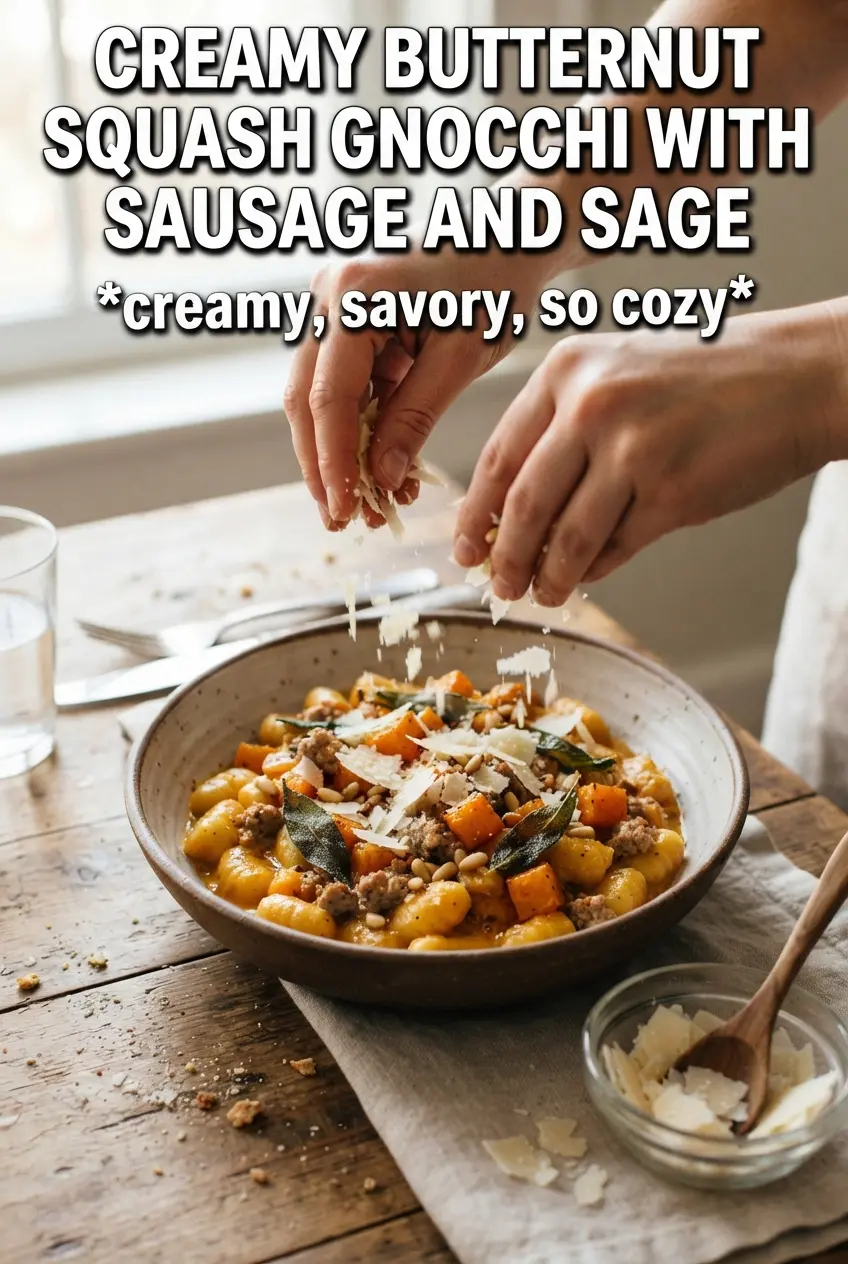
Creamy Butternut Squash Gnocchi With Sausage And Sage
Ingredients
Equipment
Method
- Brown the Italian sausage in a large skillet over medium-high heat until cooked through, then drain off excess fat and set the sausage aside.
- In the same skillet, fry the sage leaves in the unsalted butter over medium heat until crisp and fragrant, then remove and set aside.
- Sauté the garlic in the same butter for 1 minute over medium heat, stirring so it doesn’t brown.
- Add the butternut squash puree and heavy cream, then stir until combined.
- Stir in the parmesan, nutmeg, and red pepper flakes, then simmer for 5 minutes until the sauce is smooth and cohesive.
- Cook the potato gnocchi according to package instructions, then add the gnocchi directly to the sauce.
- Return the sausage to the skillet and toss until the gnocchi is evenly coated.
- Season with salt and pepper to taste, then top with the crispy sage leaves and extra parmesan before serving.