Glossy chicken teriyaki hits the table fast, but the best versions never taste rushed. The chicken stays juicy, the sauce clings in a shiny lacquer instead of pooling at the bottom of the pan, and every bite gets that sweet-salty balance that makes you keep going back for one more forkful. This version earns its place because it cooks quickly without turning the sauce watery or the chicken tough.
The trick is building the sauce in the same skillet after the chicken sears. Those browned bits left behind add depth, and the cornstarch slurry thickens the teriyaki just enough to coat the chicken without turning pasty. Brown sugar gives the sauce body, rice vinegar keeps it from leaning too sweet, and fresh ginger and garlic keep the whole dish tasting sharp and lively instead of flat.
Below, I’ve included the small timing details that matter most, plus a few swaps that actually work when you need to adapt the recipe. If you’ve had teriyaki sauce go thin, sticky, or burnt on the bottom before, the notes here will help you avoid all three.
The sauce thickened up into that perfect glossy coating, and the chicken stayed tender even after tossing it back in. My husband asked if I could put this in the weekly rotation.
Save this chicken teriyaki for a fast skillet dinner with a glossy sauce that coats every bite.
The Secret to Teriyaki That Glazes Instead of Running Thin
Teriyaki sauce fails in two common ways: it either stays watery, or it turns into a sticky mess before the chicken is finished. The fix is simple. Let the soy sauce, sugar, vinegar, sesame oil, garlic, and ginger come to a real simmer first, then add the cornstarch slurry and give it a full minute or two to thicken. If you rush that step, the sauce can taste raw and look cloudy instead of turning smooth and shiny.
Keeping the chicken in bite-sized pieces matters too. Smaller pieces sear quickly, which means less time in the pan and less chance of dried-out chicken. Once the sauce is thick, the chicken only needs a short toss back in the skillet to pick up a full glaze.
What Each Ingredient Is Actually Doing in This Dish
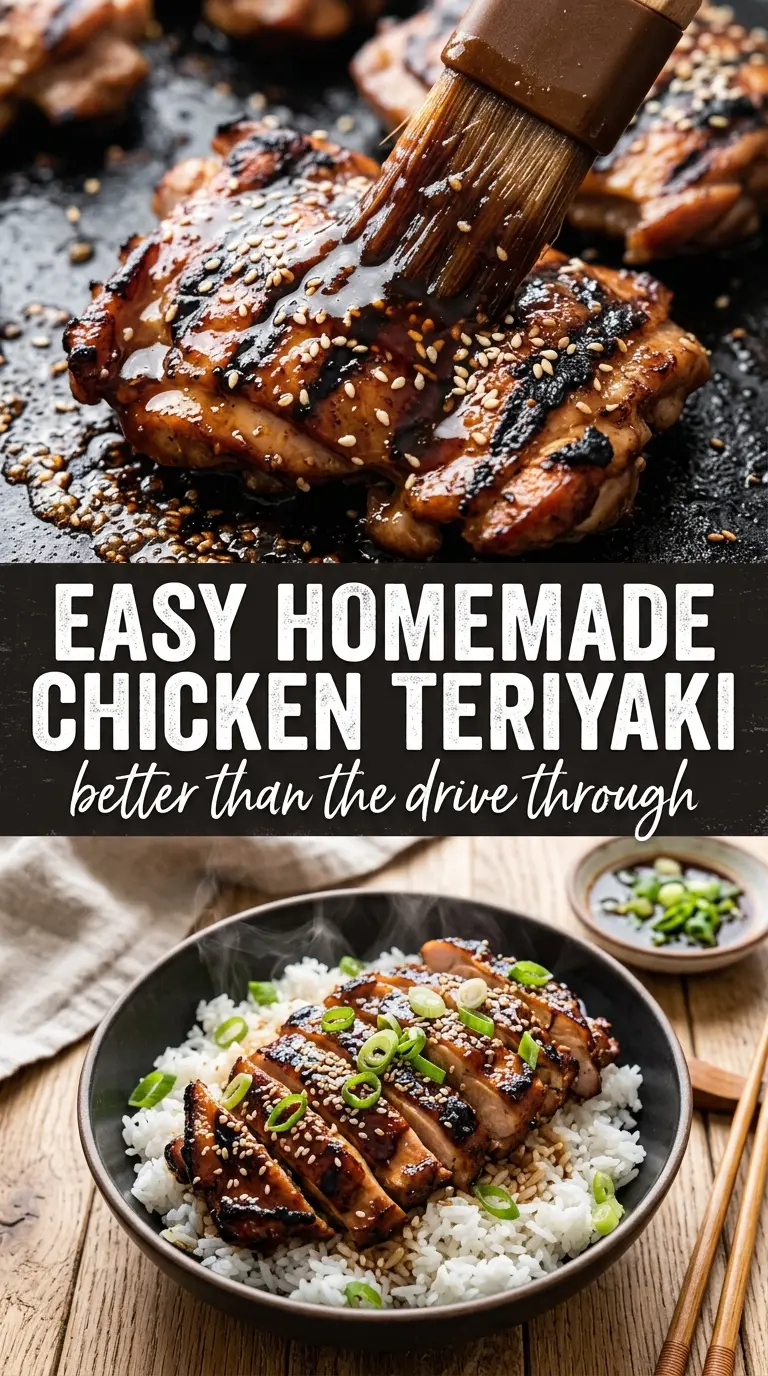
- Boneless, skinless chicken thighs — Thighs stay tender and forgiving under high heat. Chicken breast can work, but it dries out faster and gives you less wiggle room while the sauce finishes.
- Soy sauce — This is the backbone of the teriyaki flavor. Use a standard soy sauce for balance; low-sodium works if that’s what you keep on hand, but the sauce may need a touch more reduction to taste complete.
- Brown sugar — It sweetens the sauce and helps it glaze. White sugar will sweeten in a pinch, but you lose the deeper, molasses-like note that makes the sauce taste rounder.
- Rice vinegar — It keeps the sauce from tasting heavy. If you swap in apple cider vinegar, use a little less because it’s sharper.
- Sesame oil, garlic, and ginger — These are the aromatics that make the sauce taste like more than sweet soy. Fresh ginger and garlic matter here; dried versions won’t give you the same punch.
- Cornstarch slurry — This is what turns the sauce from thin to glossy. Stir it in only after the sauce is simmering, or it can clump and stay chalky.
Building the Glaze in the Same Skillet
Sear the Chicken First
Heat the oil until it shimmers, then add the chicken in a single layer. You want clear browning on the edges and a golden surface, not gray steam. If the pan is crowded, the chicken releases liquid and boils instead of searing, so work in batches if needed. Cook until the pieces are just cooked through, then move them out of the skillet before starting the sauce.
Cook the Sauce Until It Smells Sharp and Sweet
Use the same skillet and pour in the soy sauce, brown sugar, rice vinegar, sesame oil, garlic, and ginger. Scrape up the browned bits as the sauce warms; that’s where a lot of the savory depth comes from. Let it bubble for a minute so the sugar dissolves completely and the raw edge comes off the garlic. If it smells harsh, it needs another minute.
Thicken, Toss, and Finish Fast
Stir in the cornstarch slurry while the sauce is simmering, not before. It should go from loose to glossy and lightly thickened in about a minute or two. Add the chicken back in and toss until every piece is coated, then let it simmer briefly so the glaze clings instead of sliding off. If it gets too thick, a spoonful of water loosens it right back up.
Three Practical Ways to Make This Recipe Fit Your Kitchen
Gluten-Free Version
Swap the soy sauce for tamari or a certified gluten-free soy sauce. The flavor stays close to the original, but tamari tends to taste a little rounder and less sharp. Keep the rest of the recipe the same.
Lower-Sugar Teriyaki
Cut the brown sugar back to 2 tablespoons and simmer the sauce a little longer so it still coats the chicken. The glaze will be less glossy and a little more savory, but it won’t lose the teriyaki character.
Chicken Breast Instead of Thighs
Use bite-sized breast pieces and shorten the sear slightly so they stay juicy. Chicken breast gives a leaner result, but it goes dry faster if you leave it in the pan too long after the sauce thickens.
Extra Vegetables in the Pan
Add broccoli florets, snap peas, or bell peppers after the sauce thickens, then toss them just long enough to glaze. That keeps them crisp instead of soft and lets the sauce coat everything without diluting.
Storage and Reheating
- Refrigerator: Store in an airtight container for up to 4 days. The sauce will thicken more as it chills.
- Freezer: It freezes well for about 2 months. Cool completely, then freeze in portions so the chicken reheats evenly.
- Reheating: Warm gently in a skillet over medium-low heat with a splash of water to loosen the glaze. High heat can make the sauce stick and turn the chicken dry.
Questions I Get Asked About This Recipe

Chicken Teriyaki
Ingredients
Equipment
Method
- Heat 1 tbsp vegetable oil in a large skillet over medium-high heat. Sear the chicken pieces for 5–6 minutes, until golden and cooked through, then remove and set aside.
- In the same skillet, combine the soy sauce, brown sugar, rice vinegar, sesame oil, garlic, and ginger. Bring to a simmer until the sugar dissolves and the mixture is fragrant.
- Stir in the cornstarch slurry and continue cooking for 1–2 minutes. Cook until the sauce thickens and turns glossy.
- Return the chicken to the skillet and toss to coat evenly in the sauce. Make sure the pieces are fully covered before moving on.
- Simmer for 1–2 more minutes until the chicken is well glazed. Keep the sauce lightly bubbling so it clings to the chicken.
- Garnish with green onions and sesame seeds, then serve over rice. The garnish adds fresh color and a nutty finish.