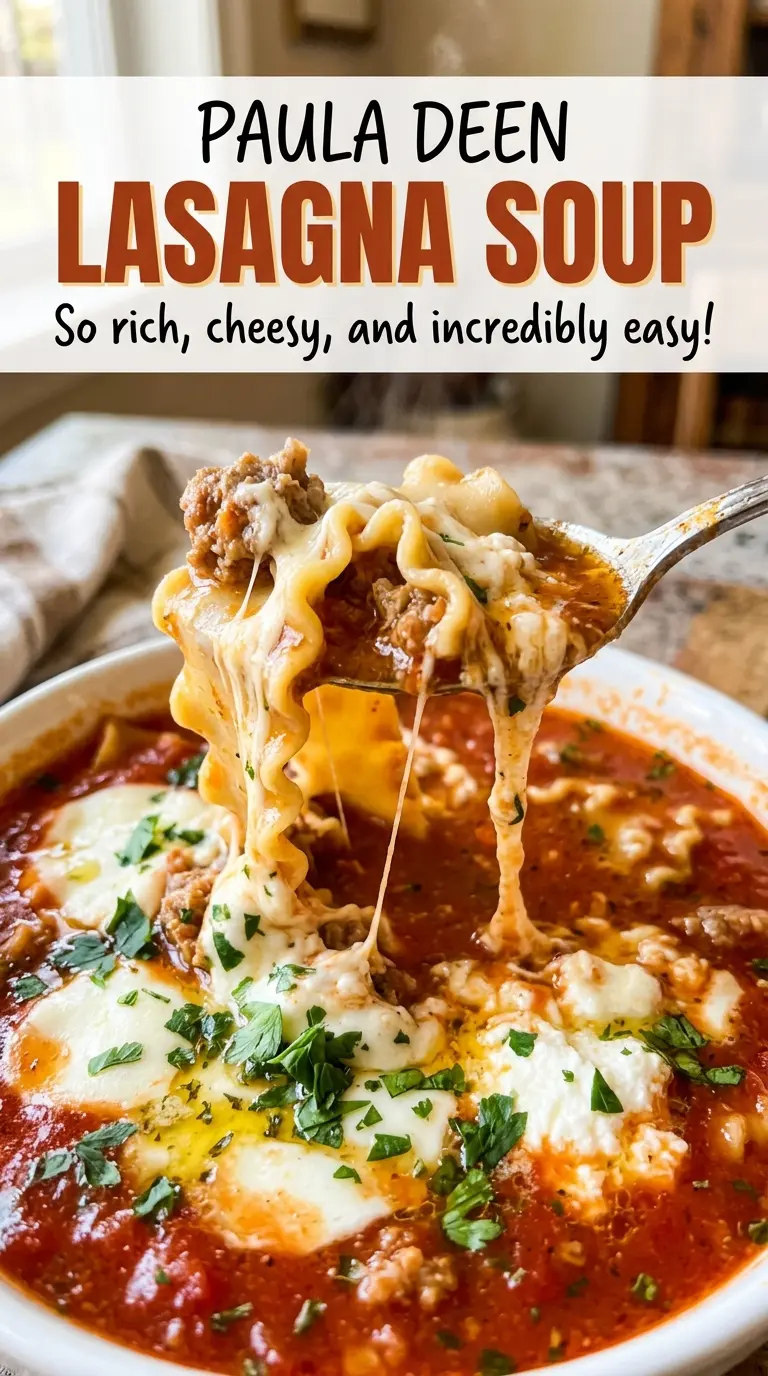
Paula Deen lasagna soup brings all the comfort of baked lasagna into one pot, and the best part is how the broth turns rich and tomatoey while the noodles soften just enough to feel hearty without going mushy. The sausage and beef give it a deep, savory base, and the cheese topping melts into the bowl in the same way a bubbling pan of lasagna gives you those creamy, stretchy bites at the top.
What makes this version work is the balance between indulgent and practical. Butter goes in at the start, which gives the meat a little richness before the tomatoes and broth join the pot. Tomato paste cooks with the garlic long enough to lose that raw edge, and the broken noodles simmer right in the soup so they pick up flavor instead of tasting like plain pasta dropped at the end.
Below, I’ve included the little details that matter most: how to keep the noodles from overcooking, how to build the cheese topping so it stays luxuriously thick, and what to adjust if you want a slightly lighter bowl without losing the character of the dish.
The broth got rich and tomatoey without being heavy, and the broken noodles held their shape perfectly. I loved how the ricotta and mozzarella melted into the soup instead of disappearing into it.
Save this Paula Deen lasagna soup for the nights when you want all the comfort of lasagna without layering a pan.
The Secret to Lasagna Soup That Tastes Rich, Not Thin
A good lasagna soup needs more than tomato broth with noodles floating in it. The flavor has to build in layers, which is why the meat gets browned first and the tomato paste gets a little time in the pot before the liquid goes in. That quick step changes the whole bowl. It gives the soup a deeper, cooked tomato flavor instead of a sharp, canned edge.
The other thing that keeps this from tasting flat is the fat. Butter and sausage bring richness right from the start, and that matters because soup can lose body fast once the broth is added. If yours ever tastes watery, the problem is usually not the noodles — it’s that the base never got enough time to concentrate before the liquid went in.
What Each Ingredient Is Actually Doing in This Bowl
- Italian sausage — This brings seasoning, fat, and a little fennel note that makes the soup taste like lasagna right away. If you use mild sausage, the broth stays balanced; if you use hot sausage, expect a little more bite.
- Ground beef — Beef makes the soup meatier and grounds the sweetness of the tomatoes. You can use all sausage if that’s what you have, but the mix gives a better, rounder flavor.
- Butter — It sounds small, but it’s part of what makes this soup feel indulgent. The butter carries the aromatics and softens the edges of the tomato base.
- Tomato paste — This is where the depth comes from. Cook it with the garlic long enough to darken slightly and smell sweet, not raw, or the soup will taste sharper than it should.
- Crushed tomatoes and diced tomatoes — The crushed tomatoes create the body of the broth, while the diced tomatoes leave some texture. If you only have crushed tomatoes, the soup will still work; it will just be a little smoother.
- Lasagna noodles — Broken noodles give you the right texture without needing a separate pot. Add them only when the soup is at a steady simmer, or they’ll turn soft before the broth has time to taste finished.
- Ricotta, mozzarella, and parmesan — The cheese topping is what makes the bowl feel like lasagna instead of pasta soup. Whole milk ricotta gives the best creamy texture, and shredded mozzarella melts into the hot soup instead of disappearing.
Building the Broth Before the Noodles Go In
Browning the Meat
Start with the sausage, beef, and butter in a large pot and cook until the meat loses its pink color and the edges pick up some browning. That little bit of color matters because it gives the broth a savory backbone. If the pan looks crowded and the meat steams instead of browns, let it cook a few extra minutes before stirring too much. Drain off excess fat so the finished soup stays rich instead of greasy.
Softening the Onion and Toasting the Tomato Paste
Add the diced onion to the pot and cook it for about four minutes, just until it turns soft and translucent. Then stir in the garlic and tomato paste and cook for another two minutes. The garlic should smell fragrant, not burnt, and the paste should darken a shade as it cooks. If the garlic goes in too early or the heat is too high, it can turn bitter and take over the whole pot.
Simmering the Soup Base
Pour in the crushed tomatoes, diced tomatoes, broth, Italian seasoning, and dried basil, then bring the pot up to a boil before lowering it to a simmer. Let that base cook together for a few minutes before the noodles go in so the broth tastes connected instead of separate. This is where the soup starts to smell like lasagna filling. If the heat is too high from the start, the tomatoes can taste harsh instead of mellow and rich.
Cooking the Noodles to the Right Bite
Add the broken lasagna noodles and simmer until they’re tender, usually 10 to 12 minutes. Stir often enough that nothing sticks to the bottom, especially once the pasta starts to soften and release starch. Stop cooking when the noodles are tender but still hold their shape, because they’ll keep softening in the hot broth as they sit. If you cook them until they’re completely soft in the pot, they can turn bloated and mushy by the time you serve dinner.
Finishing With the Cheese Topping
Mix the ricotta, mozzarella, parmesan, and fresh basil together, then ladle the soup into bowls and top each one with a generous spoonful. The hot broth will loosen the cheese just enough so it melts into creamy ribbons instead of sinking away. Use more than you think you need. This topping is what gives the soup its lasagna character, and a skimpy spoonful won’t give you the same result.
Three Ways to Tweak This Soup Without Losing the Point
Make it a little lighter
Use leaner ground beef and drain the meat well before adding the onion. You can also cut the butter back slightly, but don’t skip it completely unless you want the broth to taste flatter. The soup will still be hearty, just a touch less rich.
Make it gluten-free
Swap in your favorite gluten-free lasagna-style pasta and cook it only until just tender. Gluten-free noodles can soften fast and lose their shape if they sit too long in the broth, so check them a minute early. The soup base itself is already naturally gluten-free as long as your broth is safe.
Make it extra creamy
Stir a spoonful of ricotta directly into each bowl before adding the topping. That gives you a thicker, silkier broth that leans closer to the creamy side of baked lasagna. Don’t add dairy to the pot over high heat or it can separate instead of melting in smoothly.
Storage and Reheating
- Refrigerator: Store in an airtight container for up to 4 days. The noodles will keep absorbing broth, so expect the soup to thicken.
- Freezer: It freezes, but the pasta softens after thawing. For the best texture, freeze the soup base without noodles and add fresh noodles when reheating.
- Reheating: Warm it gently on the stove over medium-low heat with a splash of broth or water. The most common mistake is boiling it hard, which pushes the noodles past tender and can make the cheese topping separate.
Answers to the Questions Worth Asking

Paula Deen Lasagna Soup
Ingredients
Equipment
Method
- Heat a large Dutch oven and brown the Italian sausage and ground beef together in the 4 tablespoons unsalted butter, then drain excess fat.
- Sauté the diced onion for 4 minutes, then add the minced garlic and tomato paste and cook for 2 minutes.
- Add the crushed tomatoes, diced tomatoes, chicken broth, Italian seasoning, and dried basil, then bring the mixture to a boil.
- Add the broken lasagna noodles and simmer 10-12 minutes, stirring occasionally, until the noodles are tender.
- Season generously with salt and pepper.
- Mix the whole milk ricotta, shredded mozzarella, parmesan, and fresh basil to create the cheese topping.
- Ladle the soup into bowls and top each with a very large, heaping spoonful of the cheese mixture.