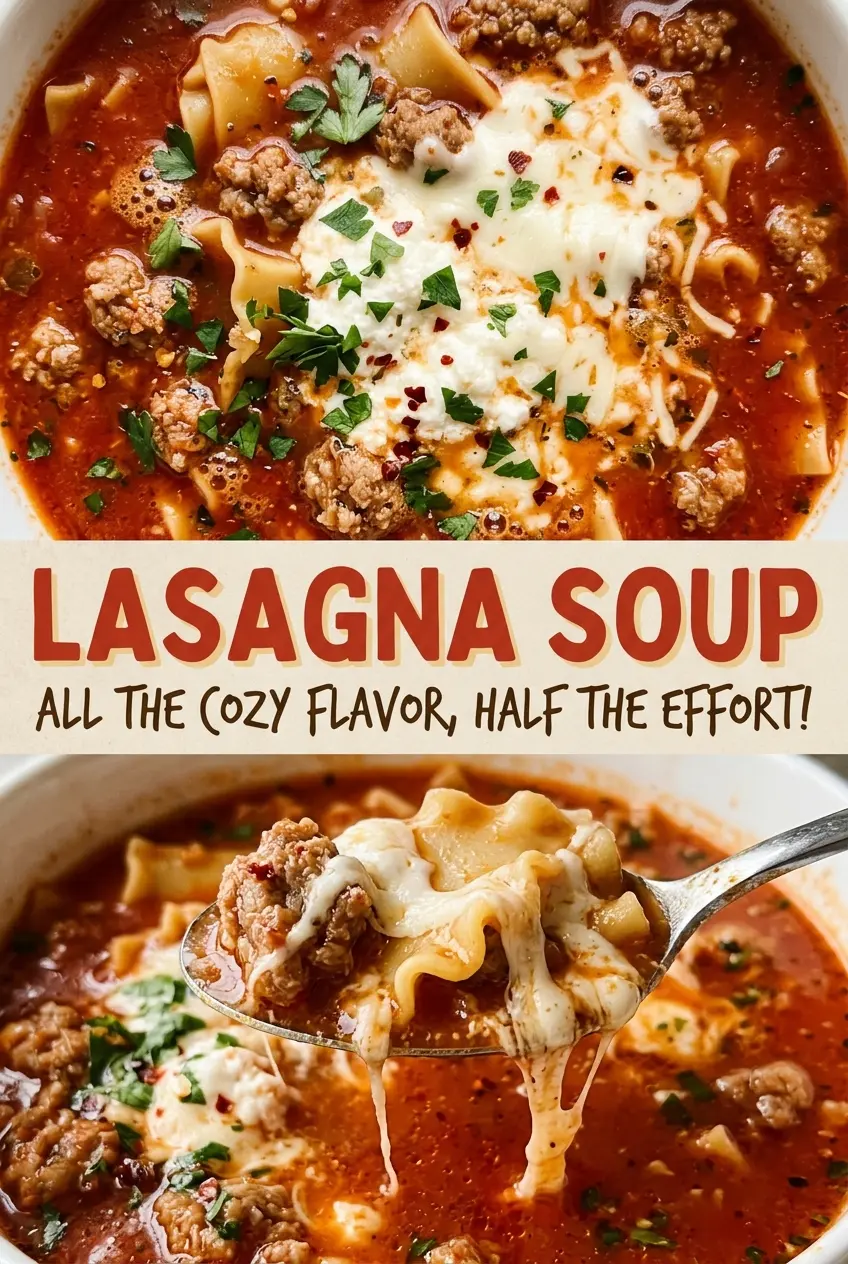
Lasagna soup gives you everything people love about a baked pan of lasagna without the layering, waiting, or cleanup. The broth is rich and tomato-forward, the noodles turn tender and silky, and the sausage brings enough depth that every spoonful tastes complete. The best part is the cheese dollop melting into the center of the bowl. It gives you that creamy, stretchy finish you want from lasagna, but in a format that lands on the table fast.
This version works because the tomato paste gets cooked before the liquid goes in, which keeps the broth from tasting flat or tinny. The sausage builds the base, the onions soften in the drippings, and the broken noodles cook right in the soup so they pick up flavor instead of getting boiled separately and added at the end. That one choice makes the texture better and the broth thicker without needing a roux or extra cream.
Below, I’ve included the details that matter most: how to keep the noodles from going mushy, why the cheese mixture should be stirred together just before serving, and what to change if you want a lighter bowl or need to make it dairy-free.
The broth was rich and thick, and the broken noodles stayed tender without turning to mush. The ricotta-mozzarella topping melted into the soup just enough to make every bowl taste like actual lasagna.
Pin this lasagna soup for nights when you want all the comfort of lasagna with a faster, one-pot finish.
The Reason Lasagna Soup Stays Brothy Instead of Turning Heavy
The biggest mistake with lasagna soup is treating it like a casserole in liquid form. If you dump everything in at once and let it simmer too long, the noodles go soft, the broth turns gluey, and the tomato base loses its brightness. This version keeps the body of the soup controlled by building flavor first, then cooking the pasta only until it’s tender.
Tomato paste is the quiet detail that changes the whole pot. Cooking it for a minute or two before adding the broth deepens the flavor and rounds out the acidity, which matters because lasagna soup depends on a clean tomato broth rather than a heavy, creamy one. The sausage also does a lot of work here. Once it browns, those bits on the bottom of the pan become part of the soup, which gives you the savory backbone that makes the bowl taste finished.
If the soup tastes thin, it usually means the tomato paste didn’t cook long enough or the seasoning was added too late. If it tastes dull, the fix is almost always a little more salt and a longer simmer after the noodles go in, not more cheese on top.
What Each Ingredient Is Actually Doing in This Bowl

- Italian sausage — This gives the soup its savory base and enough fat to carry the aromatics. Mild sausage keeps the bowl balanced, while hot sausage adds more heat than the red pepper flakes alone.
- Onion and garlic — These build the backbone of the broth after the sausage browns. Let the onion soften in the drippings before the garlic goes in, or the garlic can scorch and turn bitter.
- Tomato paste — This is what deepens the broth and gives it that cooked-all-day flavor in only a few minutes. Let it darken in the pot before adding liquid; that short step removes the raw tomato edge.
- Crushed tomatoes and diced tomatoes — The crushed tomatoes create the body of the broth, while the diced tomatoes leave a little texture so the soup doesn’t feel smooth or flat. If all you have is crushed tomatoes, use them, but the soup will be a little more uniform.
- Lasagna noodles — Broken noodles are what make the dish read as lasagna soup instead of just tomato soup with pasta. Break them into rough pieces, not tiny shards, so they hold up during simmering.
- Ricotta, mozzarella, parmesan, and basil — This topping replaces the layered cheese filling from baked lasagna. Ricotta gives the creamy center, mozzarella adds stretch, parmesan sharpens the flavor, and basil keeps it from tasting heavy.
How to Build the Bowl So the Noodles Stay Tender
Brown the Sausage First
Start with the sausage in a large pot over medium-high heat and break it into small crumbles as it cooks. You want browned edges, not pale meat simmering in its own moisture. If the pot fills with liquid, keep cooking until it evaporates and the sausage starts to sizzle again. That browning is where the flavor starts, and draining off excess fat keeps the finished broth from feeling greasy.
Cook the Tomato Paste Until It Changes Color
Add the onion to the same pot and cook it until soft, then stir in the garlic for just a minute. The tomato paste goes in after that, and it needs a full minute or two in the hot pot to darken and smell sweeter. If you add the broth too early, the paste stays raw-tasting and the soup can come across sharp instead of rich.
Simmer the Noodles in the Broth, Not a Separate Pot
Once the tomatoes, broth, and seasonings come in, bring the pot to a boil, then add the broken noodles and drop the heat to a simmer. Stir occasionally so they don’t stick to the bottom, but don’t keep the soup at a hard boil or the noodles will tear apart before they’re tender. They’re done when they’re soft with a little bite in the center. Pull the pot from the heat as soon as they get there, because they’ll keep absorbing liquid while they sit.
Top Each Bowl at the Last Minute
Mix the ricotta, mozzarella, parmesan, and basil together in a bowl before serving. Ladle the soup into bowls and add a generous spoonful on top so it softens into the broth instead of disappearing into the pot. If you stir the cheese into the whole batch, the texture gets muddy and the noodles keep soaking up liquid while it sits. Served in the bowl, it stays creamy and distinct.
Three Ways to Adjust This for What You Have on Hand
Make It Lighter Without Losing the Lasagna Feel
Use turkey Italian sausage instead of pork sausage. You’ll lose a little richness, but the broth still carries enough flavor because the tomatoes, herbs, and cheese topping do the rest of the work. If the soup tastes a bit leaner at the end, add an extra pinch of salt and a little more parmesan rather than trying to compensate with more broth.
Dairy-Free Version
Skip the cheese topping and finish each bowl with a spoonful of dairy-free ricotta or a drizzle of good olive oil. The soup itself is already built on tomato, sausage, and herbs, so you’re not rewriting the whole recipe. What you lose is the creamy lasagna-style finish, but the bowl still reads as hearty and complete.
Gluten-Free Swap
Use gluten-free lasagna noodles or another sturdy gluten-free pasta cut into pieces. Gluten-free pasta can go from tender to mushy fast, so start checking it a few minutes early and keep the soup at a gentle simmer. If you plan on leftovers, store the pasta separately so it doesn’t absorb the broth overnight.
Storage and Reheating
- Refrigerator: Store for up to 4 days. The noodles will keep absorbing broth, so expect the soup to thicken.
- Freezer: Freeze the soup without the noodles if you can. Pasta gets soft after thawing, so cook fresh noodles when you reheat for the best texture.
- Reheating: Warm it gently on the stove over medium-low heat with a splash of broth or water. A hard boil will overcook the noodles and can break the tomato broth’s texture.
Answers to the Questions Worth Asking
Lasagna Soup
Ingredients
Equipment
Method
- Heat a large pot over medium-high heat and brown the Italian sausage, breaking it into crumbles, until no longer pink and the texture looks crumbly (about 0-10 minutes). Drain excess fat and keep the browned sausage in the pot.
- Add the diced onion to the same pot and sauté until softened, about 4 minutes (stir often so it turns translucent).
- Stir in the minced garlic and cook for 1 minute until fragrant (about 1 minute, no browning).
- Mix in the tomato paste and cook 1-2 minutes until it darkens slightly (stir constantly for even color).
- Add the crushed tomatoes, diced tomatoes, broth, Italian seasoning, dried basil, and red pepper flakes, then bring the mixture to a boil (watch for steady bubbling across the surface).
- Add the broken lasagna noodles and simmer 10-12 minutes until the noodles are tender (liquid should actively bubble).
- Season with salt and pepper to taste, then stir well so the seasoning disappears into the broth.
- Mix the ricotta, shredded mozzarella, parmesan, and fresh basil together until combined into a thick, scoopable mixture (look for an even marbled texture).
- Ladle the soup into bowls and top each with a generous dollop of the cheese mixture so it begins to melt in the center (finish with fresh basil on top if desired).