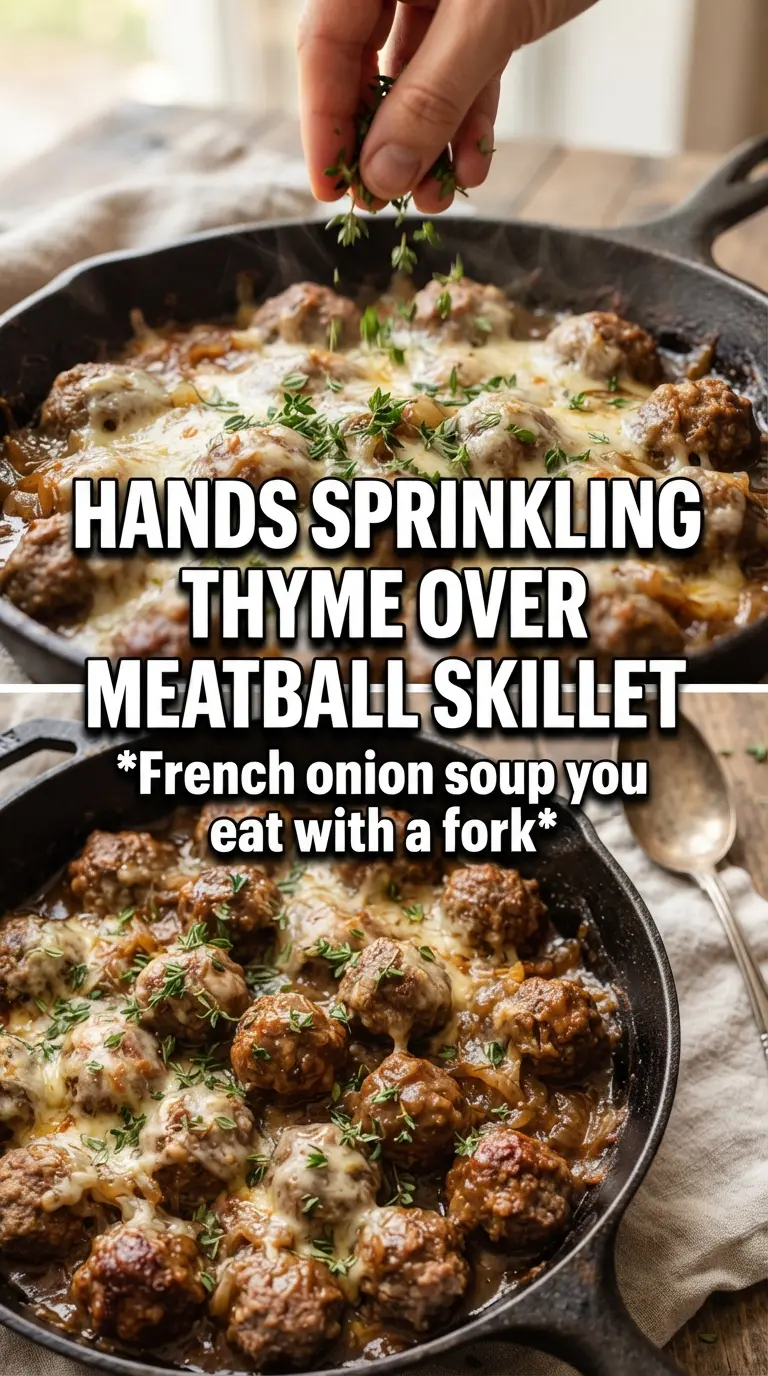
Deeply caramelized onions turn this skillet into something bigger than a weeknight meatball dinner. The broth goes glossy and savory, the meatballs stay tender, and the Gruyere melts into a browned, bubbly lid that pulls everything together. It eats like French onion soup that finally decided to become a full meal.
What makes this version work is patience at two key points: the onions need enough time to lose their raw bite and become jammy and sweet, and the meatballs need a quick brown before they finish in the sauce. Browning first gives you a better crust and leaves behind flavor in the pan, which means the sauce starts with those good browned bits instead of a blank skillet.
Below, I’ve included the small things that matter here, like how dark the onions should get before you stop stirring them and how to broil the cheese without turning the top bitter. Those details are what keep this skillet rich instead of muddy.
The onions took their time, but they cooked down into that sweet, deep brown base I was hoping for. The Gruyere melted beautifully over the meatballs and the sauce thickened just enough to spoon over rice.
Save this French Onion Meatball Skillet for the nights when you want a cozy skillet dinner with caramelized onions and melted Gruyere.
The Difference Between Sweet Onions and Burned Ones
The onions are the backbone of this skillet, and this is where most people rush. At first they’ll look like too much for one pan, then they collapse and shrink, then they finally start taking on color. That last stage is what you want. If they still taste sharp, the sauce will taste flat and oniony instead of rich and almost jammy.
Use medium-low heat and give them the full time. If the pan starts looking dry before the onions are done, a small splash of water loosens the browned bits and keeps them from scorching. The goal is a deep amber color with edges that look soft and silky, not blackened or crisp.
- Beef: A regular ground beef with some fat gives the meatballs better flavor and keeps them from drying out. Very lean beef works, but the texture gets firmer and less juicy.
- Breadcrumbs and egg: These hold the meatballs together and keep them tender. If you need a gluten-free swap, use gluten-free breadcrumbs in the same amount.
- Gruyere: This is the cheese that gives the dish its French onion character. Swiss will work in a pinch, but Gruyere melts creamier and tastes a little nuttier and deeper.
- Dry white wine: It lifts the browned bits off the pan and adds brightness to the onion base. If you don’t cook with wine, use a little extra broth plus a squeeze of lemon at the end to wake up the sauce.
What Each Ingredient Is Actually Doing in This Recipe
- Primary ingredient (the star) — Quality matters most. Choose the best you can find.
- Cooking medium (oil, butter, or broth) — This carries flavors and prevents dryness.
- Seasonings (salt, pepper, spices, herbs) — Layer flavors so nothing overpowers. Build depth gradually.
- Aromatics (garlic, onion, herbs) — Cook with fat to bloom flavors. Become the foundation.
- Supporting ingredients — Complement the main ingredient without overpowering it.
- Sauce or liquid (if applicable) — Brings flavors together. Balance richness with acid.
- Acid (lemon, vinegar, wine, or other) — Brightens and prevents flat-tasting results.
- Final finish (garnish, glaze, or sauce) — Prevents one-dimensional taste and adds visual appeal.
Building the Skillet in the Right Order
Brown the Meatballs First
Mix the meatball ingredients just until combined, then roll them into even portions so they cook at the same rate. Brown them in the butter until you get color on at least two sides; they do not need to cook through yet. If you crowd the pan, they’ll steam and lose that browned flavor, so work in batches if needed. Pull them out once they’re seared so they don’t overcook while the onions go in.
Caramelize the Onions Slowly
Add the sliced onions to the same skillet and let them cook down over medium-low heat, stirring often enough to keep them from catching but not so much that they can’t brown. This stage takes the longest, and that’s the point. When they’re ready, they should be dark gold to brown, soft, and sweet with no raw crunch left. Stir in the garlic and thyme near the end so the garlic doesn’t burn before the wine goes in.
Build the Sauce and Finish Under the Broiler
Deglaze with the wine and scrape the pan clean, then add the broth and Worcestershire and let the sauce simmer until it looks slightly reduced. Nestle the meatballs back in so they finish cooking in the onion broth and pick up flavor as they warm through. Scatter the Gruyere over the top and broil just until it melts and browns in spots. If you walk away for even a minute here, the cheese can go from bubbling to scorched, so stay close to the oven.
How to Adapt This for Different Tables
Gluten-Free Meatballs That Still Hold Together
Swap the breadcrumbs for a gluten-free version in the same amount. The texture stays close to the original as long as you don’t overmix the meat, which is what turns meatballs dense instead of tender.
Dairy-Free Version With a Little Less Richness
Use olive oil instead of butter to brown the meatballs and soften the onions, then skip the Gruyere or finish with a dairy-free melting cheese. You’ll lose some of the classic French onion flavor, but the caramelized onions and broth still carry the dish.
A Lighter Meatball With Ground Turkey
Ground turkey works if you want a lighter skillet, but it needs the breadcrumb and egg mixture to stay tender. The flavor will be a little milder, so the onions and cheese matter even more here.
Storage and Reheating
- Refrigerator: Store in an airtight container for up to 4 days. The onions will thicken and the meatballs will absorb more sauce as it sits.
- Freezer: This freezes well without the cheese topping. Cool completely, freeze in portions, and add fresh Gruyere after reheating if you want the best texture.
- Reheating: Reheat gently on the stovetop over low heat with a splash of broth to loosen the sauce. High heat can tighten the meatballs and break the onion base.
Answers to the Questions Worth Asking
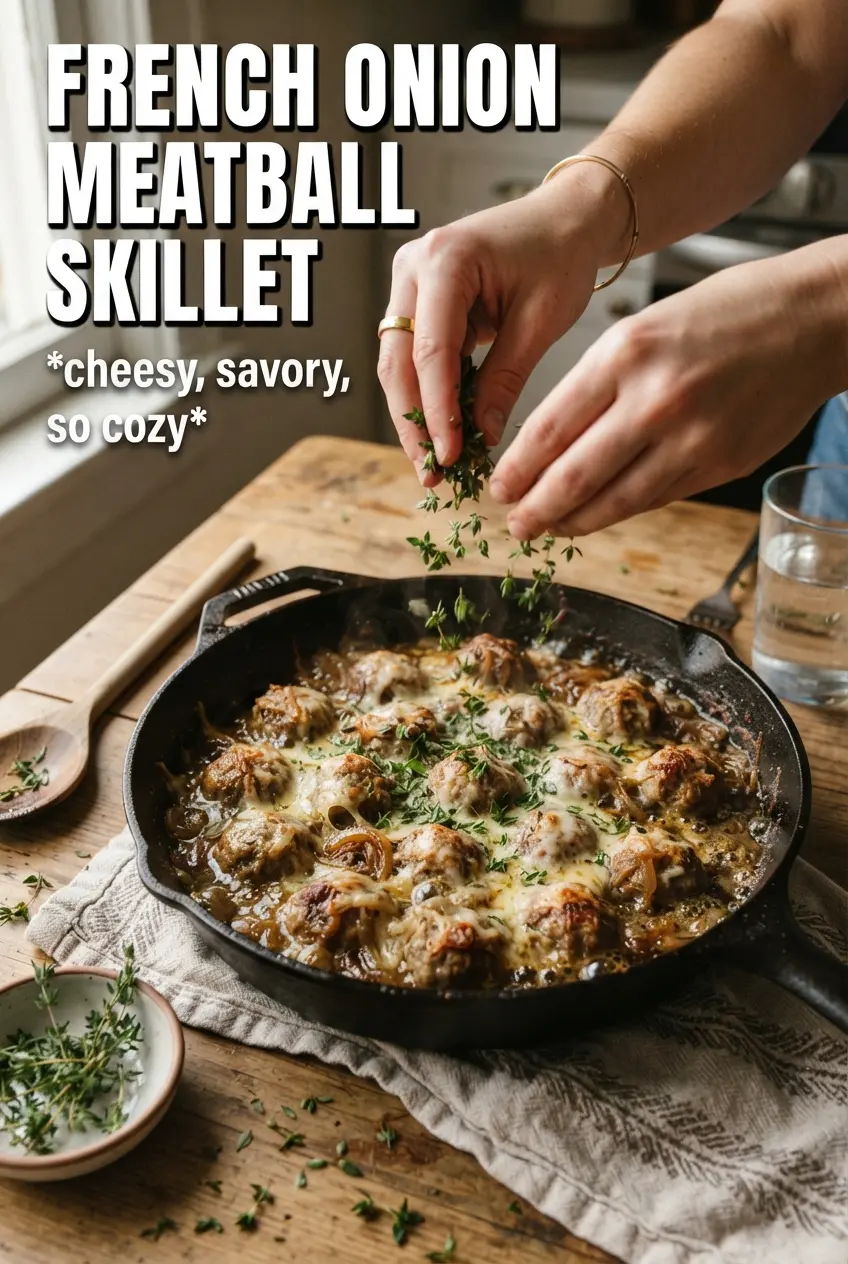
French Onion Meatball Skillet
Ingredients
Equipment
Method
- Mix ground beef, breadcrumbs, egg, Worcestershire, garlic powder, salt, and black pepper until just combined. Roll into meatballs, keeping them roughly even for consistent browning.
- Heat butter in an oven-safe cast iron skillet over medium-high heat. Brown the meatballs in the skillet, then remove them to a plate.
- Add the sliced onions to the same skillet and cook over medium-low heat for 30-35 minutes until deeply caramelized. Stir occasionally so the onions soften and turn dark golden.
- Add minced garlic and fresh thyme to the caramelized onions and stir for about 30-60 seconds until fragrant. Keep the heat at medium-low to avoid scorching.
- Deglaze the skillet with the dry white wine, scraping up the browned bits from the bottom. Cook until the wine is reduced slightly.
- Stir in beef broth and Worcestershire, then bring the mixture to a gentle simmer. Season with salt and black pepper to taste.
- Nestle the browned meatballs into the caramelized onion sauce so they’re partially submerged. Simmer for 10 minutes to warm through and marry the flavors.
- Scatter the shredded Gruyère over the entire surface of the skillet. Broil at high heat for 3-5 minutes until golden and bubbly.