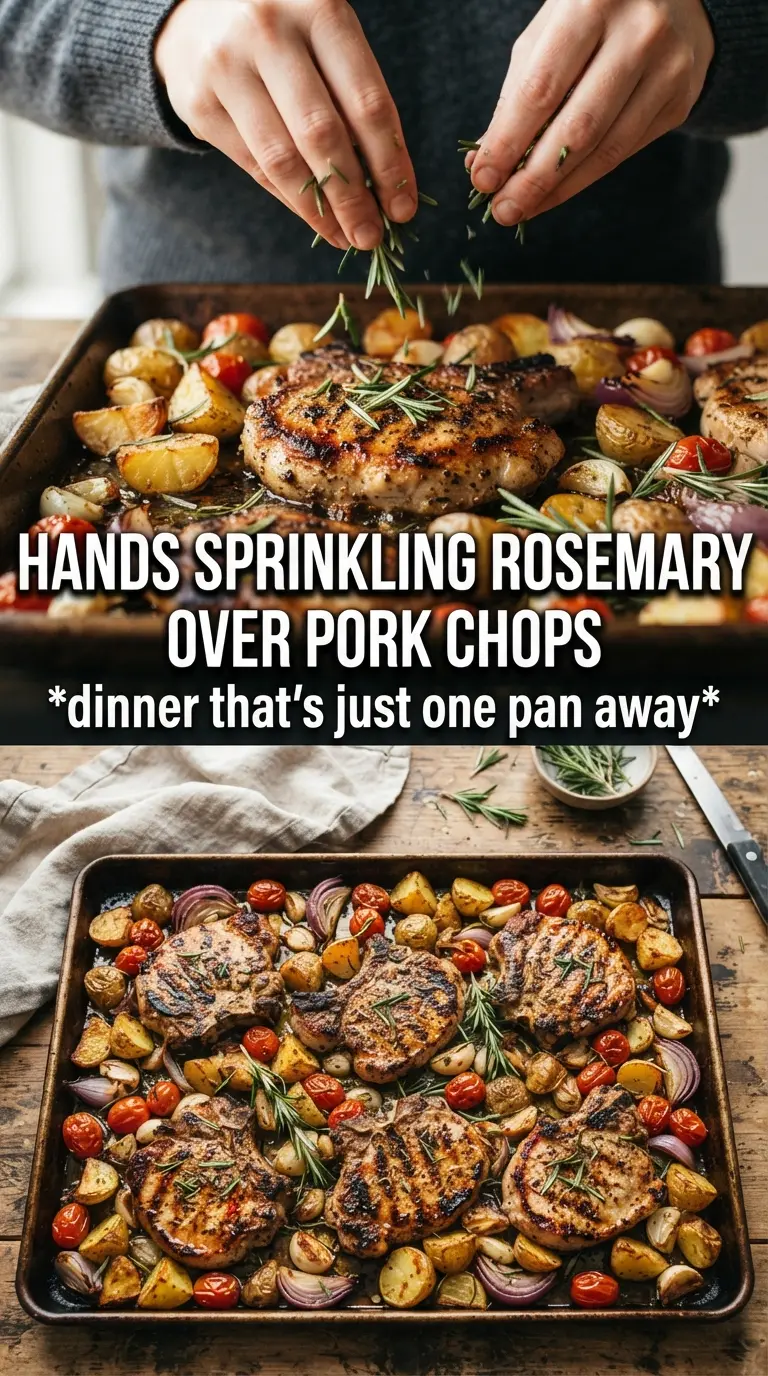
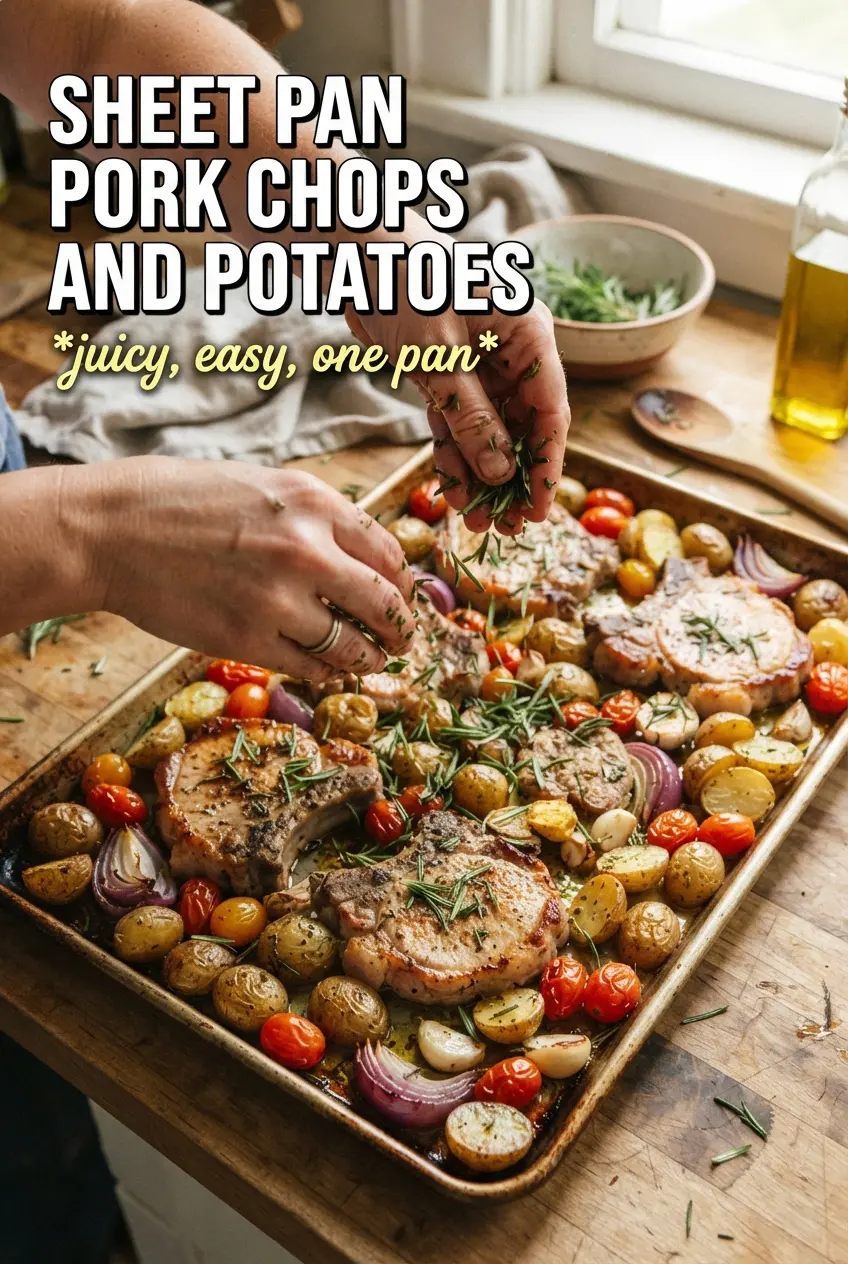
Golden pork chops, caramelized potatoes, and tender green beans all on one pan is the kind of dinner that earns a permanent spot in the rotation. The chops stay juicy because they get a fast sear before they finish in the oven, and the potatoes roast long enough to pick up browned edges instead of going soft and pale. The garlic butter drips into the vegetables as everything finishes, which is what turns a simple sheet pan meal into something people actually look forward to.
The part that matters most here is timing. Potatoes need a head start, so they go in first and get partially roasted before the pork chops and green beans join the pan. That keeps the vegetables on track with the meat instead of leaving you with underdone potatoes or dry pork. A quick skillet sear also gives the chops better color than oven-only roasting can manage.
Below, I’ll walk you through the timing that keeps the pork tender, the potato edges crisp, and the garlic butter from burning in the oven. There’s also a storage note worth knowing if you like to pack leftovers for lunch.
The pork stayed juicy and the potatoes got those crisp, browned edges I never seem to get when I try to roast everything at once. I loved that the garlic butter soaked into the green beans too.
Save these sheet pan pork chops and potatoes for the night you want a full dinner with crisp edges, juicy meat, and only one pan to wash.
The Trick to Juicy Pork Chops and Crisp Potatoes on the Same Pan
The biggest mistake with sheet pan pork chops is treating the meat and vegetables like they want the same amount of time. They don’t. Potatoes need long, dry heat to brown, while pork chops only need enough time to reach 145°F without drying out. If everything goes in together from the start, one of those two things loses.
This recipe fixes that by giving the potatoes a head start and using a hot skillet for the pork chops before they go into the oven. That sear builds flavor fast and keeps the chops from sitting in the oven long enough to squeeze out all their juices. The green beans go in at the end so they stay bright and tender instead of limp.
- Bone-in pork chops — Bone-in chops stay juicier than thin boneless chops and give you a little more forgiveness in the oven. If you only have boneless chops, cut the second oven time by a few minutes and start checking early.
- Baby potatoes — Halving them gives you more surface area for browning, which is the whole reason they get those caramelized edges. Larger potatoes can work too, but cut them into even wedges so they finish at the same rate.
- Green beans — These go in late because they only need enough heat to turn tender and pick up the garlic butter. If you add them too early, they’ll steam and lose their snap.
- Olive oil and butter — The oil helps with roasting and searing, while the melted butter carries the garlic flavor over the finished pan. You can use all oil if you want, but the butter gives the dish its richer finish.
- Smoked paprika, rosemary, and thyme — These seasonings give the pork and potatoes a deep savory backbone without needing a complicated marinade. Dried herbs work well here because they stand up to the oven heat better than delicate fresh herbs.
What Each Ingredient Is Actually Doing in This Recipe
- Primary ingredient (the star) — Quality matters most. Choose the best you can find.
- Cooking medium (oil, butter, or broth) — This carries flavors and prevents dryness.
- Seasonings (salt, pepper, spices, herbs) — Layer flavors so nothing overpowers. Build depth gradually.
- Aromatics (garlic, onion, herbs) — Cook with fat to bloom flavors. Become the foundation.
- Supporting ingredients — Complement the main ingredient without overpowering it.
- Sauce or liquid (if applicable) — Brings flavors together. Balance richness with acid.
- Acid (lemon, vinegar, wine, or other) — Brightens and prevents flat-tasting results.
- Final finish (garnish, glaze, or sauce) — Prevents one-dimensional taste and adds visual appeal.
Building the Pan in the Right Order
Roasting the Potatoes First
Start with a hot oven and give the potatoes room on the pan. If they’re crowded, they’ll steam instead of browning, and you’ll lose the crisp edges that make this dinner worth making. Toss them thoroughly with oil and seasonings so every cut side is coated, then spread them out in a single layer. After 15 minutes, they should be starting to turn golden on the edges but still have plenty of room to finish cooking later.
Searing the Pork Chops
Pat the pork chops dry before they hit the skillet. Moisture on the surface is what keeps a crust from forming, and you want that quick sear to lock in color before the oven finishes the job. Two minutes per side over hot oil is enough to build a good crust without cooking the center too far ahead. If the skillet isn’t hot enough, the chops will look gray instead of browned, and that missing color is hard to get back.
Finishing Everything Together
Once the pork goes onto the pan, tuck the green beans around the edges and drizzle the garlic butter over the top. The butter should hit the hot pan and sizzle lightly, not burn; if it starts to brown too fast, the oven is running hot and you need to watch closely. Pull the pork when it reaches 145°F in the thickest part and let it rest a few minutes before serving. That rest keeps the juices in the meat instead of running out onto the pan.
How to Adapt This for Different Kitchens and Different Eaters
Dairy-Free Version
Skip the butter and finish the pan with another tablespoon of olive oil. You’ll lose a little richness, but the garlic, herbs, and pork drippings still give you plenty of flavor.
Boneless Pork Chops
Boneless chops cook faster and dry out sooner, so check them a few minutes early after they go back into the oven. You’ll still get the same seasoning and garlic butter, but the texture is a little leaner and less forgiving than bone-in chops.
Swap in Another Vegetable
Broccoli florets, asparagus, or Brussels sprouts all work if you don’t have green beans. Just choose something that can handle a short blast of high heat, and add delicate vegetables late so they don’t overcook before the pork is done.
Storage and Reheating
- Refrigerator: Store leftovers in an airtight container for up to 3 days. The potatoes soften a bit as they sit, but the flavor holds up well.
- Freezer: The pork chops freeze well, but the potatoes and green beans lose some of their texture. If you freeze it, wrap the chops tightly and freeze them separately from the vegetables.
- Reheating: Warm leftovers in a 325°F oven until heated through. The microwave works in a pinch, but it tends to overcook the pork before the potatoes are hot, so use short bursts if that’s your only option.
Questions I Get Asked About This Recipe
Sheet Pan Pork Chops And Potatoes
Ingredients
Equipment
Method
- Preheat the oven to 425F and line a large rimmed baking sheet with parchment (pan ready and clean).
- Toss halved baby potatoes with 2 tablespoons olive oil, dried rosemary, dried thyme, garlic powder, salt, and black pepper, then spread them on the pan in a single layer.
- Roast the potatoes for 15 minutes, until the edges start to bronze.
- Season the bone-in pork chops with smoked paprika, salt, and black pepper (evenly coated).
- Heat the remaining olive oil in a hot cast iron skillet and sear the pork chops for 2 minutes per side, until browned.
- Push the potatoes to the edges of the sheet pan, place the pork chops in the center, and tuck the trimmed green beans around them.
- Mix the minced garlic with the melted butter, then drizzle the garlic herb butter over the potatoes, pork chops, and green beans (pan juices will look glossy).
- Roast for 18 to 20 more minutes at 425F until the pork chops reach 145F in the thickest part, then garnish with fresh parsley.