Ground beef stroganoff lands in that sweet spot between comforting and practical: creamy mushroom sauce, tender noodles, and a skillet dinner that feels bigger than the work it takes. The beef gives you all the savory depth you want from stroganoff without the extra time of slicing and searing strips, and the sauce clings to the noodles instead of pooling underneath them.
What makes this version work is the layering. The mushrooms cook down until they lose their raw edge and start to brown, the flour goes in with the beef so it can thicken the sauce without lumps, and the sour cream gets stirred in off the heat so it stays smooth. Cream cheese helps the sauce stay silky and a little more stable than a sour-cream-only version, which is useful when you’re serving a pan of it to the table instead of plating it one bowl at a time.
You’ll find the timing that keeps the sauce creamy, the ingredient swaps that still give you a good result, and a few fixes for the common problems people run into with stroganoff — mostly curdling, bland sauce, or a skillet that ends up watery instead of rich.
The sauce thickened up beautifully and stayed creamy even after I went back for seconds. I usually worry about sour cream splitting, but adding it off the heat made all the difference.
Save this ground beef stroganoff for the nights when you want a creamy skillet dinner that thickens properly and tastes like it took more effort than it did.
The Trick to Keeping Stroganoff Creamy Instead of Grainy
The most common mistake with stroganoff is adding the dairy while the pan is still bubbling hard. Sour cream is delicate. If you dump it into high heat, it can curdle or turn a little grainy, especially once there’s tomato or acid in the mix. This version avoids that by thickening the broth first, then pulling the pan off the burner before the sour cream and cream cheese go in.
The other thing that matters is how you build the base. Browning the beef first gives you flavor, but the mushrooms and onions need time in the same pan to soften and pick up those browned bits left behind. That fond is what keeps the sauce tasting rich instead of like seasoned cream. If the pan looks dry before the broth goes in, that’s a good sign — it means the vegetables have cooked down enough to concentrate their flavor.
- Ground beef — Use 85/15 or 80/20 if you can. It has enough fat for flavor without turning the sauce greasy, and the beef crumbles stay tender instead of drying out. If you use leaner beef, leave a little butter or oil in the pan after draining so the onions and mushrooms still have something to cook in.
- Cremini mushrooms — These give the sauce its earthy backbone. White button mushrooms work, but cremini have a deeper flavor and hold their shape better after simmering. Slice them evenly so they cook at the same pace and release moisture instead of steaming in clumps.
- Sour cream and cream cheese — This is the texture insurance. Sour cream gives you the tang that makes stroganoff taste like stroganoff, and cream cheese adds body so the sauce stays smooth and clings to the noodles. Use full-fat if possible; low-fat versions are more likely to break when heated.
- Worcestershire and Dijon — These don’t make the sauce taste sharp. They round it out. Worcestershire adds savory depth, and Dijon quietly boosts the whole pan without turning it mustardy. If you’re out of Dijon, a small spoonful of prepared yellow mustard works, but the finish will be a little brighter and less mellow.
What Each Ingredient Is Actually Doing in This Recipe

- Primary ingredient (the star) — Quality matters most. Choose the best you can find.
- Cooking medium (oil, butter, or broth) — This carries flavors and prevents dryness.
- Seasonings (salt, pepper, spices, herbs) — Layer flavors so nothing overpowers. Build depth gradually.
- Aromatics (garlic, onion, herbs) — Cook with fat to bloom flavors. Become the foundation.
- Supporting ingredients — Complement the main ingredient without overpowering it.
- Sauce or liquid (if applicable) — Brings flavors together. Balance richness with acid.
- Acid (lemon, vinegar, wine, or other) — Brightens and prevents flat-tasting results.
- Final finish (garnish, glaze, or sauce) — Prevents one-dimensional taste and adds visual appeal.
Building the Sauce in the Right Order
Browning the Beef First
Cook the ground beef in a large skillet until it’s no longer pink and you see some browned bits sticking to the pan. Those browned bits are flavor, not a problem, so don’t rush to wipe them out. Drain the excess fat, but leave enough behind that the onions and mushrooms can sauté without catching. If the meat steams instead of browns, the skillet is too crowded or too cool.
Letting the Mushrooms Cook Down
Add the onion and mushrooms to the same skillet and cook them until the onion turns soft and the mushrooms shrink and darken, about 6 to 7 minutes. At first, the pan may look crowded and a little wet, then the moisture should evaporate and you’ll start to hear more of a sizzle than a hiss. That shift is what you want. Add the garlic at the end so it perfumes the pan without burning.
Thickening Before the Dairy Goes In
Sprinkle the flour over the beef and vegetables, then stir until everything looks lightly coated. This step keeps the flour from tasting raw and helps it disperse before the broth goes in. Add the beef broth, Worcestershire sauce, and Dijon, then bring the skillet to a simmer for 5 to 7 minutes until the sauce turns glossy and coats the back of a spoon. If it still looks thin, give it another minute or two; it will thicken as it reduces.
Finishing Off the Heat
Take the pan off the burner before stirring in the sour cream and softened cream cheese. The residual heat is enough to melt them into a smooth sauce without shocking the dairy. Stir until no white streaks remain and the sauce looks creamy and uniform. Taste it at the end and season with salt and pepper, because the broth, Worcestershire, and beef all bring salt of their own.
What to Change When You Need This Dinner to Fit Your Pantry
Dairy-Free Version With a Tangy Finish
Use a plain unsweetened dairy-free sour cream and a dairy-free cream cheese that melts well. The sauce won’t have the exact same richness, but it will still be creamy if you add it off the heat just like the original. Choose one with a neutral flavor so it doesn’t fight the mushrooms and Worcestershire.
Gluten-Free Stroganoff
Swap the all-purpose flour for a 1:1 gluten-free flour blend or use a cornstarch slurry at the end. The flour blend gives you a more classic texture, while cornstarch thickens faster and a little more sharply, so use less and add it gradually. Serve it over gluten-free pasta or mashed potatoes.
Make It Meatier With a Mushroom Forward Version
Cut the beef to 1 pound and add an extra 8 ounces of mushrooms. You’ll get a deeper, earthier sauce and a little more stretch without losing the comfort-food feel. This works especially well if you want the dish to feel lighter but still hearty.
Storage and Reheating
- Refrigerator: Store leftovers in an airtight container for up to 4 days. The sauce thickens as it chills, so it will look a little firmer the next day.
- Freezer: It freezes, but the dairy can separate a bit on thawing. If you want to freeze it, cool it completely and portion it without the noodles for the best texture.
- Reheating: Warm it gently on the stove over low heat with a splash of broth or water. Don’t boil it, or the sauce can split and the noodles can turn mushy.
Questions I Get Asked About This Recipe
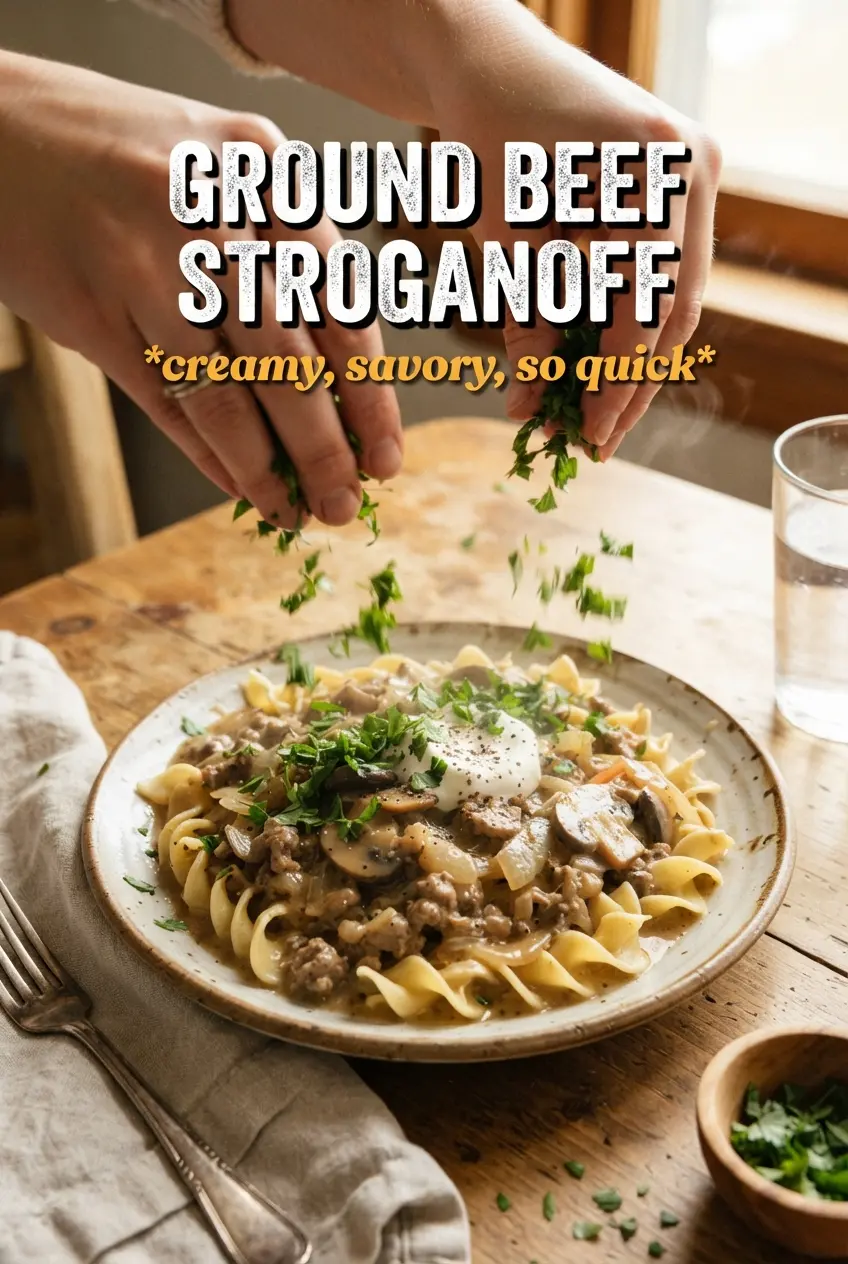
Ground Beef Stroganoff
Ingredients
Equipment
Method
- Brown the ground beef in a large skillet over medium-high heat until cooked through, then drain off excess fat.
- Sauté the onion and sliced cremini mushrooms in the same skillet for 6-7 minutes until softened and browned, then add the minced garlic and cook 1 minute.
- Return the cooked beef to the skillet and sprinkle the all-purpose flour over the top, stirring to coat the meat and vegetables.
- Add the beef broth, Worcestershire sauce, and Dijon mustard, bring everything to a simmer, and cook 5-7 minutes until the sauce thickens.
- Remove the skillet from the heat, then stir in the sour cream and softened cream cheese until smooth.
- Season with garlic powder, salt, and pepper to taste.
- Serve the stroganoff over the cooked egg noodles, then top with fresh parsley and paprika.