Deeply caramelized onions turn this French onion chicken orzo casserole into something far richer than the usual weeknight bake. The onions melt into the broth, the Gruyere forms a bronzed, savory cap, and the orzo cooks right in the sauce until it’s creamy without turning gluey. You get tender chicken, soft pasta, and that French onion flavor that tastes like it took all day, even though most of the work is hands-off once the onions are underway.
The key is giving the onions enough time to go from pale and sharp to dark gold and jammy before anything else goes in. That’s where the depth comes from. The wine deglazes the pan and pulls every bit of flavor back into the casserole, while the cream cheese gives the sauce body so the finished dish slices and scoops instead of spreading into broth.
Below, I’m walking through the part that matters most: how to get true caramelized onions without rushing them, how to keep the orzo tender, and what to do if you want to swap the cheese or make this ahead for a busy night.
The onions turned deep golden and the sauce thickened up exactly right. I used the wine and Gruyere like written, and the top came out bubbly with those crisp edges my husband kept going back for.
Love the rich onion crust and creamy orzo filling? Save this French Onion Chicken Orzo Casserole for the kind of dinner that feels special without extra fuss.
The Reason the Orzo Stays Creamy Instead of Turning Mushy
The biggest mistake with baked pasta casseroles is adding too much liquid too early and then walking away. Orzo is small, so it drinks fast. In this dish, the chicken, broth, wine, and cream cheese build a sauce that starts loose in the pan and finishes in the oven, which means the pasta has time to cook through without collapsing into paste.
The onions also matter more than they seem at first glance. If they’re only softened, the casserole tastes flat. Once they’re deeply caramelized, they bring sweetness and depth that balance the salty broth, the sharp Gruyere, and the savory chicken. That’s the difference between a baked pasta that tastes layered and one that just tastes creamy.
- Caramelized onions — These are the backbone of the dish. Cook them low and slow until they’re deep golden brown and jammy, not pale and limp. If you rush this step, the casserole loses the French onion character that makes it worth making.
- Dry white wine — The wine loosens the browned bits from the pan and adds acidity, which keeps the sauce from tasting heavy. A dry Sauvignon Blanc or Pinot Grigio works well; don’t use sweet wine here.
- Gruyere — This gives you that nutty, melty French onion finish. Swiss cheese can stand in if needed, but Gruyere melts more smoothly and browns with better flavor.
- Cream cheese — It thickens the broth into a silky sauce without needing flour or a separate roux. Full-fat cream cheese gives the best texture; reduced-fat versions can turn grainy when baked.
What Each Ingredient Is Actually Doing in This Recipe
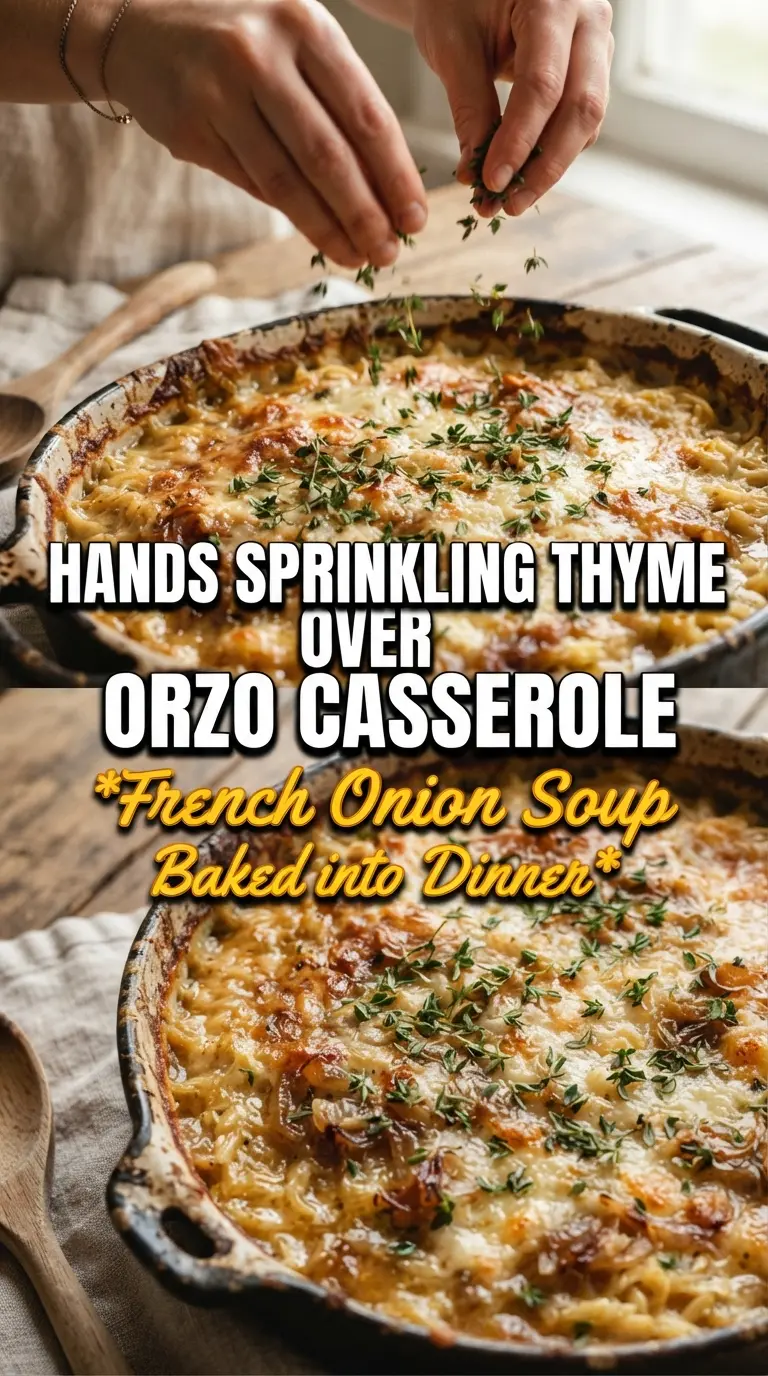
- Primary ingredient (the star) — Quality matters most. Choose the best you can find.
- Cooking medium (oil, butter, or broth) — This carries flavors and prevents dryness.
- Seasonings (salt, pepper, spices, herbs) — Layer flavors so nothing overpowers. Build depth gradually.
- Aromatics (garlic, onion, herbs) — Cook with fat to bloom flavors. Become the foundation.
- Supporting ingredients — Complement the main ingredient without overpowering it.
- Sauce or liquid (if applicable) — Brings flavors together. Balance richness with acid.
- Acid (lemon, vinegar, wine, or other) — Brightens and prevents flat-tasting results.
- Final finish (garnish, glaze, or sauce) — Prevents one-dimensional taste and adds visual appeal.
How to Build the Casserole So the Bottom Doesn’t Dry Out
Caramelizing the onions the right way
Start with the butter and sliced onions in a large oven-safe skillet, then let them cook over medium heat until they collapse, darken, and start sticking lightly to the pan before releasing. That sticking is useful; it means flavor is concentrating. If the heat is too high, the onions scorch at the edges before they soften in the center, and you lose the deep sweetness this dish needs.
Pulling the pan together
Once the garlic and thyme go in, cook them just long enough to smell fragrant, then pour in the wine and scrape the bottom well. The wine should simmer for a couple of minutes so the harsh alcohol cooks off and the pan tastes rounded, not sharp. At this stage, the broth and Worcestershire sauce should look like a flavorful base, not a thin soup.
Baking until the pasta finishes in the sauce
Stir in the uncooked orzo and diced chicken, then bring everything to a simmer before the pan goes into the oven. That simmer matters because it jump-starts the pasta and keeps the casserole from baking too long before the liquid starts working. When it comes out, the orzo should be tender, the chicken cooked through, and the cheese on top bronzed with bubbling edges.
How to Adapt It Without Losing the Onion-and-Cheese Character
Make it dairy-free without the broiled cheese finish
Swap the cream cheese for a plain dairy-free cream cheese and use a good melting plant-based cheese on top. The result will be a little less rich and less stretchy, but the caramelized onions and wine still give the casserole plenty of depth.
Use rotisserie chicken for a faster assembly
If you already have cooked chicken, stir it in after the broth and orzo are combined instead of before baking. That keeps it from drying out in the oven and trims the active prep time without changing the flavor of the sauce.
Gluten-free with a pasta swap
Use a gluten-free orzo-style pasta and check the broth and Worcestershire sauce labels for hidden gluten. Gluten-free pasta can soften faster, so start checking a few minutes early; you want it tender, not bloated.
Swap the wine if you don’t cook with alcohol
Use an equal amount of extra beef broth plus a teaspoon of white wine vinegar or lemon juice. You’ll lose a little of the depth that wine brings, but the acid still keeps the casserole from tasting flat.
Storage and Reheating
- Refrigerator: Store covered for up to 4 days. The orzo thickens as it chills, so the casserole will be denser the next day.
- Freezer: It freezes, but the texture of the orzo softens a bit after thawing. Freeze in portions for best results and thaw overnight before reheating.
- Reheating: Reheat covered in a 350°F oven with a splash of broth to loosen the sauce. The common mistake is blasting it uncovered until the cheese dries out and the pasta tightens up.
Answers to the Questions Worth Asking
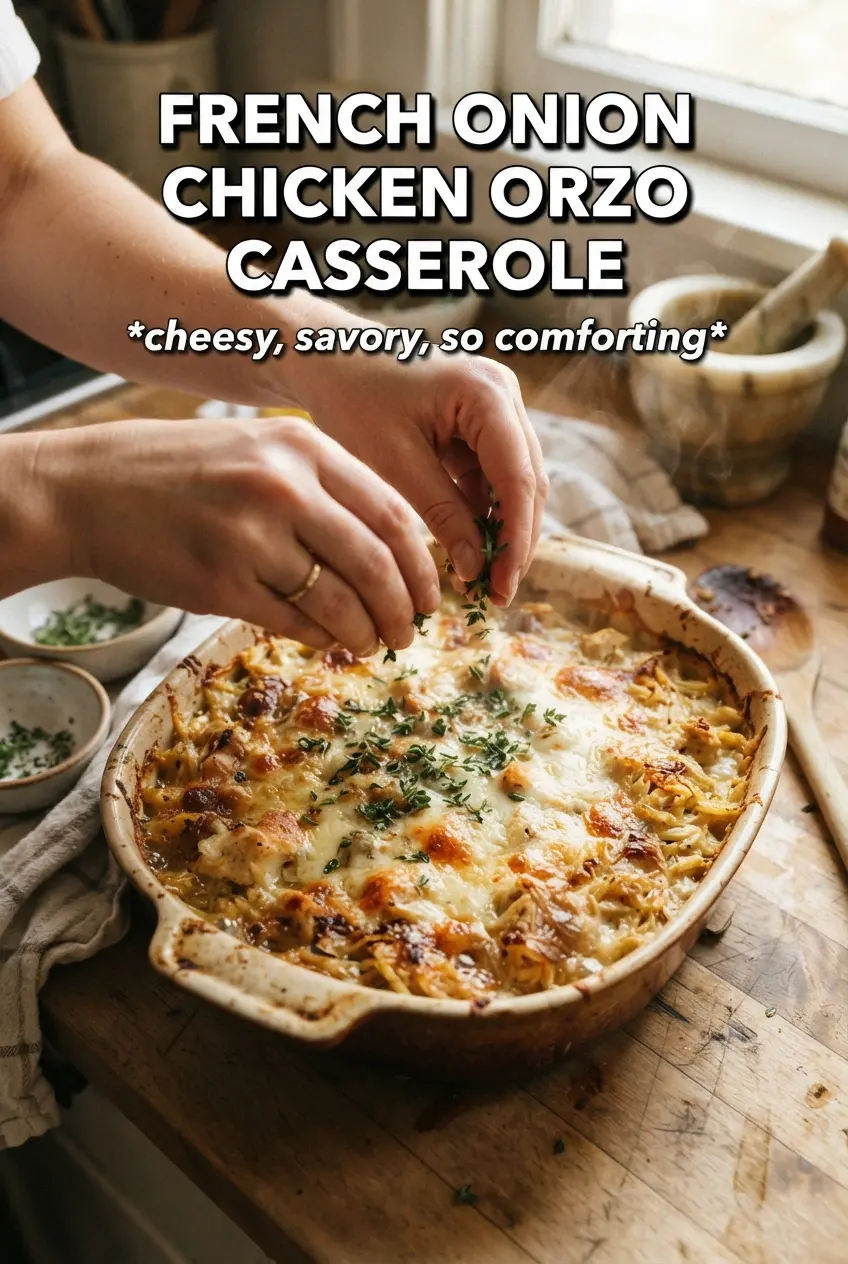
French Onion Chicken Orzo Casserole
Ingredients
Equipment
Method
- Preheat the oven to 375F, and set out an oven-safe skillet for baking.
- Melt the butter in the oven-safe skillet over medium heat, then add the thinly sliced onions and cook 30-35 minutes until deeply caramelized, stirring occasionally so they brown evenly.
- Add the minced garlic and dried thyme, and cook for 2 minutes until fragrant.
- Pour in the dry white wine and cook for 2 more minutes to reduce slightly.
- Add the beef broth, Worcestershire sauce, and uncooked orzo, then stir in the diced chicken until everything is evenly combined.
- Bring the mixture to a simmer, then stir in the cubed cream cheese until fully melted and the sauce turns creamy.
- Season with salt and pepper to taste, scatter the shredded Gruyere over the top, and finish by placing the skillet in the oven.
- Bake 25-30 minutes until the orzo is cooked through, the chicken is done, and the cheese is golden and bubbling at the edges; garnish with fresh thyme before serving.