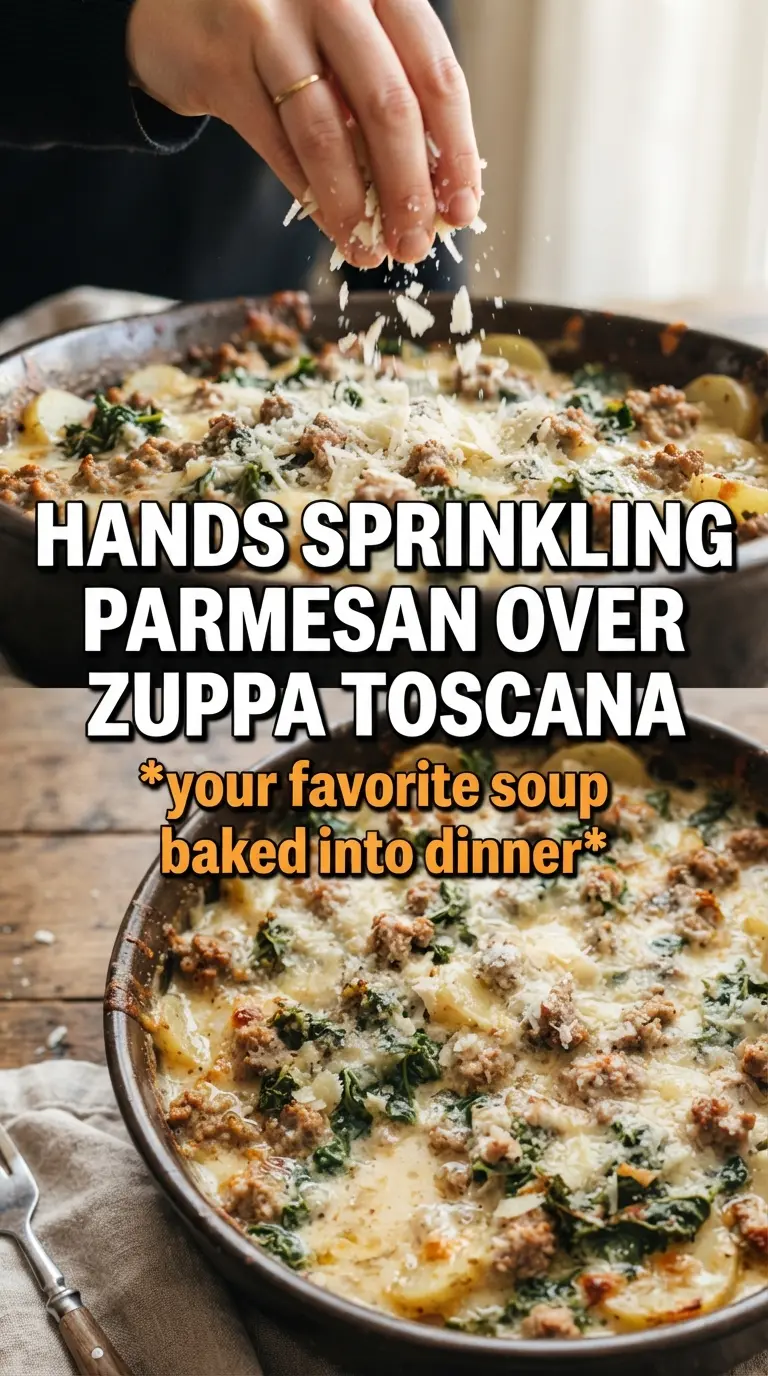
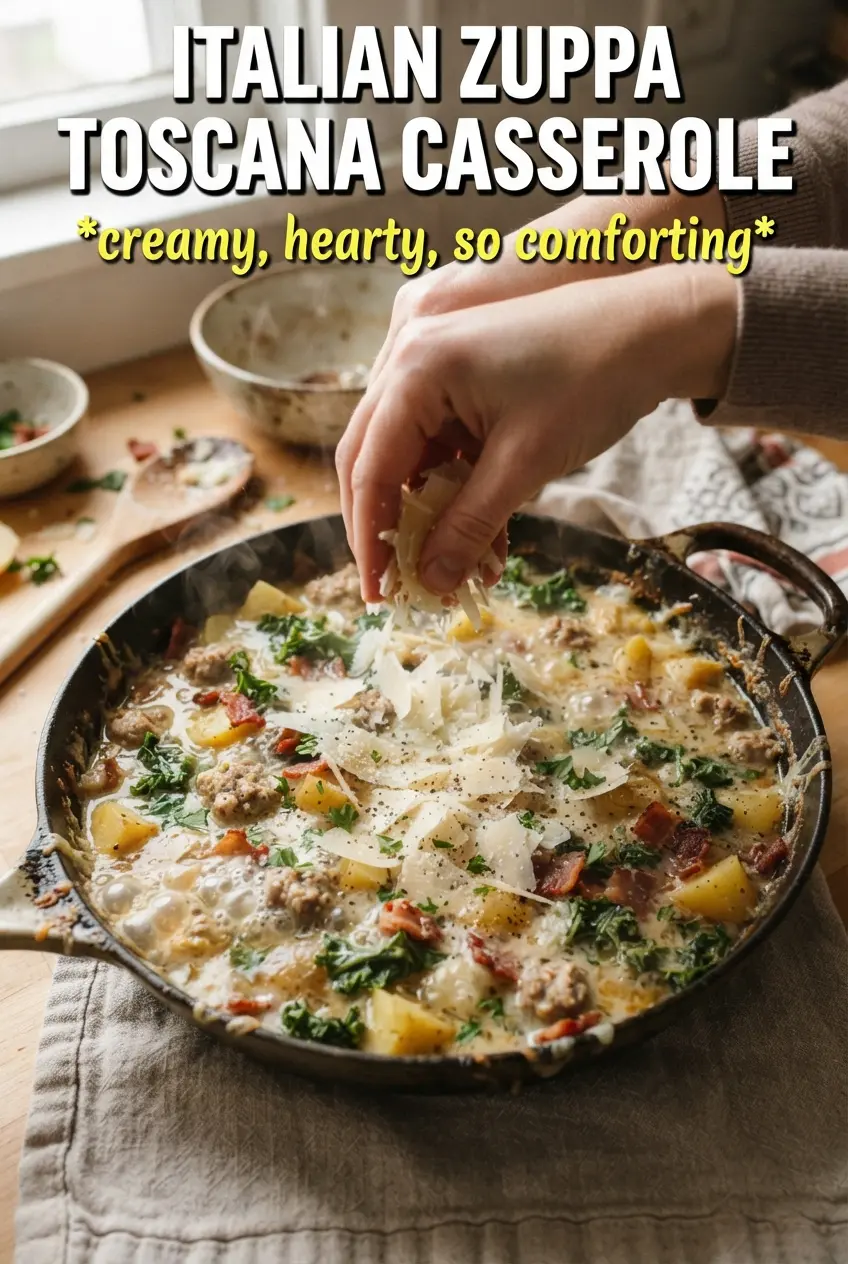
Italian Zuppa Toscana casserole takes everything people love about the soup and turns it into a bubbling baked dinner with more texture in every bite. The potatoes go tender in the creamy broth, the sausage seasons the whole dish from the inside out, and the cheese on top bakes into a golden lid that cracks under a spoon. It eats like comfort food, but it still has enough kale and peppery bite to keep each serving from feeling flat.
What makes this version work is the way the potatoes are par-cooked right in the broth and cream before the casserole goes into the oven. That keeps the base silky instead of watery and gives the starch time to thicken everything as it bakes. Browning the sausage and crisping the bacon first matters too, because the rendered fat carries the onion and garlic and gives the finished dish a deeper, more savory edge.
Below, I walk through the part that matters most: how to get the potatoes tender without turning them to mush, how to keep the sauce from breaking, and which swaps still give you that classic Zuppa Toscana feel.
The potatoes softened perfectly in the creamy broth and the top baked up with that little bit of crunch from the bacon. My husband went back for a second bowl before I even sat down.
Save this Zuppa Toscana casserole for the nights when you want creamy potatoes, sausage, and kale under a browned cheese crust.
The Trick to Keeping the Creamy Base From Turning Thin
The biggest mistake with a casserole like this is rushing the potatoes into a pan that isn’t ready to thicken. Yukon golds help because they hold their shape better than russets and give the sauce a naturally velvety texture as the starch releases. If you slice them too thick, they stay firm in the center and drag out the bake time; too thin, and they can collapse before the casserole hits the oven.
The other thing to watch is heat. Once the cream and milk go in, keep the simmer gentle. A hard boil can split the dairy or make the bottom catch before the potatoes are tender. You want the potatoes just barely fork-tender before they go into the baking dish, because the oven should finish the job without reducing the sauce too far.
- Yukon gold potatoes — These are the backbone of the casserole. They turn tender and buttery without shredding into the sauce.
- Italian sausage — Use hot or mild depending on how much pepper you want. The sausage seasons the whole dish, so it matters more than the cheese here.
- Bacon or pancetta — This is your salty, smoky finish. Bacon is fine; pancetta gives a cleaner pork flavor and a little less grease.
- Kale — Stir it in at the end so it stays green and a little chewy. If it goes in too early, it turns dull and soft.
- Heavy cream and whole milk — The combination gives you richness without making the casserole feel gluey. Using all cream can make it heavy; using only milk can leave it thin.
What Each Ingredient Is Actually Doing in This Recipe
- Primary ingredient (the star) — Quality matters most. Choose the best you can find.
- Cooking medium (oil, butter, or broth) — This carries flavors and prevents dryness.
- Seasonings (salt, pepper, spices, herbs) — Layer flavors so nothing overpowers. Build depth gradually.
- Aromatics (garlic, onion, herbs) — Cook with fat to bloom flavors. Become the foundation.
- Supporting ingredients — Complement the main ingredient without overpowering it.
- Sauce or liquid (if applicable) — Brings flavors together. Balance richness with acid.
- Acid (lemon, vinegar, wine, or other) — Brightens and prevents flat-tasting results.
- Final finish (garnish, glaze, or sauce) — Prevents one-dimensional taste and adds visual appeal.
Building the Casserole in Stages So the Sauce Stays Silky
Browning the Sausage and Bacon First
Start by browning the sausage in a large oven-safe skillet or a wide pan. You want deep color on the meat, not just a pale cooked-through look, because those browned bits become part of the sauce. Cook the bacon until it’s crisp enough to crumble later, then drain it off and leave a little fat in the pan. If the pan is crowded, the sausage will steam instead of brown, and you lose the savory base this dish needs.
Softening the Onion and Garlic in the Drippings
Add the onion to the hot fat and cook until it turns translucent and a little sweet around the edges. Garlic goes in after that and only needs a short stir; once it smells fragrant, move on before it darkens. This is the point where the casserole starts to taste layered instead of flat. If the pan looks dry, add a spoonful of bacon fat or a little olive oil so the onion doesn’t stick.
Cooking the Potatoes Until Just Tender
Pour in the broth, cream, milk, and red pepper flakes, then add the potatoes and let everything simmer gently. The potatoes should give way at the edge when pierced, but the slices should still hold together on the spoon. That’s the sweet spot. If they’re fully soft at this stage, they’ll go mushy in the oven; if they’re still hard in the center, the finished casserole will bake unevenly.
Finishing With Kale, Cheese, and the Oven
Fold in the kale and sausage, then taste the base before you add the cheese. The seasoning has to be right now, because once the mozzarella and parmesan go on top, it gets harder to correct salt. Scatter the cheese evenly so every serving gets a browned top, then bake until the surface bubbles at the edges and the center looks set but still creamy underneath. Add the bacon after baking so it stays crisp instead of going soft in the oven heat.
What to Change When You Need a Different Version
Make it dairy-free without losing the creamy texture
Use full-fat canned coconut milk in place of the cream and milk, then add a splash more broth if the sauce gets too thick. The flavor shifts a little richer and less classic, but the casserole still bakes up silky and spoonable.
Swap in turkey sausage for a lighter casserole
Turkey sausage works well, but you’ll want to brown it a little longer to build flavor since it gives off less fat than pork. Add a small drizzle of olive oil for the onion and garlic so the base doesn’t taste lean or dry.
Make it gluten-free without changing the method
This recipe is naturally gluten-free as written if your sausage, broth, and pancetta are certified gluten-free. The texture doesn’t need flour to thicken, because the potatoes do that work for you.
Use spinach instead of kale if that’s what you have
Spinach wilts faster and gives a softer finish, so stir it in right before the casserole goes into the baking dish. It won’t hold its shape the way kale does, but it keeps the dish green and balances the cream nicely.
Storage and Reheating
- Refrigerator: Store leftovers covered for up to 4 days. The sauce thickens as it chills, and the potatoes soak up some of the cream.
- Freezer: It freezes, but the texture softens a little after thawing because of the dairy and potatoes. Freeze in portions for best results, then thaw overnight in the refrigerator.
- Reheating: Reheat covered in a 325F oven until hot, adding a splash of broth or milk if the casserole looks dry. The microwave works for single servings, but use medium power so the cream doesn’t separate.
Answers to the Questions Worth Asking
Italian Zuppa Toscana Casserole
Ingredients
Equipment
Method
- Preheat the oven to 375°F. Brown the Italian sausage in a large oven-safe skillet, drain the fat, and set the sausage aside.
- Cook the bacon or pancetta until crispy in the skillet, then remove and set aside.
- Sauté the onion and garlic in the reserved fat for 4 minutes. Add the chicken broth, heavy cream, whole milk, and red pepper flakes, stirring until combined.
- Add the thinly sliced Yukon gold potatoes and simmer for 12-15 minutes until just tender.
- Fold in the kale and sausage, then season with salt and pepper. Transfer to a 9x13 baking dish if needed and scatter the mozzarella and parmesan over the top.
- Bake at 375°F for 20-25 minutes until golden and bubbling. Top with the crispy bacon or pancetta before serving.