Vegetable beef soup earns its place in the rotation when the broth turns deep and savory, the beef goes tender without falling apart, and every spoonful brings a mix of potatoes, carrots, green beans, and corn that actually tastes like it cooked together. The best versions don’t taste thin or one-note. They taste like the pot had time to build something richer than the sum of its parts.
What makes this version work is the order. The beef gets seared first, which gives you browned bits in the pot that carry the broth. Tomato paste cooks with the vegetables long enough to lose its raw edge, and Worcestershire adds a quiet depth that makes the broth taste fuller without turning it into something heavy. The potatoes go in later so they hold their shape, and the green beans and corn finish at the end so they stay bright instead of going soft and dull.
Below, I’m walking through the small details that matter most: how to brown the beef without crowding it, when to add the vegetables so they keep their texture, and the little choices that make this soup taste like it simmered all afternoon even though it comes together in just over an hour.
The broth turned out so rich, and the beef was tender after the full simmer without getting stringy. I also liked that the potatoes held their shape and the green beans still had a little bite.
Save this vegetable beef soup for a night when you want a rich broth, tender beef, and vegetables that still keep their shape.
The Trick to Keeping the Beef Tender Instead of Stringy
The biggest mistake with vegetable beef soup is rushing the beef through the pot just because it eventually simmers. Tough cuts need two things: a good sear up front and a gentle simmer later. If the pan is crowded, the meat steams and turns gray instead of browning, which means you miss the savory base that gives the broth its depth.
Low and steady heat matters after that. Once the broth comes to a boil, drop it to a simmer where only small bubbles break the surface. A hard boil can tighten the meat and make the broth cloudy. The goal is tender cubes that hold together when you ladle them up, not shredded beef that disappeared into the broth.
- Brown the beef in batches so the pieces actually sear instead of steaming.
- Cook the tomato paste with the vegetables for a minute or two until it darkens slightly and smells sweet, not raw.
- Simmer gently after the broth goes in. Fast bubbling is what turns good stew meat tough.
What Each Ingredient Is Doing in the Pot
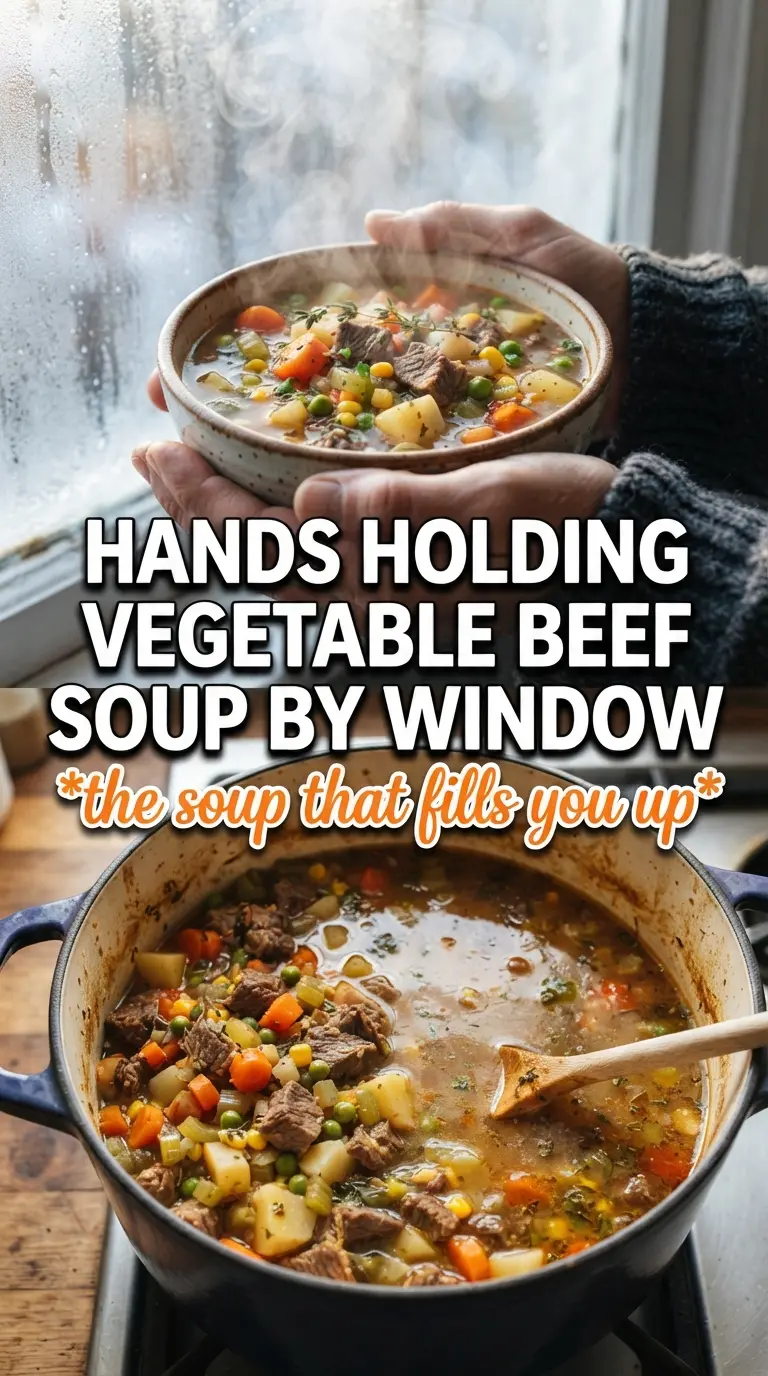
Beef stew meat gives this soup its body and that deep beefy flavor you can’t fake with broth alone. Chuck is the usual best choice because it turns tender with time. Trim off any huge pieces of hard fat, but don’t overdo it.
Tomato paste and Worcestershire sauce are the quiet boosters here. Tomato paste adds concentration and a little color, while Worcestershire brings savory depth and a hint of tang that keeps the broth from tasting flat. Don’t skip either one if you want the soup to taste fully built.
Potatoes, carrots, celery, green beans, and corn each need different timing. Potatoes go in after the beef has had time to soften, or they’ll turn mealy and break apart. The green beans and corn go in near the end so they keep some texture and taste like vegetables, not filler.
Diced tomatoes and beef broth form the soup base. A good broth matters here because the liquid is the dish. If your broth tastes thin straight from the carton, the soup will too, so use one you’d actually drink.
Building the Pot in the Right Order
Searing the Beef First
Heat the olive oil until it shimmers, then add the beef in batches with space around each piece. You want a brown crust on the outside, not a gray surface from overcrowding. Pull the beef out once it’s browned on all sides; it doesn’t need to be cooked through yet, just well colored.
Softening the Aromatics
Use the same pot for the onion, carrots, and celery. Those browned bits on the bottom are the beginning of the broth, so don’t scrub them away. After the vegetables soften, stir in the garlic and tomato paste and cook until the paste looks darker and sticks lightly to the bottom before you add liquid.
Simmering Until the Beef Starts to Yield
Once the broth, tomatoes, Worcestershire, thyme, bay leaf, and beef go back in, bring everything just to a boil and then turn it down. Small bubbles are what you’re looking for. After about 30 minutes, the beef should start to loosen and the broth should taste fuller, not sharp.
Adding the Vegetables in Stages
Add the potatoes next and give them enough time to cook through without collapsing. The green beans and corn only need the final few minutes, because they’re already tender enough to heat through. Pull out the bay leaf before serving, then season at the end so the salt lands where it’s needed instead of getting lost while the soup reduces.
Ways to Change This Soup Without Losing What Makes It Good
Make It Gluten-Free
This soup is naturally gluten-free as written as long as your beef broth and Worcestershire sauce are certified gluten-free. That’s the only place hidden gluten usually sneaks in, and swapping those products keeps the texture and flavor intact.
Use Different Vegetables
Swap the green beans and corn for peas, diced zucchini, or small pieces of cabbage if that’s what you have. Just keep the firmer vegetables earlier in the simmer and the delicate ones for the last few minutes so they don’t fade into the broth.
Make It Thicker
If you want a heartier, stew-like bowl, mash a few potato cubes against the side of the pot near the end. That gives the broth a little body without adding flour or changing the flavor. Don’t blend the whole soup unless you want to lose the brothy texture completely.
Store It for Later
Vegetable beef soup keeps well and the flavor gets even better after a night in the fridge. The potatoes soften a little more after chilling, but the broth stays rich and the beef reheats nicely.
Storage and Reheating
- Refrigerator: Store in an airtight container for up to 4 days. The potatoes will soften a bit, but the soup stays hearty.
- Freezer: Freeze for up to 3 months. Let it cool completely first, and leave a little headspace in the container because the broth expands.
- Reheating: Warm gently on the stove over medium-low heat until hot. A hard boil can break down the potatoes and push the beef from tender to tough.
Answers to the Questions Worth Asking

Vegetable Beef Soup
Ingredients
Equipment
Method
- Heat the olive oil in a large Dutch oven over medium-high heat, then add the beef stew meat in batches and sear until browned on all sides. Remove the browned beef to a plate and repeat until all beef is browned.
- In the same Dutch oven, sauté the onion, carrots, and celery for 5 minutes until slightly softened. Add the garlic and tomato paste and cook for 2 minutes, stirring until fragrant.
- Return the beef to the pot, then add the beef broth, diced tomatoes, Worcestershire sauce, dried thyme, and bay leaf. Bring to a boil, then reduce heat and simmer for 30 minutes.
- Add the potatoes and simmer for 15 minutes, until the potatoes are starting to get tender. Then add the green beans and frozen corn and cook for the last 8 minutes, until heated through and crisp-tender.
- Remove the bay leaf, then season the soup with salt and black pepper to taste and serve hot.