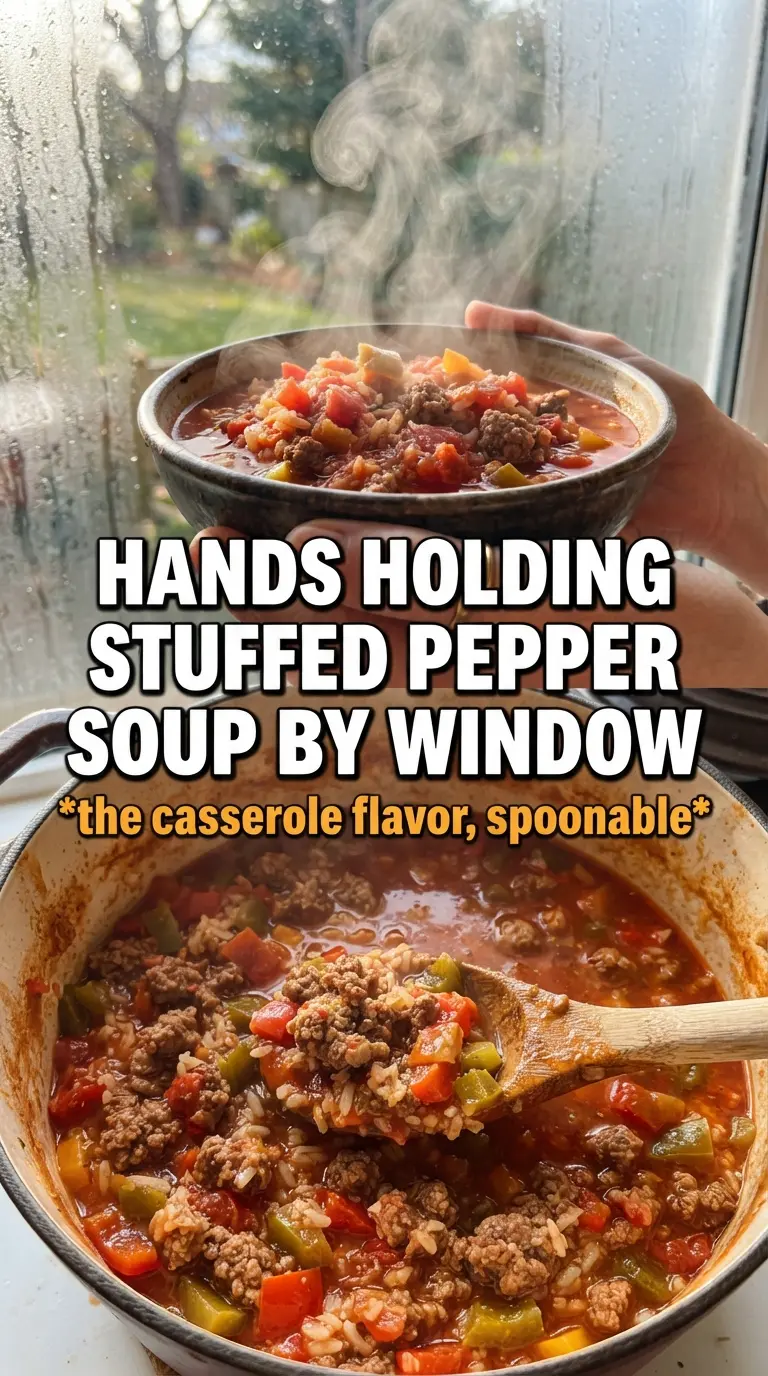
Stuffed pepper soup tastes like the comfort-food version of stuffed peppers, but without the fussy part where you have to hollow, fill, and bake individual peppers. The broth turns rich and tomatoey, the beef brings depth, and the rice swells just enough to make every spoonful feel hearty. What lands this soup on repeat is the balance: enough pepper to taste fresh and sweet, enough tomato to keep it bright, and enough seasoning to make it taste like dinner instead of a thin bowl of leftovers.
The trick is building flavor in layers. Browning the beef first gives you the savory base, then the onions and peppers soften in the same pot so they pick up every bit of flavor left behind. Tomato paste needs that extra minute or two in the hot pot; if you rush it, the soup can taste flat. Adding the rice straight into the broth keeps the process simple, but it also means the soup thickens as it sits, which is exactly what you want from a dish like this.
Below, I’m walking through the part that matters most: how to keep the rice tender without letting the whole pot turn mushy, plus a few smart swaps if you want to stretch it, lighten it up, or make it fit what’s already in your pantry.
The rice cooked up perfectly in the broth and didn’t get gummy, and the cheddar on top melted into the soup just enough to make it taste like stuffed peppers in a bowl.
Save this stuffed pepper soup for the nights when you want all the flavor of stuffed peppers without turning on the oven.
The Rice Is What Can Make or Break This Soup
Stuffed pepper soup lives or dies by the rice. If you dump it in and then walk away too long, it keeps absorbing broth and can turn the whole pot starchy and thick. The sweet spot is simmering just until the grains are tender with a tiny bit of bite left in the center, then pulling the pot off the heat. That gives you a soup that eats like soup instead of a casserole.
The other thing that matters is the order. The tomato base needs to come together before the rice goes in, because rice softens fast in acidic liquid. Build the flavor first, then add the rice at the end and keep the simmer gentle. A hard boil can split the texture, break up the beef, and make the rice uneven.
What Each Ingredient Is Actually Doing in This Bowl
- Ground beef — This is the backbone of the soup. A leaner blend works fine, but if you use something very lean, keep a little of the rendered fat in the pot so the base doesn’t taste thin.
- Bell peppers — The mix of green and red gives you both peppery bite and sweetness. Dice them evenly so they soften at the same pace and don’t leave you with crunchy pieces in an otherwise tender soup.
- Tomato paste — This is where the deep, cooked tomato flavor comes from. Let it cook for a full minute or two in the pot so it loses the raw edge and turns brick-red and fragrant.
- Long grain white rice — Long grain rice holds its shape better than short grain and keeps the soup from turning gummy. If you only have brown rice, you’ll need more liquid and a longer simmer, so the texture will be different.
- Beef broth — Use a broth you’d actually drink. Since the soup doesn’t have a long list of spices, a weak broth tastes flat fast.
Building the Pot in the Right Order
Browning the Beef First
Start with a large pot over medium-high heat and cook the beef until it’s deeply browned, not just gray. That browning creates the savory base the rest of the soup needs. Drain off excess fat if the pot looks greasy, but leave a little behind so the onions and peppers have something to cook in.
Softening the Peppers and Onions
Add the onions and all the peppers to the same pot and cook them until the onions turn translucent and the peppers lose their raw crunch. This is where the soup gets its stuffed-pepper character. If you rush this step, the vegetables taste sharp and the finished soup feels unfinished.
Cooking Out the Tomato Paste
Stir in the garlic and tomato paste and let them cook for about two minutes. The garlic should smell fragrant, not bitter, and the tomato paste should darken slightly as it fries in the fat. That short step adds a lot more depth than tossing the paste straight into the broth.
Simmering the Rice Gently
Once the broth, tomatoes, and seasonings go in, bring everything to a boil, then reduce the heat before adding the rice. A steady simmer is what cooks the grains evenly. If the soup boils hard, the rice can split and the broth can reduce too quickly before the rice is done.
Finishing With Salt and Toppings
Taste the soup at the end and season with salt and pepper after the rice has cooked. Rice mutes seasoning as it absorbs liquid, so this final check matters. Ladle it into bowls and finish with cheddar and parsley while the soup is hot enough to melt the cheese into little ribbons.
Three Practical Ways to Change It Without Losing the Point
Make It Gluten-Free Without Changing the Texture
This recipe is naturally gluten-free as written, as long as your beef broth is certified gluten-free. The rice does all the thickening work here, so you don’t need flour or any other stabilizer.
Use Ground Turkey for a Lighter Bowl
Ground turkey works if you want a lighter version, but it tastes best when you keep the tomato paste and season the pot a little more assertively. Because turkey is leaner than beef, the soup will be less rich, so don’t skip the cheese on top if you want that classic stuffed-pepper feel.
Swap in Brown Rice When That’s What You Have
Brown rice needs a longer simmer and more liquid, so add extra broth and give it more time than white rice. The flavor stays the same, but the soup gets a heartier, nuttier texture and won’t be quite as soft.
Leave Out the Rice for a Lower-Carb Version
If you skip the rice, the soup becomes brothy and more vegetable-forward, almost like stuffed pepper filling in a rich tomato base. Add a little extra broth if needed, because the finished soup won’t thicken the same way once the rice is gone.
Storage and Reheating
- Refrigerator: Keep in an airtight container for up to 4 days. The rice will continue to soak up broth, so expect it to thicken.
- Freezer: Freezes well, but the rice softens a bit after thawing. For the best texture, freeze it in portions and add a splash of broth when reheating.
- Reheating: Warm gently on the stove over medium-low heat or in the microwave at reduced power. Add a little broth if the soup has tightened up, because boiling it hard will make the rice mushy.
Answers to the Questions Worth Asking

Stuffed Pepper Soup
Ingredients
Equipment
Method
- Brown the ground beef in a large pot over medium-high heat, breaking it up as it cooks, until no longer pink. Drain excess fat so the soup stays lighter.
- Add the onion and both bell peppers to the same pot and sauté for 4-5 minutes until slightly softened. Add the garlic and tomato paste and cook for 2 minutes, stirring to coat.
- Stir in the crushed tomatoes, diced tomatoes, beef broth, Italian seasoning, garlic powder, and smoked paprika, then bring the mixture to a boil. Keep the boil going briefly before moving on to the rice.
- Add the uncooked long grain white rice, reduce heat to maintain a gentle simmer, and cover the pot. Simmer for 18-20 minutes, until the rice is cooked and the broth thickens slightly.
- Season with salt and pepper to taste, then turn off the heat. Ladle into bowls and top with shredded cheddar and fresh parsley so the cheese melts.