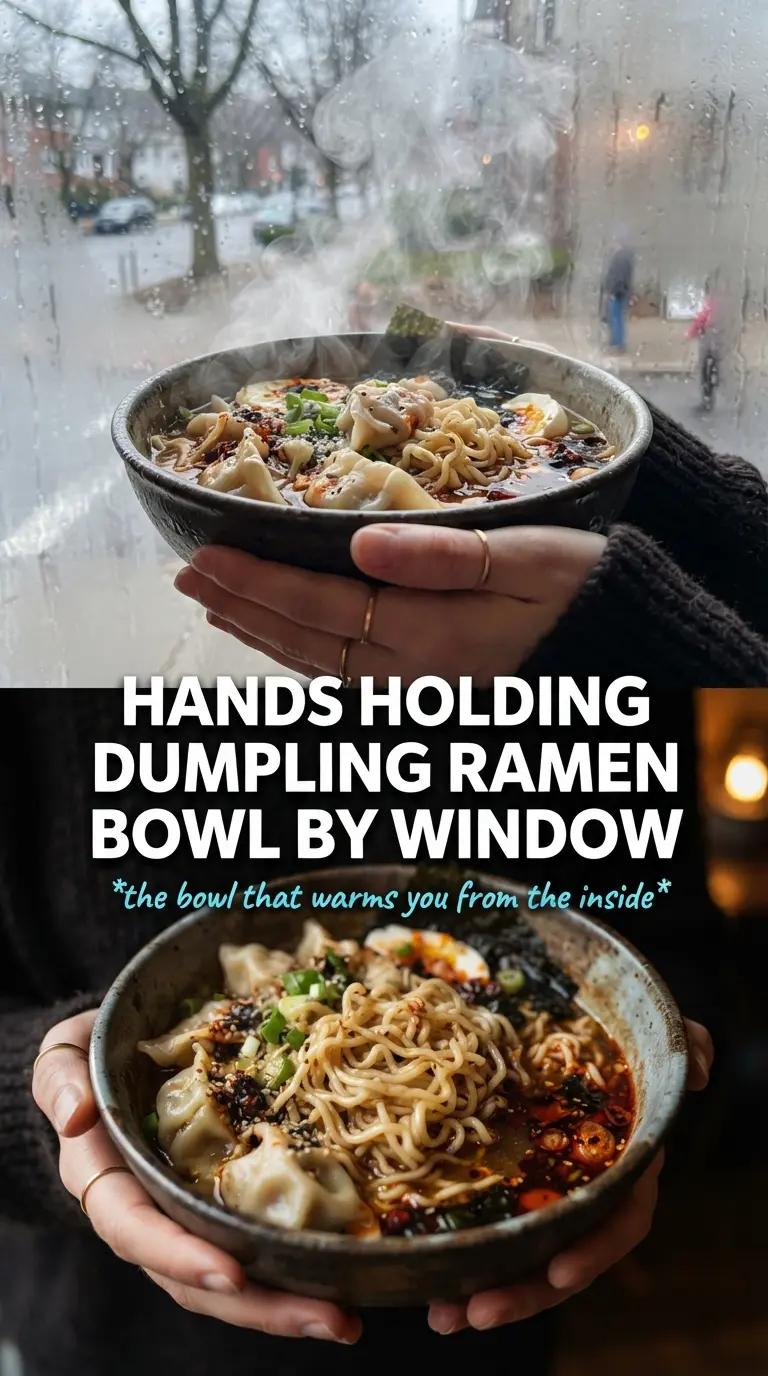
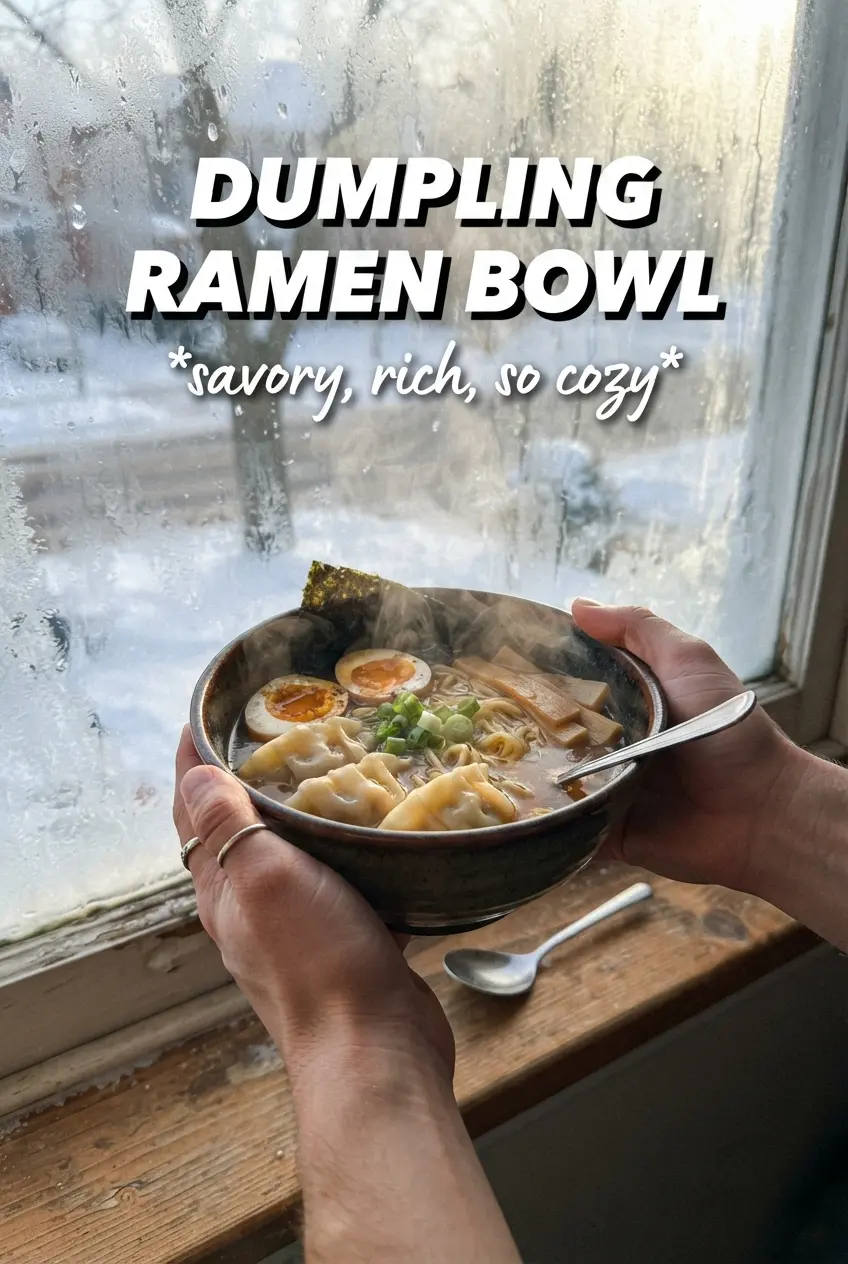
Dumpling ramen bowl hits the table with the kind of comfort that makes a regular weeknight feel pulled together. The broth is savory and a little sweet from miso and mirin, the dumplings turn the bowl into a real meal, and the soft-boiled egg gives you that silky yolk running into the noodles. It eats like takeout, but it lands fresher and more balanced because everything is built around a broth that stays clean, not heavy.
What makes this version work is the order. The miso gets whisked into warm broth instead of boiling hard, which keeps the flavor round instead of harsh. The dumplings cook right in the broth so they season the soup as they heat, and the noodles are cooked separately so they don’t steal liquid or turn gummy in the bowl. That one extra pot is worth it.
Below, I’ve laid out the part that matters most: how to keep the broth smooth, how to time the dumplings so they stay juicy, and a few swaps if you want to stretch this into a vegetarian bowl or use what you already have in the fridge.
The broth tasted like it had been simmering all afternoon, and the dumplings stayed plump instead of falling apart. I loved that the noodles were cooked separately because the bowl still had plenty of broth left at the end.
Save this dumpling ramen bowl for the nights when you want a fast, brothy dinner with real texture in every spoonful.
The Trick to Keeping the Broth Bright While the Dumplings Cook
The biggest mistake with a bowl like this is boiling the broth hard once the miso goes in. Miso wants gentle heat. If you blast it, the flavor turns flat and a little rough at the edges, and that subtle fermented depth disappears. Keep the pot at a steady simmer, not a rolling boil, and the broth stays clean and savory.
The second thing that matters is not overcrowding the pot with dumplings. Frozen dumplings release a little starch as they cook, and if you cram too many in at once, the broth turns cloudy and the dumplings can stick together. Give them space, and let the surface stay lively but not frantic.
- Miso paste — White miso is mild and slightly sweet, which fits this bowl better than a darker miso that can dominate the broth. Whisk it in while the broth is warm so it dissolves smoothly; if it clumps, press it against the side of the pot with your spoon.
- Frozen dumplings — Use pork or chicken dumplings straight from the freezer. Thawing first makes them fragile and more likely to split before the filling heats through. Potstickers, gyoza, or soup dumplings all work as long as they hold their shape in broth.
- Fresh ramen noodles — Fresh noodles give you the best chew and only need a short boil. Dried ramen works in a pinch, but it softens faster and can soak up more broth in the bowl, so pull it early.
- Sesame oil and mirin — Sesame oil rounds out the broth, while mirin adds a light sweetness that keeps the soy from tasting sharp. If you don’t have mirin, use a small splash of sugar with water, but the result won’t have quite the same polished finish.
The 20 Minutes That Actually Matter in a Dumpling Ramen Bowl
Bring the broth to a gentle simmer. Set the chicken broth over medium heat, then whisk in the miso, soy sauce, mirin, and sesame oil. The broth should look glossy and smell savory-sweet, not aggressively boiling. If the miso refuses to dissolve, lower the heat and keep whisking for a few seconds longer.
Cook the dumplings in the broth. Add the frozen dumplings and let them simmer until they’re hot through and tender, usually 5 to 7 minutes depending on size. You want the wrappers soft but intact, with no splitting at the seams. If the pot gets too crowded, cook in batches so the dumplings keep their shape.
Wilt the bok choy and build the bowls. Add the bok choy for the last 2 to 3 minutes so it stays bright and a little crisp at the stem. Cook the ramen noodles separately, drain them well, and divide them into bowls before ladling the broth over top. Finish with the halved egg, corn, green onions, nori, sesame seeds, and chili oil so every bite gets a different mix of soft, chewy, and crunchy.
What to Change When You Want a Different Bowl
Make it vegetarian without losing the broth
Swap in vegetable broth and use vegetable dumplings. Add a little extra white miso and a touch more sesame oil to replace the depth you’d normally get from chicken broth. The bowl stays savory, but it reads a little lighter and cleaner.
Use dried noodles when fresh ramen isn’t around
Dried ramen or even thin spaghetti can stand in, but cook it just shy of done so it doesn’t turn soft in the hot broth. Fresh noodles have more spring and better chew, so the tradeoff is a slightly less bouncy texture and a broth that thins a little faster.
Make it dairy-free and gluten-free
This bowl is naturally dairy-free already. For gluten-free, use gluten-free tamari instead of soy sauce and choose gluten-free dumplings and noodles. The broth will still be rich and balanced as long as the dumplings and noodles are built to hold up in soup.
Storage and Reheating
- Refrigerator: Store the broth, dumplings, and toppings separately for up to 3 days. The noodles soften fast once they sit in liquid, so keeping them apart matters.
- Freezer: The broth and dumplings freeze well for up to 2 months, but the cooked noodles and bok choy do not. Freeze the broth in airtight containers and add fresh noodles when reheating.
- Reheating: Warm the broth gently on the stove until steaming, then add the dumplings just long enough to heat through. Reheat noodles separately or add them directly to the bowl at the last second so they don’t turn mushy.
Answers to the Questions Worth Asking
Dumpling Ramen Bowl
Ingredients
Equipment
Method
- Bring the chicken broth to a simmer in a Dutch oven and whisk to dissolve any film on the surface. Keep it at a gentle simmer so the miso stays smooth.
- Whisk in the white miso paste, soy sauce, mirin, and sesame oil until fully combined. Aim for a simmering consistency without boiling.
- Add the frozen dumplings to the simmering broth and cook for 5-7 minutes until cooked through. Skim any foam if it rises to the top.
- Add the halved bok choy and cook for 2-3 minutes until wilted. Stir once or twice to coat the greens in broth.
- Cook the fresh ramen noodles separately according to package instructions, then drain. Keep noodles warm so they don’t clump before assembling.
- Divide the noodles between bowls and ladle the broth and dumplings over each bowl. Make sure every bowl gets dumplings and some bok choy.
- Top each bowl with the halved soft-boiled egg, corn kernels, green onions, nori, sesame seeds, and chili oil. Adjust chili oil and salt to taste before serving.