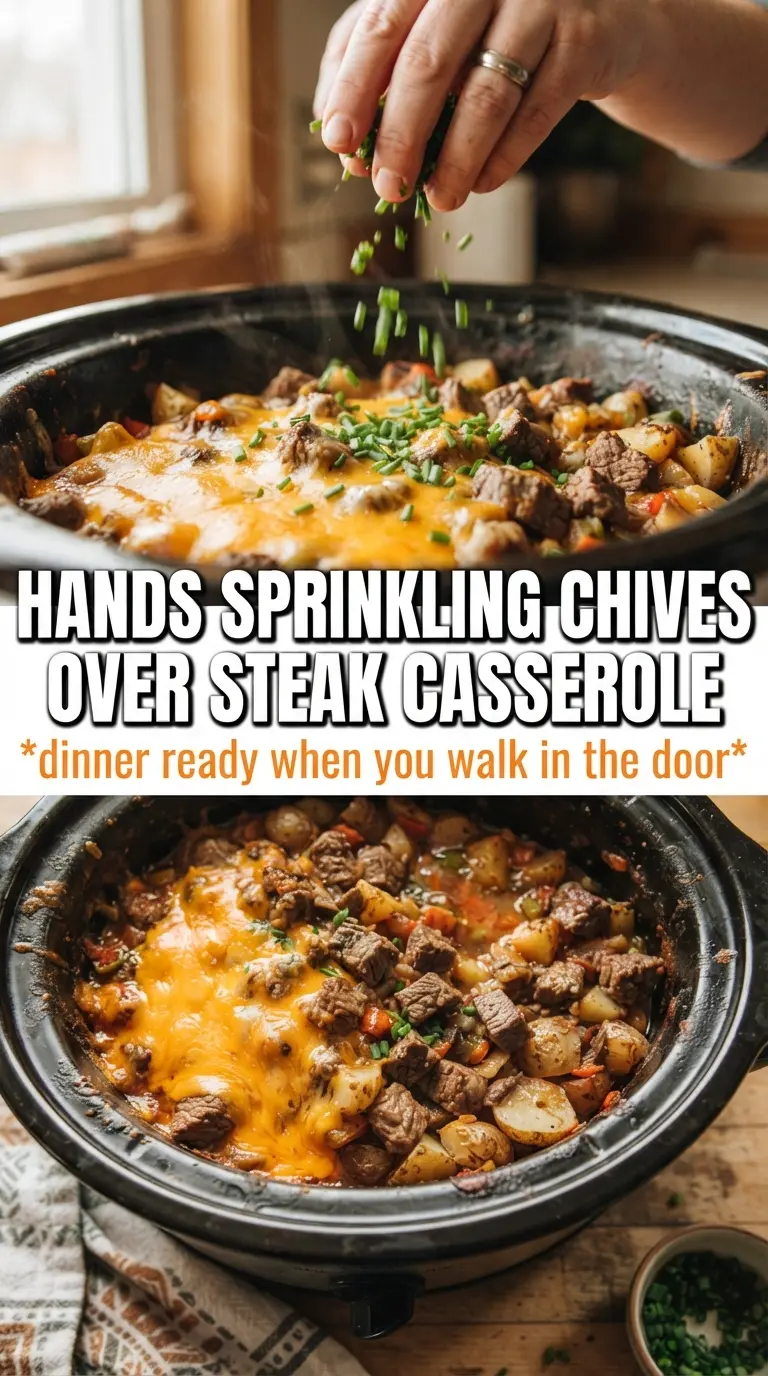
Melted cheddar over tender steak and soft Yukon gold potatoes is the kind of dinner that disappears fast, especially when the broth turns creamy and the edges of the potatoes soak up all that beefy flavor. This slow cooker casserole lands somewhere between a steak bake and a hearty weeknight mashup, with enough richness to feel comforting but not heavy in the way a lot of crockpot dinners can be.
The texture comes from layering thin potatoes with sliced steak so everything cooks evenly without turning into a mash. Yukon golds hold their shape better than russets, and the cream of mushroom soup helps the broth thicken as it cooks instead of staying thin and soupy. Sharp cheddar goes on at the end, not the beginning, so it melts into a blanket instead of disappearing into the pot.
Below you’ll find the layering order that keeps the potatoes tender, the timing that prevents dry steak, and a few practical swaps if you need to use a different cut or want to stretch this into a bigger meal.
The potatoes were perfectly tender after 7 hours on low, and the cheddar melted into the top without getting greasy. I served it with sour cream and my husband went back for seconds before I even sat down.
Save this slow cooker steak and cheddar potato casserole for a hands-off dinner with tender beef, creamy potatoes, and a cheddar finish.
The Layering Order That Keeps the Steak Tender
The biggest mistake with a slow cooker casserole like this is piling everything in without thinking about where the liquid sits. Potatoes sitting low in the pot need enough broth to soften, while the steak does better when it’s nestled through the layers instead of packed into one dense mound. That arrangement keeps the meat from steaming into toughness and helps the potatoes cook through at the same pace.
The thin slices matter more than most people think. Thick chunks of steak can handle a braise, but they take longer to turn tender in a crockpot and can end up chewy by the time the potatoes are done. Thinly sliced sirloin or chuck catches the sauce on all sides and cooks into soft, savory pieces instead of dry cubes.
- Yukon gold potatoes hold their shape and stay creamy, which is exactly what you want under all that cheddar.
- Chuck steak gives you the most forgiving texture if you want a richer, slightly more braised result.
- Cream of mushroom soup thickens the broth as it cooks, so the finished dish eats like a casserole instead of a bowl of soup.
What Each Ingredient Is Actually Doing in This Dish
- Beef sirloin or chuck steak — Sirloin stays a little cleaner in texture, while chuck gives you more of that slow-cooked, fall-apart richness. Slice it thin across the grain so every bite is tender. If you use a tougher cut, keep the slices thin and give it the full low-and-slow cook time.
- Yukon gold potatoes — These are worth using. They hold their shape, taste buttery, and don’t collapse into chalk the way russets sometimes can in the slow cooker. Slice them evenly so the bottom layers don’t turn mushy before the top layers are done.
- Cream of mushroom soup — This is the shortcut that gives the casserole body. You can swap in cream of celery if you want a milder flavor, but don’t skip the creamy base entirely or the broth will stay thin.
- Sharp cheddar — Sharp cheese cuts through the richness and gives the finished dish some bite. Pre-shredded works, but freshly shredded melts more smoothly if you want a cleaner topping.
- Worcestershire sauce — This is the quiet ingredient that makes the beef taste more like beef. There isn’t a great substitute for the same savory depth, though soy sauce can work in a pinch if you use a little less.
The Low-and-Slow Finish That Keeps the Cheese From Breaking
Seasoning the Steak First
Season the sliced steak with salt, pepper, garlic powder, and onion powder before it ever touches the slow cooker. That quick coating gives the meat some surface flavor, and it also keeps the final casserole from tasting flat after hours of cooking. If you forget this part, the whole dish leans bland no matter how good the sauce is.
Building the Layers in the Crockpot
Alternate the potatoes, onion, and steak instead of making one solid layer of each ingredient. The goal is even heat and even moisture, not a dense stack that blocks the liquid from moving around. Pour the broth mixture over the top slowly so it settles through the layers instead of washing everything into the center.
Cooking Until the Potatoes Yield Cleanly
Cook on low for 6 to 7 hours, or on high for 3 to 4, until a fork slides through the potatoes with no resistance and the steak feels tender rather than rubbery. If the potatoes are still firm, give it more time; if the steak is dry, it was sliced too thick or cooked too hot. Slow cookers vary a lot, so use texture as your real timer.
Melting the Cheddar at the End
Scatter the cheddar over the top during the last 15 minutes on high. That short finish melts the cheese without letting it sink into the broth and disappear. If your cheese turns oily, it stayed in too long or the slow cooker ran hot, so shut the heat off as soon as it’s melted.
Three Ways to Change the Casserole Without Losing What Makes It Good
Dairy-Free Version With the Same Savory Base
Use a dairy-free cream soup and skip the cheddar, then finish with chopped herbs or a little dairy-free shredded cheese if you like. The texture stays hearty, but you lose some of the rich melt that makes this casserole feel extra comforting. This version works best if you lean harder on the Worcestershire and black pepper for flavor.
Gluten-Free Swap That Still Thickens Properly
Use a certified gluten-free cream of mushroom soup and check your Worcestershire sauce label, since some brands contain gluten. The rest of the dish stays the same. You still get that creamy casserole texture without changing the cooking method.
Stretch It Into a Bigger Meal
Add sliced mushrooms or extra onions between the layers if you want more volume without changing the flavor much. They soak up the broth and make the casserole feel even heartier. This is the easiest way to feed more people without increasing the steak by much.
Storage and Reheating
- Refrigerator: Store covered for up to 4 days. The potatoes will soften a little more as they sit, but the flavor gets even deeper.
- Freezer: It freezes reasonably well in portions for up to 2 months, though the potatoes can turn a bit softer after thawing. Cool it completely before freezing and reheat gently so the sauce doesn’t separate.
- Reheating: Warm in the oven covered at 325°F until heated through, or use the microwave in short bursts with a splash of broth if it looks dry. High heat can make the steak tighten up, so go slow.
Answers to the Questions Worth Asking

Slow Cooker Steak And Cheddar Potato Casserole
Ingredients
Equipment
Method
- Season steak slices with salt, pepper, garlic powder, and onion powder, coating all surfaces for even flavor.
- Layer potatoes, onion, and steak in the slow cooker in alternating layers for balanced cooking and flavor distribution.
- Whisk beef broth, cream of mushroom soup, Worcestershire sauce, and minced garlic, then pour over the layers so the potatoes are mostly submerged.
- Cook on Low for 6-7 hours or High for 3-4 hours until potatoes and steak are tender, checking that the edges of the potatoes are soft.
- Scatter shredded sharp cheddar over the top and cook on High for 15 minutes until melted, bubbling at the edges as a visual cue.
- Serve topped with green onions and a dollop of sour cream for a cool, creamy contrast to the hot casserole.