Golden cheese, tender potatoes, and browned kielbasa are the kind of combination that disappears fast once it comes out of the oven. This casserole hits that sweet spot between comforting and practical: the potatoes turn soft and creamy underneath, the sausage brings smoky salt, and the cheddar on top bakes into a crust that cracks just enough when you scoop in.
The part that makes this version work is the balance of moisture. Yukon gold potatoes hold their shape without turning mealy, and the sauce uses sour cream plus a little broth to coat every layer without drying out. Browning the kielbasa first matters too. It gives the sausage some color and keeps the casserole from tasting flat or greasy.
Below, I’ll walk through the layering order that helps the potatoes cook evenly, plus the small timing details that keep the top golden while the center turns tender. There are also a few swaps and storage notes, because this is one of those dishes that’s just as useful on a busy weeknight as it is for feeding a crowd.
The potatoes came out tender all the way through and the cheddar on top browned beautifully. I loved that the kielbasa got a little crisp around the edges before baking, and my husband went back for seconds before I even sat down.
Save this kielbasa sausage cheesy potato casserole for the nights when you want a bubbling, cheesy bake with crisp edges and a creamy center.
The Reason the Potatoes Need Thin Slices, Not Big Chunks
The biggest mistake in casseroles like this is cutting the potatoes too thick. Thick slices trap the heat outside before the centers soften, which leaves you with a browned top and crunchy potatoes underneath. Thin slices give you layers that steam through evenly while still holding enough structure to stay creamy instead of turning into mash.
The other thing that matters here is the order of the layers. Putting half the potatoes down first gives the sauce a chance to soak through the whole dish, not just sit on top. That’s what keeps the bottom from tasting dry even after a long bake.
If your casserole ever comes out watery, it’s usually because the potatoes were cut unevenly or the dish was pulled before the center had time to finish. The foil-covered bake does the heavy lifting. The uncovered time at the end is there to dry the surface and brown the cheese, not to cook the potatoes from scratch.
What Each Ingredient Is Actually Doing in This Casserole
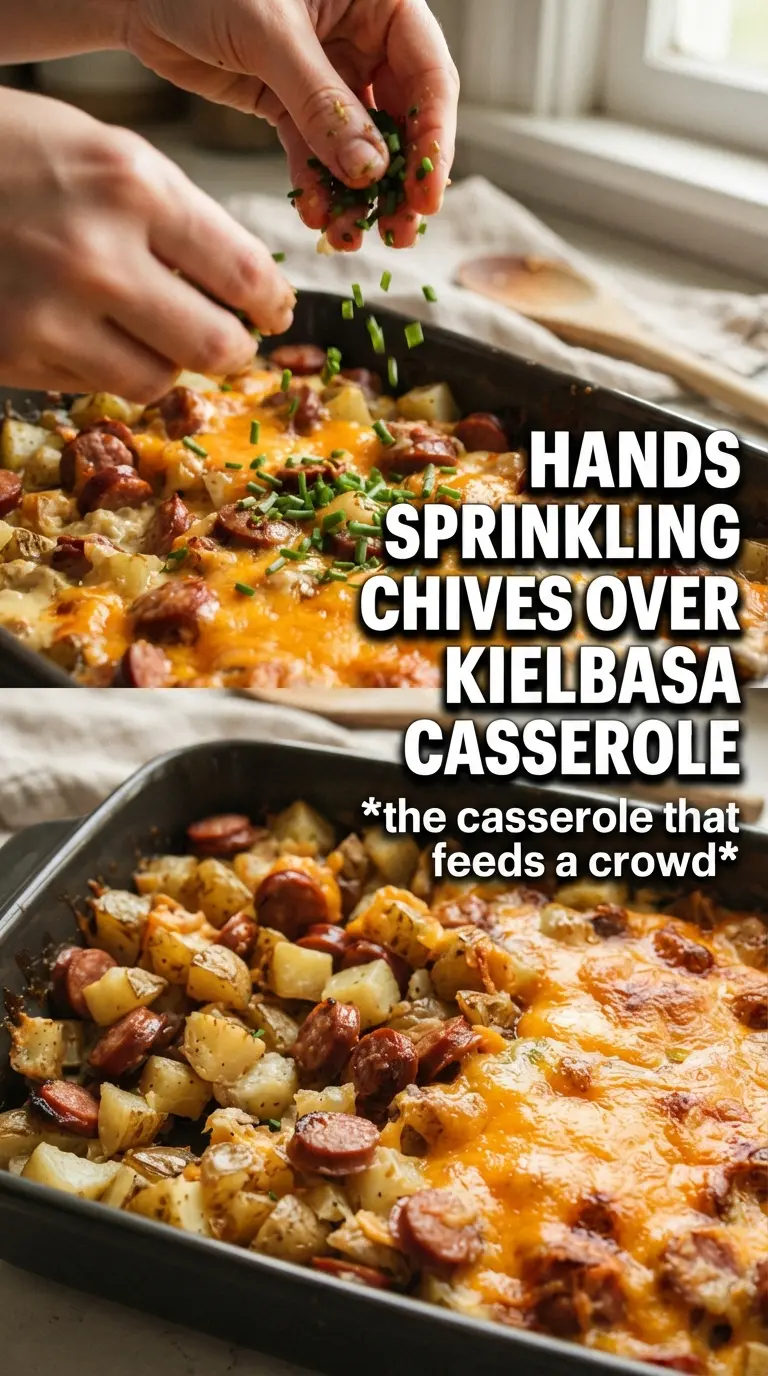
- Kielbasa — Browning it first adds flavor and keeps the slices from tasting soft and one-note after baking. If you skip the skillet step, the casserole still works, but the sausage won’t have those caramelized edges that make it taste deeper.
- Yukon gold potatoes — These are the right potato for this dish because they stay creamy and hold their shape. Russets can work in a pinch, but they break down more and give you a softer, less defined texture.
- Sour cream — This adds tang and body to the sauce, helping it coat the potatoes without turning gluey. Plain Greek yogurt can stand in if needed, though it tastes a little sharper and is more likely to curdle if the casserole is overheated.
- Cream of chicken soup — This is the shortcut that gives the casserole its rich, seasoned base. If you want a homemade version, a thick white sauce will work, but the texture won’t be quite as plush or as easy to assemble.
- Sharp cheddar — Sharp cheddar matters because it brings enough flavor to cut through the potatoes and sausage. Mild cheddar melts fine, but the casserole will taste flatter.
- Onion and garlic — The fresh onion softens into the layers while the garlic gives the sauce some backbone. The powders in the sauce reinforce that savory flavor so it doesn’t get lost under the cheese.
Building the Layers So the Center Stays Creamy
Brown the Sausage First
Cook the kielbasa rounds in a skillet until the edges turn deep golden and the surface picks up a little color. You’re not trying to cook it through; you’re building flavor and removing the bland, steamed taste sausage can get in the oven. If the pan starts to look dry, the sausage will usually release its own fat. Let that happen and use it.
Mix the Sauce Until It’s Smooth
Whisk the sour cream, cream of chicken soup, broth, garlic powder, and onion powder until the mixture looks fully blended and glossy. Any lumps left in the sauce will show up later as pockets of thick soup instead of a smooth coating. This is the moment to taste and season with salt and pepper, because once the casserole is layered, the seasoning doesn’t distribute as evenly.
Layer From Bottom to Top
Start with half the potatoes, then half the onion and garlic, half the kielbasa, and half the sauce. Repeat the same order with the second layer, then finish with the remaining cheddar. This structure helps the sauce seep down through the potatoes while the cheese stays on top where it can brown. If you pile the cheese in the middle, it disappears into the filling instead of forming that crust people fight over.
Cover, Bake, Then Uncover
The foil-covered bake is what softens the potatoes all the way through. After 40 minutes, the casserole should be hot and bubbling around the edges, but the potatoes may still need the last stretch uncovered to finish. Pull the foil off only for the final 15 minutes so the top can turn golden without drying out the center. A knife should slide into the potatoes with no resistance when it’s done.
Three Ways to Adjust the Casserole Without Ruining It
Make It Gluten-Free
Use a gluten-free cream of chicken soup and check that your kielbasa is certified gluten-free. The texture stays the same, and this swap is close to seamless because the casserole depends more on the sauce thickness than on any flour-based thickener.
Swap in Ham or Smoked Sausage
Ham gives you a saltier, leaner casserole, while smoked sausage brings a similar snap and smoke to kielbasa. Either one works well, but both are a little less rich than kielbasa, so the finished dish tastes slightly cleaner and less savory.
Lighten It With Half the Cheese on Top
You can cut the topping cheese to 1 1/2 cups if you want a less heavy casserole. The dish will still be creamy underneath, but the top won’t form as thick of a crust, so the bake looks a little softer and less dramatic.
Add Peppers or Mushrooms
Sauté sliced bell peppers or mushrooms before layering them in. That extra step matters because raw vegetables can leak liquid into the casserole and thin the sauce, but pre-cooked vegetables add flavor without watering it down.
Storage and Reheating
- Refrigerator: Store covered for up to 4 days. The potatoes firm up a bit as they chill, but the flavor stays strong.
- Freezer: This freezes better than you might expect, though the potatoes soften slightly after thawing. Cool it completely, wrap well, and freeze for up to 2 months.
- Reheating: Reheat covered in a 325F oven until hot in the center, or warm individual portions in the microwave in short bursts. If you blast it on high, the cheese can split and the edges dry out before the middle heats through.
Answers to the Questions Worth Asking

Kielbasa Sausage Cheesy Potato Casserole
Ingredients
Equipment
Method
- Preheat your oven to 375°F, then grease a 9x13 baking dish so the casserole releases easily.
- Brown the kielbasa rounds in a skillet, then set them aside once they have color.
- Whisk together sour cream, cream of chicken soup, chicken broth, garlic powder, and onion powder until smooth and pourable.
- Layer half the potatoes in the baking dish and top with half the onion, garlic, kielbasa, sauce, and 3/4 cup cheddar.
- Repeat the layers with the remaining potatoes, onion, garlic, kielbasa, and sauce, then top with the remaining cheddar.
- Cover with foil and bake for 40 minutes at 375°F so the potatoes cook through.
- Uncover and bake for 15 more minutes at 375°F until golden on top and the potatoes are tender.
- Garnish with green onions and season with salt and pepper to taste before serving.