Egg roll soup gives you all the savory, gingery, soy-slick flavor of a takeout egg roll, but in a bowl with a spoon and a broth that tastes like it had time to think. The cabbage turns tender without going limp, the pork adds richness, and the sesame oil finishes everything with that unmistakable egg-roll smell the second it hits the pot. Crisp wonton strips on top give you the crunch that keeps each bite interesting.
The trick is building the soup in layers instead of dumping everything in at once. Browning the pork first gives the broth a deeper, meatier base, and a quick cook on the garlic and ginger wakes up the whole pot before the liquid goes in. The cabbage needs enough simmer time to soften, but not so long that it loses its bite and turns the broth dull.
Below you’ll find the small details that matter most, including how to keep the vegetables from overcooking and the easiest swaps if you want to make this with chicken or stretch it a little further for leftovers.
The broth had so much flavor, and the cabbage stayed tender but still had a little bite. I used ground chicken and the whole pot was gone by the next day.
Pin this egg roll soup for a fast, savory dinner with ginger-soy broth, tender cabbage, and that crunchy wonton topping.
The Secret to Keeping the Cabbage Tender, Not Mushy
Egg roll soup goes wrong when the vegetables sit in the broth too long. Cabbage cooks fast, and once it passes tender, it starts to turn soft and bland. That’s why this version adds the cabbage after the broth is already seasoned and at a full simmer, then keeps the cook time short enough that the cabbage holds some structure.
The other thing people miss is the base. Browning the meat first creates the savory foundation the broth needs. If you rush straight to the liquid, the soup tastes thin no matter how much soy sauce you add. A minute or two with the ginger and garlic in the hot pot is what gives the broth that unmistakable egg-roll edge.
- Ground pork — Pork gives you the richest, most takeout-like result, but ground chicken works well if you want something lighter. Chicken just needs a little more help from the sesame oil and soy sauce to feel complete.
- Cabbage — Thin shreds cook quickly and soak up the broth without falling apart. If your pieces are too thick, they stay crunchy in the wrong way and throw off the balance of the soup.
- Fresh ginger and garlic — These are not background players here. Fresh is worth it because dried versions won’t give you the same sharp, fragrant base when the hot fat hits them.
- Sesame oil — Use the real thing, and add it with the broth so its aroma spreads through the soup instead of disappearing. A little goes a long way, and it’s one of the main reasons this tastes like an egg roll instead of plain pork soup.
- Rice vinegar and sriracha — Vinegar keeps the broth from tasting flat, while sriracha gives a gentle heat that rounds out the salt and fat. If you skip both, the soup can taste one-note.
Building the Broth Before the Vegetables Go In
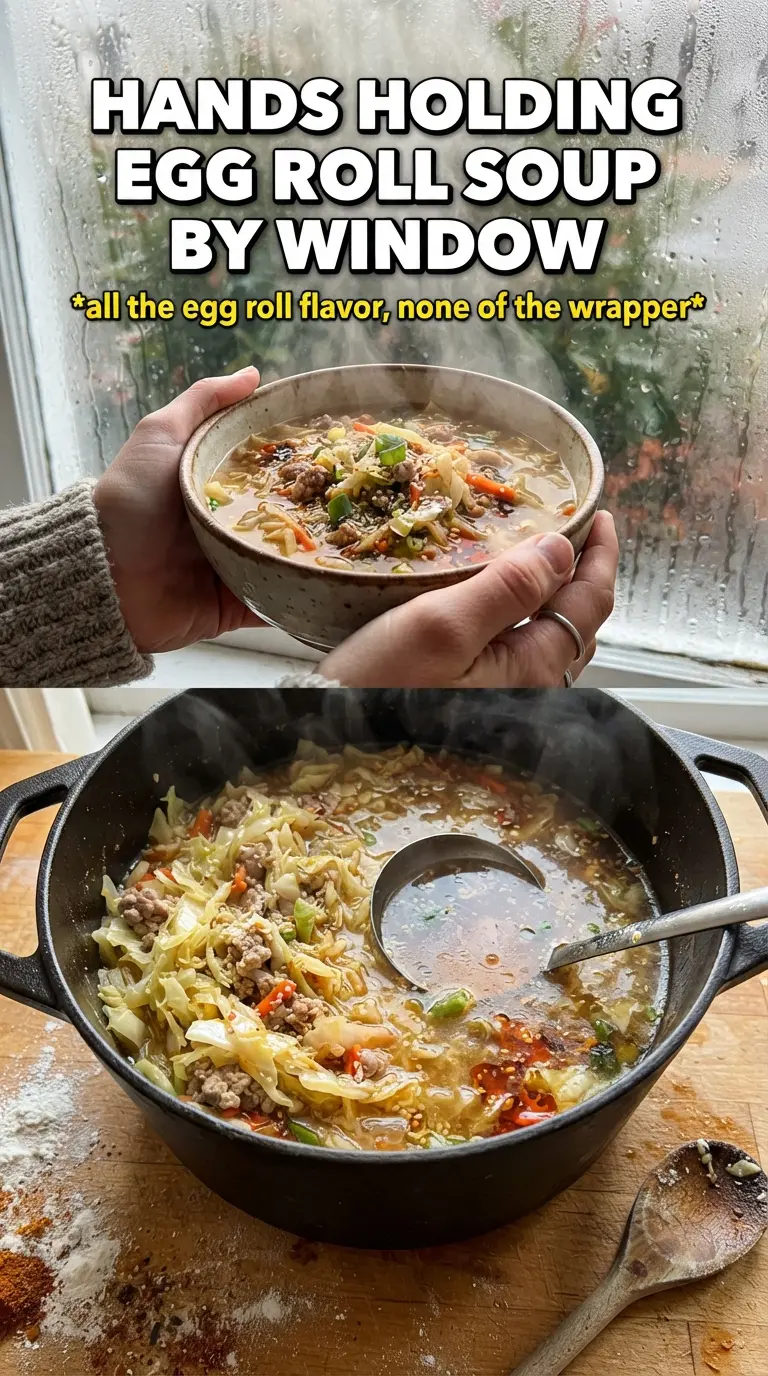
Brown the pork in a wide pot over medium-high heat and break it into small crumbles as it cooks. You want the meat to pick up some color, not just turn gray, because that browning is what gives the broth depth. If the pot fills with a lot of fat, drain off the excess so the soup doesn’t feel greasy.
Add the garlic and ginger next and stir them for a minute or two, just until they smell sharp and fragrant. If they start to stick, lower the heat; burned garlic turns bitter fast and there’s no fixing it later. Once the broth, soy sauce, sesame oil, vinegar, and sriracha go in, bring the pot up to a boil so the flavors fully combine before the vegetables are added.
When the cabbage and carrots go in, the soup should settle into a steady simmer, not a hard boil. That gentler heat softens the vegetables without shredding them apart, and it keeps the broth clear and clean-tasting. Stir in the green onions at the end so they stay bright.
What to Change When You Want a Lighter Bowl or a Different Finish
Ground chicken instead of pork
Chicken makes the soup a little lighter and cleaner tasting, which is great if you want a less rich bowl. Because chicken has less fat, keep the sesame oil in the broth and don’t skimp on the ginger so the flavor still feels full.
Gluten-free version
Swap the soy sauce for tamari or another gluten-free soy sauce and use gluten-free crispy topping if you want the crunch on top. The flavor stays close to the original, but check the label on the broth too, since some brands sneak in wheat-based additives.
Lower-carb bowl
Skip the wonton strips and use extra green onions, sesame seeds, or a handful of bean sprouts on top instead. You keep the same savory broth and vegetables, but the bowl lands lighter and with less crunch from processed toppings.
Make it ahead for lunches
Cook the soup base and vegetables, then store the crispy wonton strips separately and add them only when serving. That keeps the topping from dissolving into the broth and gives you a lunch that still tastes fresh on day two.
Storage and Reheating
- Refrigerator: Store in an airtight container for up to 4 days. The cabbage softens a little more as it sits, but the flavor deepens.
- Freezer: It freezes well without the wonton strips. Freeze in portions for up to 2 months, and leave a little space in the container for expansion.
- Reheating: Warm it gently on the stove over medium-low heat until steaming. A hard boil can make the cabbage tired and push the broth into a salty, overcooked place.
Questions I Get Asked About This Recipe
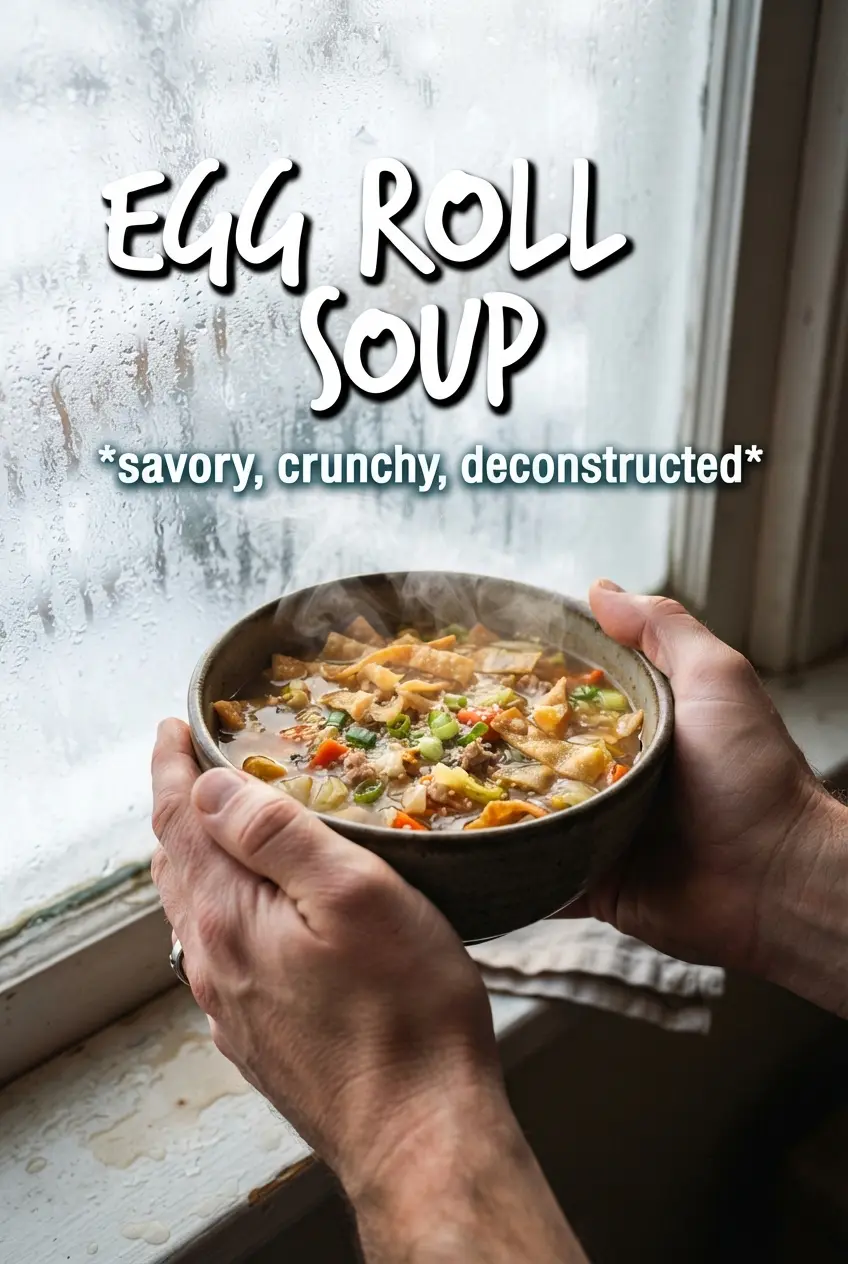
Egg Roll Soup
Ingredients
Equipment
Method
- Heat a large Dutch oven over medium-high heat and add the vegetable oil. Brown the ground pork, breaking it up as it cooks, then drain excess fat.
- Add the garlic and grated ginger to the pot. Cook for 1-2 minutes until fragrant.
- Pour in the chicken broth, soy sauce, sesame oil, rice vinegar, and sriracha. Bring the mixture to a boil.
- Add the thinly shredded cabbage and julienned/shredded carrots to the boiling broth. Simmer for 8-10 minutes until the vegetables are tender.
- Stir in the sliced green onions and season with salt and pepper to taste. Let the soup stand briefly so flavors settle, then serve.
- Ladle the soup into bowls and top with crispy wonton strips and sesame seeds. Finish with extra green onions for serving.