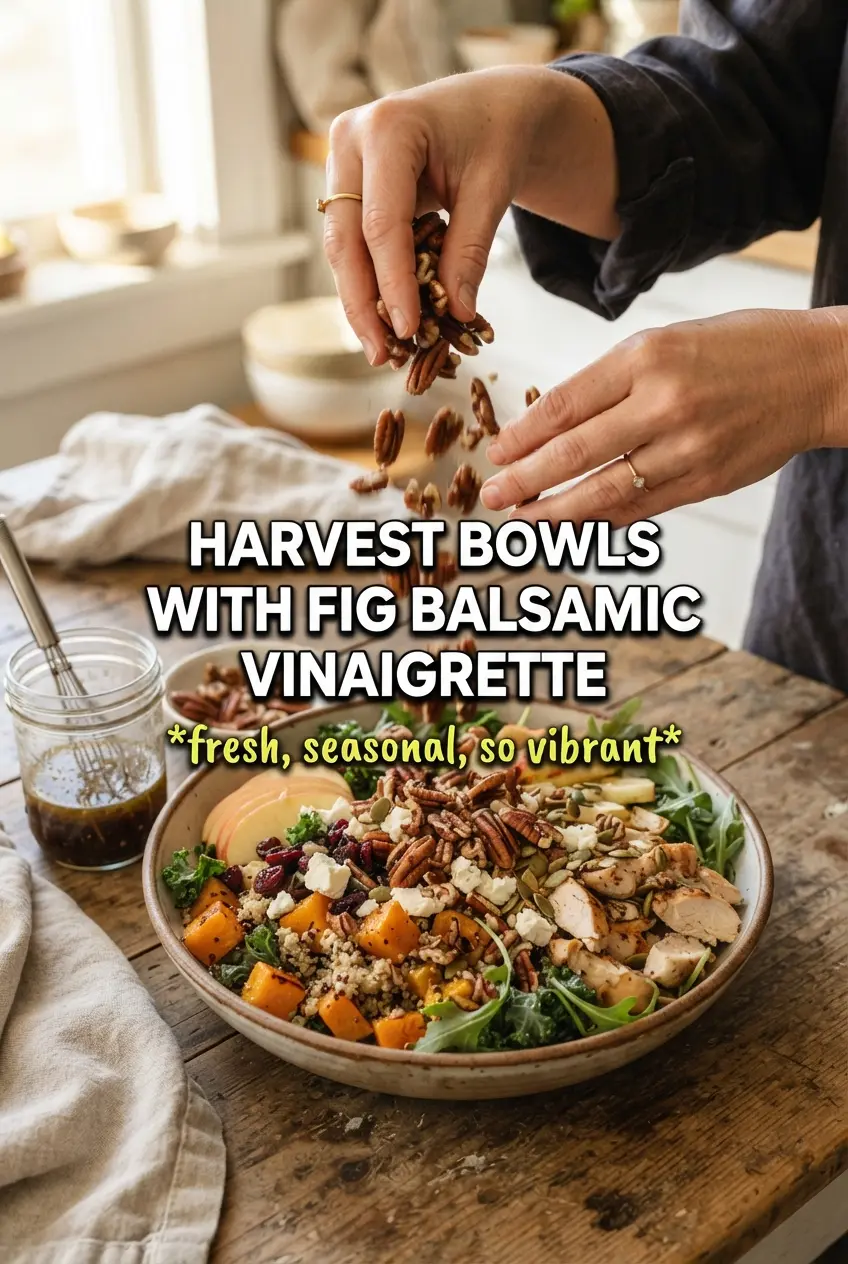
Roasted sweet potatoes, crispy chickpeas, and a sharp-sweet fig balsamic drizzle turn an ordinary grain bowl into something you actually want to eat on repeat. The contrast is what makes it work: warm and cool, creamy and crisp, earthy and bright. Every bite lands differently, but the bowl still eats like one complete meal.
The trick is treating each component like it has a job. The sweet potatoes need enough space to caramelize, the chickpeas need to dry out and roast until their skins tighten, and the Brussels sprouts stay raw so they bring crunch instead of going limp under the vinaigrette. Fig jam gives the dressing body and a deep fruitiness that plain balsamic can’t deliver on its own, while Dijon keeps it emulsified long enough to coat the bowl instead of puddling at the bottom.
Below, I’ll walk through the roast timing, the dressing texture, and the small assembly choices that keep this bowl from turning soggy before it reaches the table.
The chickpeas got properly crisp and the fig balsamic coated everything without making the Brussels sprouts soggy. I made this for lunch and it held up great even after sitting for a bit.
Save these harvest bowls with fig balsamic vinaigrette for a colorful grain bowl that actually stays crisp and satisfying.
The Reason Grain Bowls Go Limp Before You Even Sit Down
Most grain bowls fail because everything gets dressed too early. Warm roasted vegetables, tender grains, and raw greens all behave differently once the sauce hits. If you toss the whole bowl together and let it sit, the sprouts soften, the chickpeas lose their edge, and the sweet potatoes steam themselves into mush.
This version avoids that by keeping the components distinct until the last minute. The farro or quinoa gives you a sturdy base, the Brussels sprouts stay raw for crunch, and the vinaigrette gets drizzled rather than dumped. That matters because fig jam adds body, but it can still weigh things down if you overdo it.
- Roast the sweet potatoes until the edges are browned and the centers are tender.
- Roast the chickpeas separately so they dry out and crisp instead of steaming under the potatoes.
- Keep the sprouts raw and shaved thin so they bring snap without needing any extra cooking.
- Add the vinaigrette right before serving so the bowl still has contrast in every bite.
What Each Ingredient Is Actually Doing in This Bowl
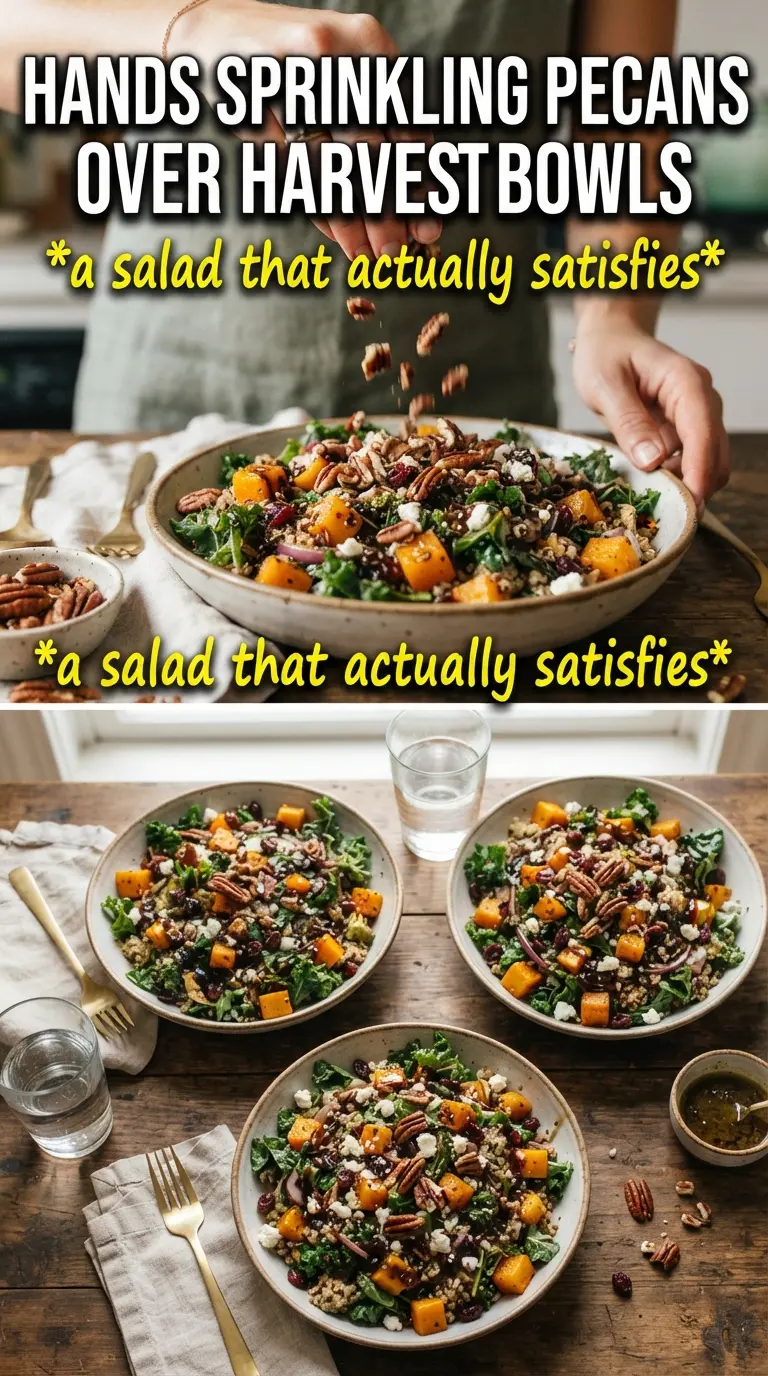
- Farro or quinoa — Farro gives the bowl a chewy, nutty base, while quinoa keeps it lighter and naturally gluten-free. Either one works, but farro holds up especially well if you’re making lunch ahead.
- Sweet potatoes — These need high heat to caramelize. Crowding the pan is the fastest way to lose that roasted edge, so give them room or they’ll steam.
- Chickpeas — Roast them until they’re crisp on the outside and no longer soft in the middle. Dry them well after draining; a damp chickpea won’t brown the same way.
- Shaved Brussels sprouts — Raw sprouts bring the crunch that keeps the bowl from eating like mashed vegetables. Slice them thin enough that they soften just slightly under the dressing.
- Fig jam — This is what makes the vinaigrette taste round and glossy instead of sharp and thin. If you don’t have fig jam, apricot preserves are the closest swap, though the flavor gets brighter and less earthy.
- Goat cheese — The tang cuts through the sweetness of the vinaigrette and the roasted vegetables. Feta works too, but it’s saltier and less creamy.
The Roasting and Tossing Order That Keeps Everything Crisp
Roasting the Sweet Potatoes Until They Caramelize
Spread the sweet potato cubes on a hot baking sheet in a single layer and roast them at 425°F until the edges are browned and the centers give easily when pierced. You want color, not just softness. If the pan is crowded, the potatoes will steam and turn pale, which robs the bowl of its best texture. A little browning on the bottom is what gives them depth against the sweet-tart dressing.
Getting the Chickpeas Crispy
Drain the chickpeas well and dry them before they hit the oven. Moisture is the enemy here. Roast them until they feel firm and sound a little hollow when stirred around the pan. If they go into the bowl while still soft, they’ll disappear under the dressing instead of standing out.
Whisking the Vinaigrette Until It Turns Glossy
Whisk the fig jam, balsamic vinegar, olive oil, Dijon, and garlic until the dressing looks smooth and slightly thickened. Dijon helps the oil and vinegar stay together long enough to coat the bowl. If the dressing breaks, whisk harder and keep going; if the jam is stiff, warm it for a few seconds first so it loosens enough to blend.
Assembling So the Bowl Still Has Texture at the Table
Start with the grain, then pile on the warm vegetables, chickpeas, sprouts, pomegranate seeds, pecans, and goat cheese. Drizzle the vinaigrette over the top instead of mixing everything in a bowl. That keeps the sprouts crisp and the pecans from going soft. The bowl should look layered, not stirred together.
How to Adapt These Harvest Bowls for a Different Pantry or Dietary Need
Make It Gluten-Free with Quinoa
Swap the farro for quinoa and the bowl stays light, nutty, and completely gluten-free. Quinoa won’t give you the same chewy bite, but it does absorb the vinaigrette well and keeps the bowl balanced.
Make It Dairy-Free Without Losing Richness
Leave off the goat cheese or replace it with a dairy-free soft cheese that can be crumbled. The vinaigrette and candied pecans already bring plenty of richness, so the bowl still feels complete without the cheese.
Use Maple Syrup Instead of Fig Jam
If fig jam isn’t in your pantry, whisk in 1 to 2 teaspoons of maple syrup with a little extra Dijon. The dressing will be less fruity and more caramel-like, which still works beautifully with the roasted vegetables.
Make It a Full Make-Ahead Lunch
Pack the grain, roasted vegetables, chickpeas, and dressing separately, then add the sprouts, pecans, pomegranate, and cheese right before eating. That keeps the textures sharp and prevents the dressing from softening the bowl overnight.
Storage and Reheating
- Refrigerator: Store the components separately for up to 4 days. The roasted vegetables will soften a little, but the flavors hold up well.
- Freezer: The grains, sweet potatoes, and chickpeas can be frozen, but the sprouts, cheese, and pomegranate don’t freeze well. Freeze only the cooked components in airtight containers.
- Reheating: Reheat the grains and roasted vegetables in the oven or a skillet until hot. Don’t microwave the chickpeas if you want them to stay crisp; they’re better reheated dry in a hot pan for a few minutes.