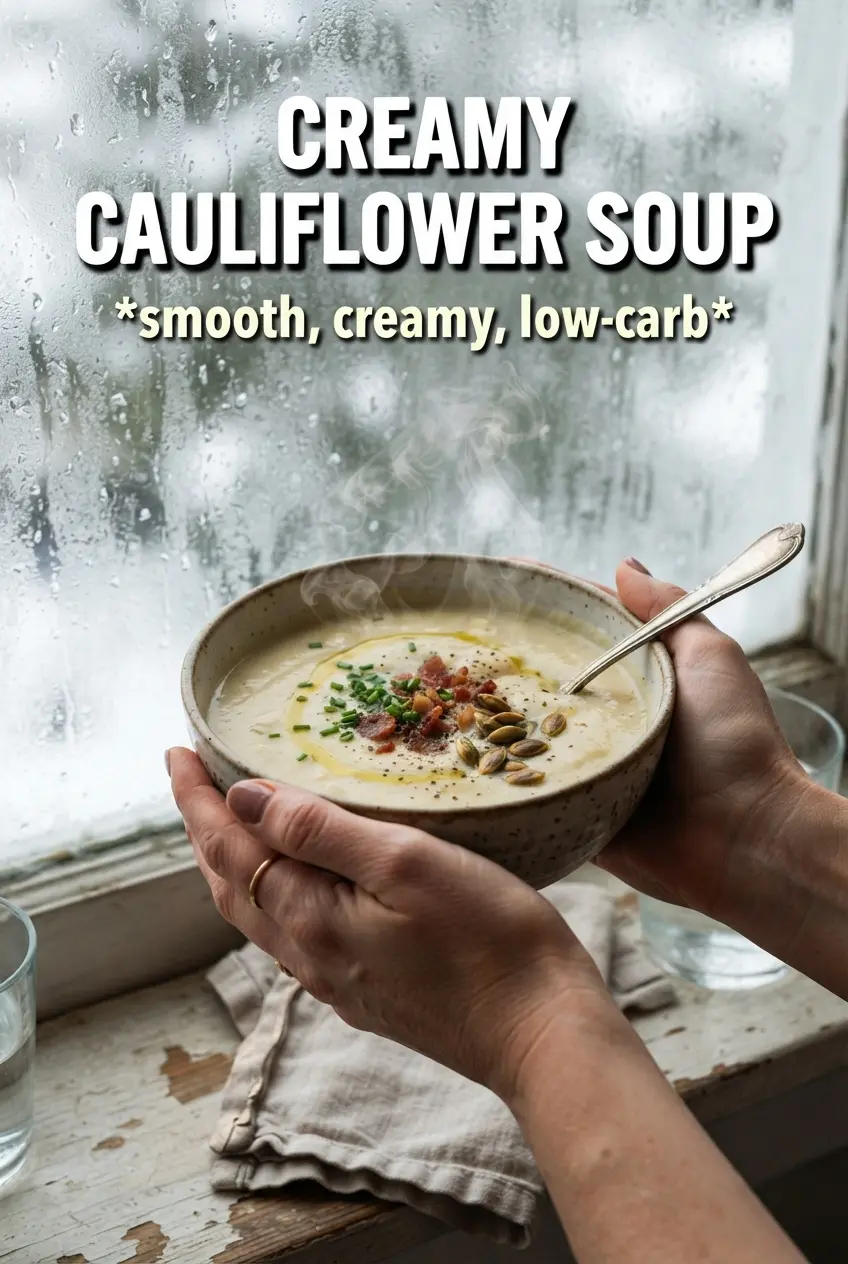
Creamy cauliflower soup earns its place in the rotation when you want something silky, comforting, and a little more interesting than plain blended vegetables. The flavor is clean and mellow, but the texture is what keeps people coming back: smooth enough to feel luxurious, thick enough to coat a spoon, and finished with roasted cauliflower that gives every bowl a little bite. The truffle oil and chives on top aren’t decoration here. They turn a simple soup into something that tastes layered and deliberate.
This version works because the cauliflower gets handled two ways. Most of it simmers until it turns completely tender, which is what gives the soup that plush, velvety body. A small portion roasts separately so you still get caramelized edges and some texture in the bowl. The onion and garlic build a savory base, and the cream goes in after blending so the soup stays smooth instead of getting dull or grainy.
Below, I’ve included the few details that matter most: how to keep the soup from tasting flat, what to do if you want it lighter, and the reheating trick that keeps the cream from separating.
The cauliflower came out so smooth, and the roasted florets on top added the perfect little crunch. I used the truffle oil at the end and my husband said it tasted like restaurant soup.
Save this creamy cauliflower soup for the nights when you want a smooth, cozy bowl with roasted cauliflower and a truffle finish.
The Roast-and-Simmer Split That Gives This Soup Its Best Texture
The biggest mistake with cauliflower soup is treating every floret the same. If you boil all of it and blend it, you get a smooth soup, but it can taste a little flat and one-note. Roasting part of the cauliflower separately fixes that. The caramelized edges add a deeper, nuttier flavor and give the finished bowl some contrast, so every spoonful isn’t just creamy from start to finish.
The other important piece is cooking the cauliflower until it’s fully tender before blending. Undercooked cauliflower leaves little grainy bits behind, and no amount of cream will hide that. Let it simmer until a knife slides through easily. That’s the point where the soup will blend into something plush instead of chalky.
What Each Ingredient Is Actually Doing in This Dish

- Cauliflower — This is the body of the soup, so freshness matters more than brand or price. Look for tight, pale florets with no gray spots. If you need to substitute, broccoli will work, but the flavor gets sharper and greener.
- Heavy cream — This gives the soup its lush finish and softens the vegetable flavor without making it taste heavy. Half-and-half will work in a pinch, but the soup will be thinner. Add it after blending so it stays smooth.
- Butter and olive oil — Butter adds depth, and olive oil keeps the onions from tasting too rich or flat. Using both gives you a better base than either one alone.
- White pepper and nutmeg — These are small amounts, but they matter. White pepper gives gentle heat without black specks, and nutmeg adds a warm background note that makes the cream taste more rounded.
- Broth — Vegetable broth keeps the soup vegetarian, while chicken broth adds a little extra savoriness. Use a good-tasting broth, since it becomes the liquid the cauliflower absorbs while simmering.
How to Build the Soup Without Losing the Creamy Finish
Roast the Garnish First
Toss the reserved cauliflower florets with olive oil and roast them until the edges are deep golden and the centers are tender. They should look browned, not pale and steamed. If the oven is overcrowded, the florets will soften instead of caramelizing, so spread them out in a single layer.
Cook the Onion Until It Turns Sweet
Melt the butter, add the onion, and cook it until it looks translucent and smells sweet, not sharp. That five-minute cook time matters because raw onion can make the soup taste harsh. Add the garlic only at the end of this stage so it doesn’t burn and turn bitter.
Simmer Until the Cauliflower Collapses
Add the cauliflower and broth, bring it to a boil, then lower the heat and simmer until the florets break apart easily with a spoon. The soup should look very soft and pale by the end. If the cauliflower still feels firm in the center, the blender will struggle and the texture won’t be as smooth as it should be.
Blend, Then Finish With Cream
Blend the soup completely smooth with an immersion blender. If you’re using a countertop blender, work in batches and vent the lid so the steam can escape. Stir in the cream after blending, not before, because high heat plus cream can dull the texture and sometimes makes the finish feel heavy instead of silky.
Season and Serve While It’s Hot
Salt the soup at the end, then taste again. Cauliflower needs enough salt to wake up, or it can taste bland even when it’s perfectly cooked. Ladle it into bowls and finish with the roasted florets, a tiny drizzle of truffle oil, and chopped chives right before serving.
Three Ways to Adjust This Soup Without Ruining the Texture
Make it dairy-free
Swap the butter for olive oil and use full-fat coconut milk or unsweetened cashew cream in place of the heavy cream. Coconut milk adds a faint sweetness, while cashew cream stays more neutral. Either one keeps the soup smooth, but the finish won’t be as rich as the original.
Keep it lighter
Use half-and-half instead of heavy cream and reduce the butter a little if you want a less rich bowl. The soup will still be creamy, but it will be a bit thinner and more vegetable-forward. Don’t replace all the cream with extra broth unless you want a much looser texture.
Skip the truffle oil
If truffle oil isn’t your thing, finish with a drizzle of good olive oil or a little browned butter instead. You lose the earthy, restaurant-style aroma, but the soup still tastes complete. A squeeze of lemon can help brighten the bowl if you skip the truffle finish.
Storage and Reheating
- Refrigerator: Store for up to 4 days. The soup will thicken as it chills, which is normal.
- Freezer: It freezes well, but the cream may separate a little when thawed. For the smoothest result, freeze before adding the cream if you know you’ll be making it ahead.
- Reheating: Warm it gently over low heat and stir often. Don’t boil it hard, or the dairy can separate and the texture can turn slightly grainy. If it seems too thick, loosen it with a splash of broth.
Answers to the Questions Worth Asking
Creamy Cauliflower Soup
Ingredients
Equipment
Method
- Toss the reserved cauliflower florets with 2 tbsp olive oil and spread them in a single layer on a sheet pan. Roast at 425F for 20-25 minutes, until golden and caramelized, then set aside for garnish.
- Melt the unsalted butter in a large pot over medium heat. Sauté the diced onion for 5 minutes, until softened.
- Add the minced garlic to the pot and cook for 1 minute. Stir constantly so it doesn’t brown.
- Add the remaining cauliflower and the broth to the pot. Bring to a boil, then reduce to a simmer and cook for 20 minutes, until very tender.
- Blend the soup completely smooth using an immersion blender. Keep blending until no cauliflower chunks remain.
- Stir in the heavy cream, nutmeg, and white pepper. Heat just until warmed through, without boiling.
- Season with salt to taste. Serve hot with the roasted cauliflower garnish, a drizzle of truffle oil, and chives.