Flaky seared salmon over a bowl of creamy Alfredo pasta is the kind of dinner that looks like you spent all evening on it, even when the whole thing comes together in about 30 minutes. The salmon brings a crisp, golden crust and rich center, while the sauce coats every strand of fettuccine with that silky, garlicky finish people expect from a good Alfredo. It lands squarely in the sweet spot between comforting and elegant.
This version works because the sauce starts in the same skillet as the salmon, so the browned bits left behind become part of the finished pasta instead of getting washed down the drain. The Parmesan goes into gently simmering cream, not boiling cream, which keeps the sauce smooth instead of grainy. The reserved pasta water does the quiet but important work of loosening the sauce just enough so it clings instead of turning heavy.
Below, you’ll find the timing that keeps the salmon tender, the cue that tells you the Alfredo is ready, and a few smart swaps if you need to work with what you have on hand.
The salmon came out with a perfect crust and the sauce stayed silky instead of getting stringy. I added a splash of the pasta water at the end and it coated the fettuccine beautifully.
Save this Salmon Alfredo for a creamy pasta dinner with crisp-edged salmon and a sauce that turns glossy with just a little pasta water.
The Reason the Salmon Stays Tender Instead of Drying Out
Salmon Alfredo can go wrong in two places: the fish gets overcooked while you wait on the sauce, or the sauce turns heavy and clumpy because it was rushed. The fix is to treat them as two short jobs that happen in sequence, not one long stovetop marathon. Sear the salmon hard enough to build color, then get it out of the pan while the center is still just barely opaque in the middle. It finishes from carryover heat while you build the Alfredo.
The other common problem is overthinking the pasta sauce. Alfredo doesn’t need a hard boil. It needs warm cream, steady whisking, and Parmesan added gradually so it melts into the fat instead of tightening up into grains. If the sauce starts looking thick before the pasta goes in, the reserved pasta water brings it back into that glossy, spoon-coating place without watering it down.
What the Pasta, Cream, and Cheese Are Actually Doing Here
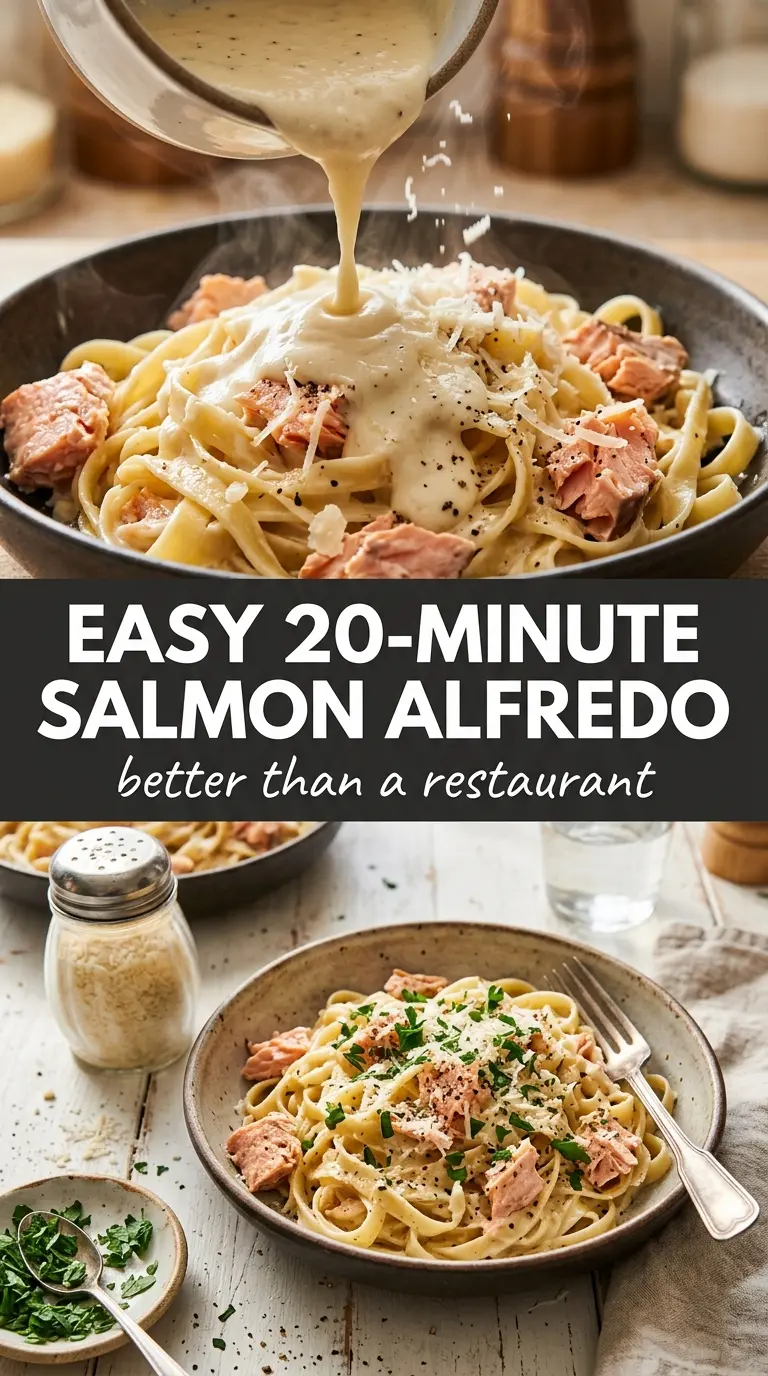
- Fettuccine — The flat ribbons catch the Alfredo sauce better than thin pasta. If you swap in linguine or spaghetti, the dish still works, but you’ll lose some of that thick, luxurious cling.
- Salmon fillets — Use fillets that are similar in thickness so they finish at the same time. Skin-on or skinless both work; skin-on gives you a little more buffer against overcooking and a better sear if you start skin-side down.
- Heavy cream — This is what gives the sauce body without needing a flour roux. Half-and-half can work in a pinch, but it makes the sauce thinner and a little more fragile, so keep the heat low and add the cheese slowly.
- Parmesan — Freshly grated cheese melts smoother than the pre-shredded kind, which often contains anti-caking agents that can leave the sauce a little gritty. If you want the cleanest texture, grate it yourself right before you cook.
- Reserved pasta water — Don’t skip this. The starch in the water helps the sauce emulsify and loosen at the same time, which is why it clings instead of pooling at the bottom of the bowl.
- Garlic and butter — The garlic only needs about 30 seconds in the butter. If it browns, it goes bitter fast and that bitterness takes over the whole pan.
Getting the Salmon, Sauce, and Pasta to Finish at the Same Time
Cooking the Fettuccine First
Start the pasta in well-salted boiling water and cook it until just tender with a little bite left in the center. Drain it after reserving half a cup of the cooking water. If the pasta sits too long, it clumps together and soaks up sauce unevenly, so have the rest of the dish moving before you drain it.
Building a Deep Golden Sear on the Salmon
Pat the salmon dry before it hits the skillet. Moisture on the surface is what keeps the crust from forming. Season it, then sear it in hot olive oil until the outside is deeply golden and the fish releases easily from the pan. If it sticks, it needs another minute; forcing it early tears the surface and leaves the crust behind.
Turning the Pan Drippings into Alfredo
After the salmon comes out, keep the same pan on the stove and melt the butter into those browned bits. Add the garlic and stir just until fragrant, then pour in the cream and let it come to a gentle simmer. Whisk in the Parmesan a handful at a time. If you dump it all in at once, the cheese can clump before it melts.
Bringing Everything Together
Toss the hot pasta in the sauce and splash in reserved pasta water only if the sauce looks too tight. You want it creamy and glossy, not soupy. Season again at the end, because the cheese and pasta water both add salt of their own. Plate the pasta first, then lay the salmon on top so the crust stays intact.
How to Adapt This for a Few Different Kitchens
Dairy-Free Version
Use a rich unsweetened plant cream and a dairy-free Parmesan-style cheese that melts well. The sauce won’t have quite the same sharp finish as classic Alfredo, but keeping the heat low and adding the cheese slowly still gives you a smooth, spoonable coating.
Gluten-Free Dinner
Swap in your favorite gluten-free fettuccine and cook it just until tender, because those noodles can turn mushy if they sit in hot water too long. Reserve the pasta water as written; gluten-free pasta water still helps the sauce loosen and cling.
Shrimp Instead of Salmon
Shrimp cooks faster, so sear it just until pink and opaque, then pull it out before you start the sauce. It gives you a lighter seafood version with the same creamy base, but it won’t bring quite the same rich, flaky bite as salmon.
Storage and Reheating
- Refrigerator: Store leftovers in an airtight container for up to 2 days. The sauce will thicken as it chills.
- Freezer: Not my first choice. Cream sauces can separate after thawing, and the salmon texture softens a lot.
- Reheating: Warm it gently on the stove over low heat with a splash of milk or cream, stirring often. High heat is what makes the sauce break and turns the salmon dry.
Questions I Get Asked About This Recipe
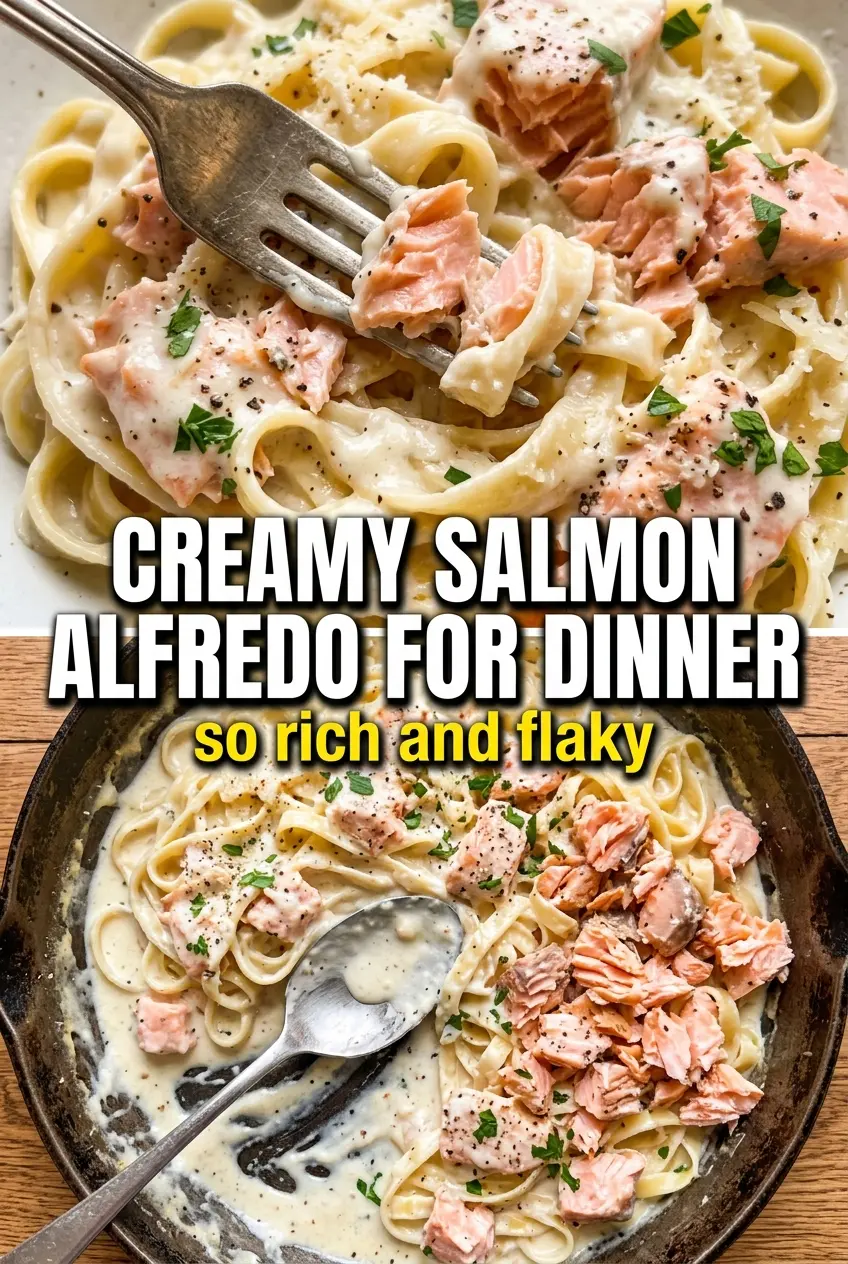
Salmon Alfredo
Ingredients
Equipment
Method
- Cook the fettuccine in salted boiling water according to package directions. Reserve ½ cup pasta water before draining and set it aside.
- Season the salmon with half the salt and pepper. Heat the olive oil in a large skillet over medium-high heat and sear the salmon for 4 minutes per side, until golden and flaky, then remove and set aside.
- In the same skillet, melt the butter and sauté the garlic for 30 seconds, until fragrant. Keep heat at medium so the garlic doesn’t brown.
- Pour in the heavy cream and bring to a gentle simmer. Whisk in the Parmesan until smooth, about 1–2 minutes.
- Toss the cooked pasta in the sauce, thinning with reserved pasta water if needed. Season with the remaining salt and pepper.
- Plate the pasta and top with the seared salmon. Garnish with fresh parsley and extra Parmesan before serving.