Crispy orange chicken wins because it gives you contrast in every bite: shatteringly crisp edges on the chicken, then that sticky sweet-tangy sauce clinging to the crust instead of drowning it. The fast fry and the quick sauce matter here. If you try to cook the chicken in the sauce from the start, you lose the texture that makes this dish worth making at home.
The trick is to fry the chicken in batches and keep the oil hot enough that the coating sets before the pieces start absorbing oil. Then the sauce gets built separately with orange juice, zest, vinegar, soy sauce, garlic, and ginger, and thickened just enough to glaze the chicken without turning syrupy. That balance is what makes it taste like takeout, only fresher and sharper.
Below, I’ll walk through the one place people usually go wrong, how to keep the sauce glossy, and a few swaps that still give you a great dinner when you’re missing an ingredient or two.
The chicken stayed crisp even after tossing, and the sauce thickened up glossy instead of turning watery. My husband kept going back for “just one more bite.”
Crispy Orange Chicken deserves a Pinterest save for the nights when you want a homemade takeout dinner with crunchy coating and glossy orange sauce.
The Secret to Keeping Orange Chicken Crisp After the Sauce Hits
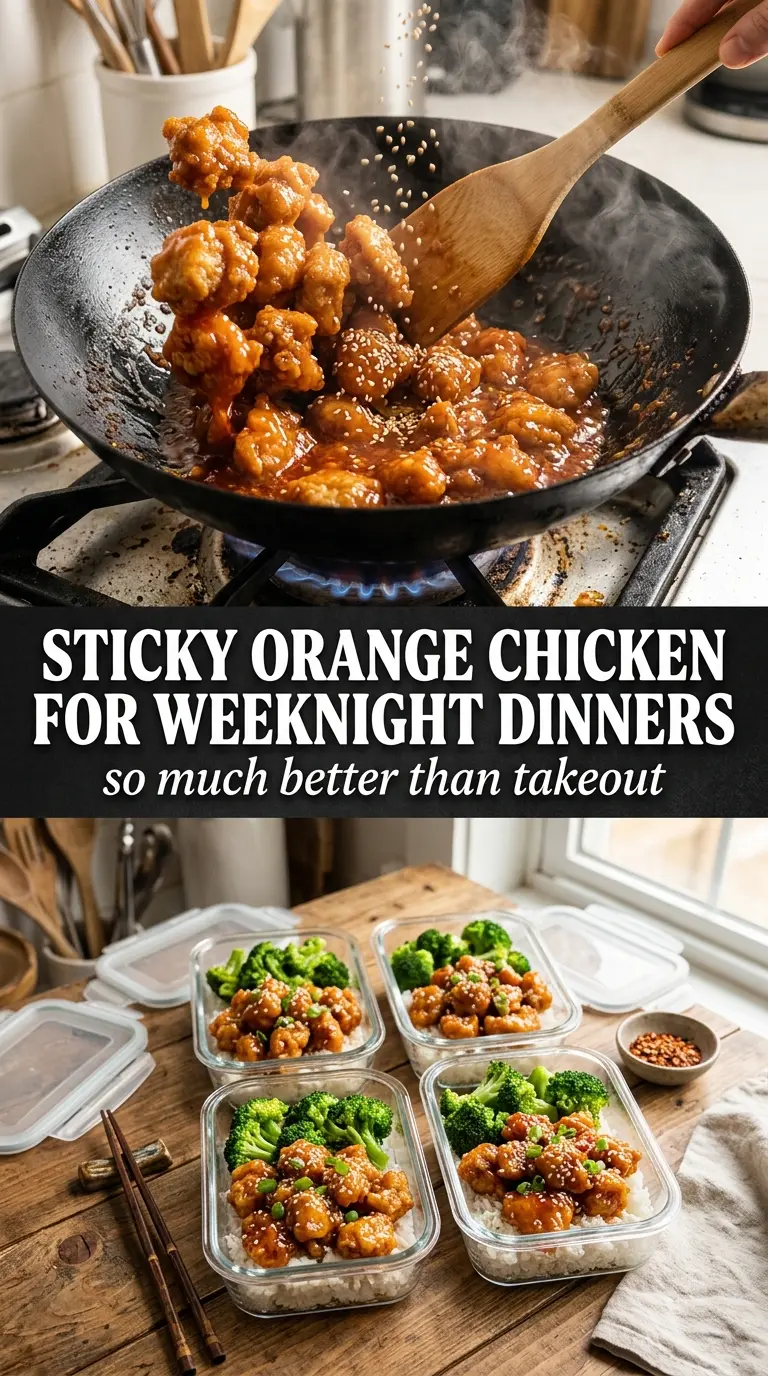
The biggest mistake with orange chicken is tossing hot fried chicken into a thin sauce and expecting the coating to stay crisp. It won’t. The sauce needs to be thick enough to glaze, not soak, and the chicken needs to be fried until the coating is deeply set before it ever meets the pan with the sauce.
That’s why the cornstarch-egg coating matters. Cornstarch gives the chicken a dry, crunchy shell, and the egg helps it cling in uneven little crags that fry up with more texture than a straight batter. Frying in small batches keeps the oil temperature from crashing, which is what gives you pale, greasy chicken instead of a crisp crust.
- Chicken thighs — Thighs stay juicy through the fry and still taste tender after tossing in sauce. Chicken breast works, but it dries out faster and needs closer timing.
- Cornstarch — This is what gives the coating that light, crisp finish. Flour won’t give you the same delicate crackle here.
- Orange zest — Fresh zest is what makes the sauce taste like orange instead of just sweet citrus syrup. Don’t skip it.
- Rice vinegar — It sharpens the sauce and keeps the sugar from taking over. White vinegar works in a pinch, but use a little less because it’s harsher.
- Soy sauce — This adds salt and depth so the sauce tastes balanced, not flat. Low-sodium soy sauce is fine if that’s what you keep on hand.
Building the Sauce So It Turns Glossy, Not Gritty
Coating and Frying the Chicken
Pat the chicken pieces dry before you start, then coat them in cornstarch and egg exactly in that order. The dry cornstarch first helps the egg cling, and the egg gives you those little rough edges that fry up crisp. Drop the pieces into oil that holds steady at about 350°F; if the oil is cooler, the chicken soaks it up, and if it’s too hot, the outside browns before the center cooks through.
Cooking the Orange Glaze
Start the sauce in a saucepan, not the skillet used for frying. Combine the orange juice, zest, sugar, vinegar, soy sauce, garlic, and ginger, then bring it to a simmer so the sugar dissolves completely. Stir in the cornstarch slurry only after the sauce is hot and moving, or you’ll get a gummy texture instead of a smooth glaze. Cook it just until it coats a spoon and looks shiny.
Tossing and Serving
Add the fried chicken to the warm sauce and toss quickly until every piece is coated. Don’t let it sit in the pan for long, because even a thick sauce will soften the crust if it hangs around too long. Finish with green onions and sesame seeds, then serve right away over rice while the coating still has its bite.
Three Ways to Adjust Orange Chicken Without Losing What Makes It Good
Gluten-Free Orange Chicken
Use a gluten-free soy sauce or tamari and check that your cornstarch is certified gluten-free. The texture stays crisp, and the sauce keeps the same sweet-salty balance without changing the method at all.
Chicken Breast Instead of Thighs
Chicken breast works if you prefer a leaner result, but cut it into even pieces and pull it as soon as it’s cooked through. It won’t stay as juicy as thighs, so keep the fry fast and the sauce toss brief.
A Less Sweet Sauce
Cut the sugar back slightly and add a touch more rice vinegar if you like a sharper sauce. The glaze will taste brighter and less sticky, but don’t reduce the sugar too far or the sauce loses the classic orange chicken finish.
Storage and Reheating
- Refrigerator: Store leftovers in an airtight container for up to 3 days. The coating softens in the fridge, but the flavor holds up well.
- Freezer: The sauced chicken freezes, but the crust won’t stay crisp after thawing. Freeze in a sealed container for up to 2 months if texture matters less than convenience.
- Reheating: Reheat in a skillet over medium-low heat or in a 375°F oven until hot. The microwave makes the coating soggy fastest, so use it only if you don’t mind losing the crunch.
Questions I Get Asked About This Recipe

Orange Chicken
Ingredients
Equipment
Method
- Toss the chicken pieces in cornstarch, then dip in beaten egg, letting the excess drip off for a light, clinging coating.
- Arrange the coated chicken on a rack while you heat the oil so the coating stays dry and crisp.
- Heat about 1 inch of oil in a skillet to 350°F, keeping the temperature steady for even frying.
- Fry the chicken in batches for 4–5 minutes, until golden and crispy, then drain on a wire rack.
- In a saucepan, combine the orange juice, orange zest, granulated sugar, rice vinegar, soy sauce, minced garlic, and grated ginger over medium heat, stirring until well mixed.
- Bring the mixture to a simmer, then keep it gently bubbling so the flavors concentrate.
- Stir in the cornstarch slurry and cook for 1–2 minutes, until thickened and glossy, with a smooth sheen that coats the back of a spoon.
- Toss the fried chicken in the warm orange sauce until fully coated so every piece gets a sticky glaze.
- Garnish with sliced green onions and sesame seeds, and serve immediately over rice for the best crunch.