Juicy chicken, tender cheese tortellini, and crisp asparagus all come together in one skillet with a creamy pesto sauce that clings to every bite. The tomatoes soften just enough to turn jammy around the edges, and the Parmesan pulls the whole pan into something that tastes far more polished than a 30-minute dinner has any right to be.
What makes this version work is the order. The chicken gets a proper sear first, the asparagus stays bright by cooking only until just tender, and the pesto goes in with cream and a splash of pasta water so it turns silky instead of heavy. That little bit of reserved cooking water matters more than most people think — it loosens the sauce just enough to coat the tortellini without turning it soupy.
Below, I’ll walk through the small details that keep the sauce smooth, the tortellini from getting gummy, and the vegetables from losing their bite. There are also a few smart swaps if you need to work with what’s in the fridge.
The sauce coated every tortellini without getting greasy, and the asparagus stayed crisp-tender instead of going mushy. I added a little extra pasta water at the end and it came together perfectly.
Creamy pesto chicken tortellini with asparagus is the kind of one-pan dinner that disappears fast — save it for the nights when you want something fast, fresh, and rich without extra cleanup.
The Trick to Keeping the Pesto Sauce Creamy, Not Broken
The biggest mistake in a pesto cream sauce is treating it like a regular Alfredo and blasting it with heat. Pesto already carries oil, cheese, and herbs, so if the pan is too hot when the cream goes in, the sauce can separate and turn slick instead of creamy. Medium-low heat gives everything time to emulsify, especially once the Parmesan starts melting into the pan.
The other detail that matters is the pasta water. Tortellini releases starch as it cooks, and that starch helps the sauce cling to the pasta and chicken. Add it a little at a time. If you pour in too much at once, the sauce thins out before the cheese has a chance to tighten it back up.
What Each Ingredient Is Actually Doing in This Dish
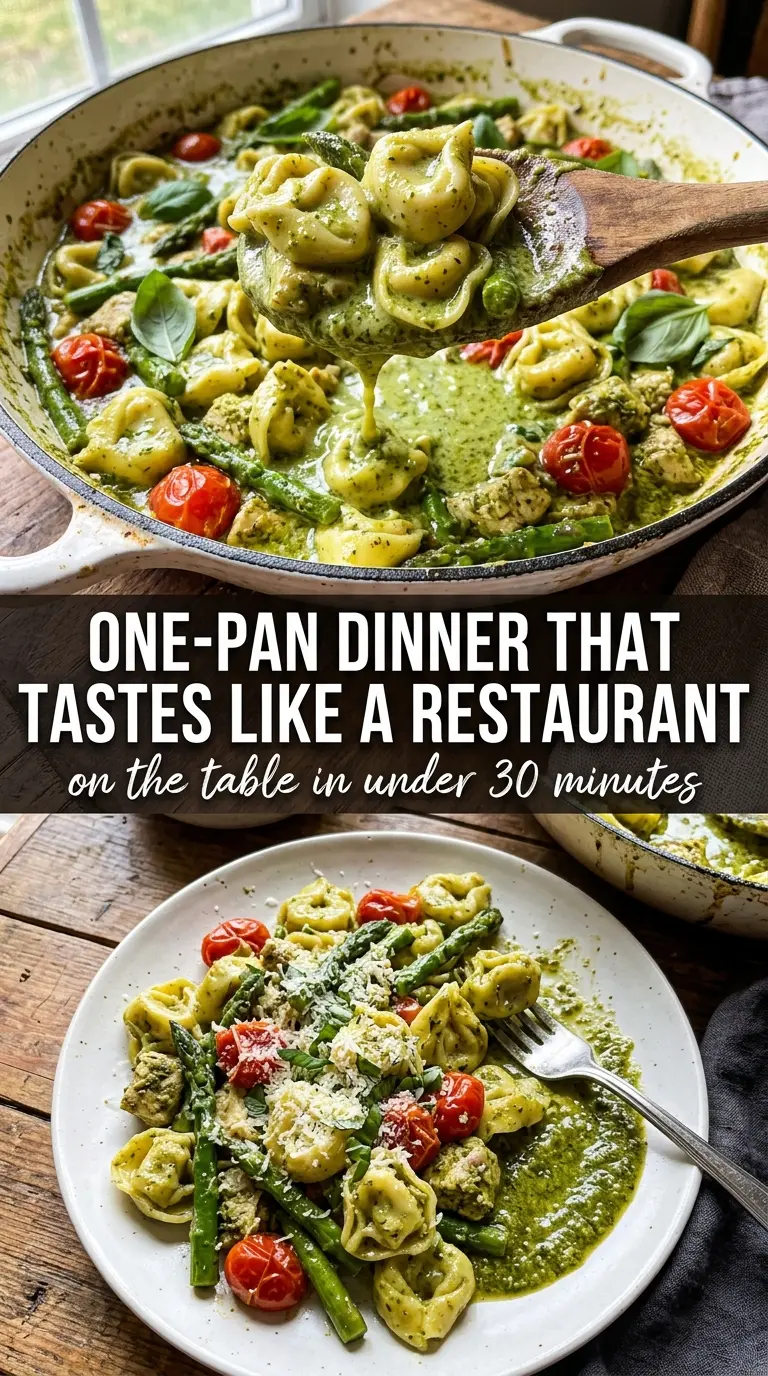
- Chicken breasts — Cut them into even pieces so they cook quickly and stay juicy. If the pieces vary too much in size, the smaller ones will dry out before the bigger ones are done.
- Refrigerated cheese tortellini — This gives you a soft, rich base that holds onto the pesto sauce. Fresh refrigerated tortellini works best here; dried tortellini needs a different cook time and won’t have quite the same tender bite.
- Basil pesto — This is the main flavor, so use one you actually like. If your pesto is thick or oily, loosen it with the cream and pasta water instead of adding more pesto, which can make the sauce taste heavy.
- Heavy cream — It softens the pesto and turns the pan sauce silky. Half-and-half can work in a pinch, but the sauce will be looser and a little less luxurious.
- Asparagus and cherry tomatoes — The asparagus brings snap and freshness, while the tomatoes add bursts of sweetness that cut through the richness. Cut the asparagus into short pieces so it cooks at the same pace as the chicken and tortellini.
- Parmesan — Use grated, not shredded, so it melts smoothly into the sauce. A finely grated hard cheese gives the best finish and helps thicken everything without making the sauce grainy.
Building the Pan in the Right Order
Searing the Chicken First
Start with a hot skillet and give the chicken space. If the pieces are crowded, they steam and turn pale instead of picking up those browned edges that add depth to the sauce. Cook until the outside is golden and the centers are just cooked through, then move it out of the pan so it doesn’t overcook while the vegetables go in.
Cooking the Vegetables Without Losing Their Bite
The asparagus only needs a few minutes in the butter before it turns bright green and crisp-tender. Once the garlic goes in, watch it closely; it should smell fragrant, not darken. Add the tomatoes right after so they soften at the edges and start to release their juices, which helps build a quick pan sauce later.
Bringing the Sauce Together
Lower the heat before adding the pesto, cream, and reserved pasta water. Stir until the sauce looks smooth and glossy, not oily or separated. If it seems too thick, add another spoonful of pasta water rather than more cream — that keeps the sauce light enough to coat everything without getting heavy.
Finishing With the Tortellini and Parmesan
Add the chicken and tortellini back to the pan last, then toss gently so the pasta doesn’t break apart. Parmesan goes in at the end because it melts better once the sauce has already come together. Stop cooking as soon as everything is hot and coated; overcooking here is what turns tender tortellini into a soft, bloated mess.
How to Adapt This for Different Nights
Gluten-Free Tortellini Swap
Use a gluten-free refrigerated tortellini if you can find one. They can soften faster than regular pasta, so pull them the moment they’re al dente and toss them in gently at the end. The sauce still works the same way because the starch from the pasta water does the heavy lifting.
Dairy-Free Version
Use a dairy-free pesto and swap the cream for an unsweetened cashew cream or coconut cream in a small amount. Skip the Parmesan or use a dairy-free alternative that melts well. The result won’t be quite as rich, but the pesto and tomatoes still give you a bright, savory pan sauce.
Swap the Vegetables Based on What You Have
Broccoli florets, zucchini, or green beans all work in place of asparagus. Keep the pieces small and cook them only until crisp-tender so they don’t go soft when you add the sauce. The goal is still the same: a little bite that balances the creamy pesto.
Storage and Reheating
- Refrigerator: Store leftovers in an airtight container for up to 3 days. The sauce will thicken as it chills, and the tortellini will absorb some of it.
- Freezer: I don’t recommend freezing this one. The cream sauce and tortellini both lose their texture after thawing, and the asparagus gets soft.
- Reheating: Warm it gently in a skillet over low heat with a splash of water or milk to loosen the sauce. Microwaving on high tends to make the sauce separate and can turn the tortellini rubbery.
Questions I Get Asked About This Recipe
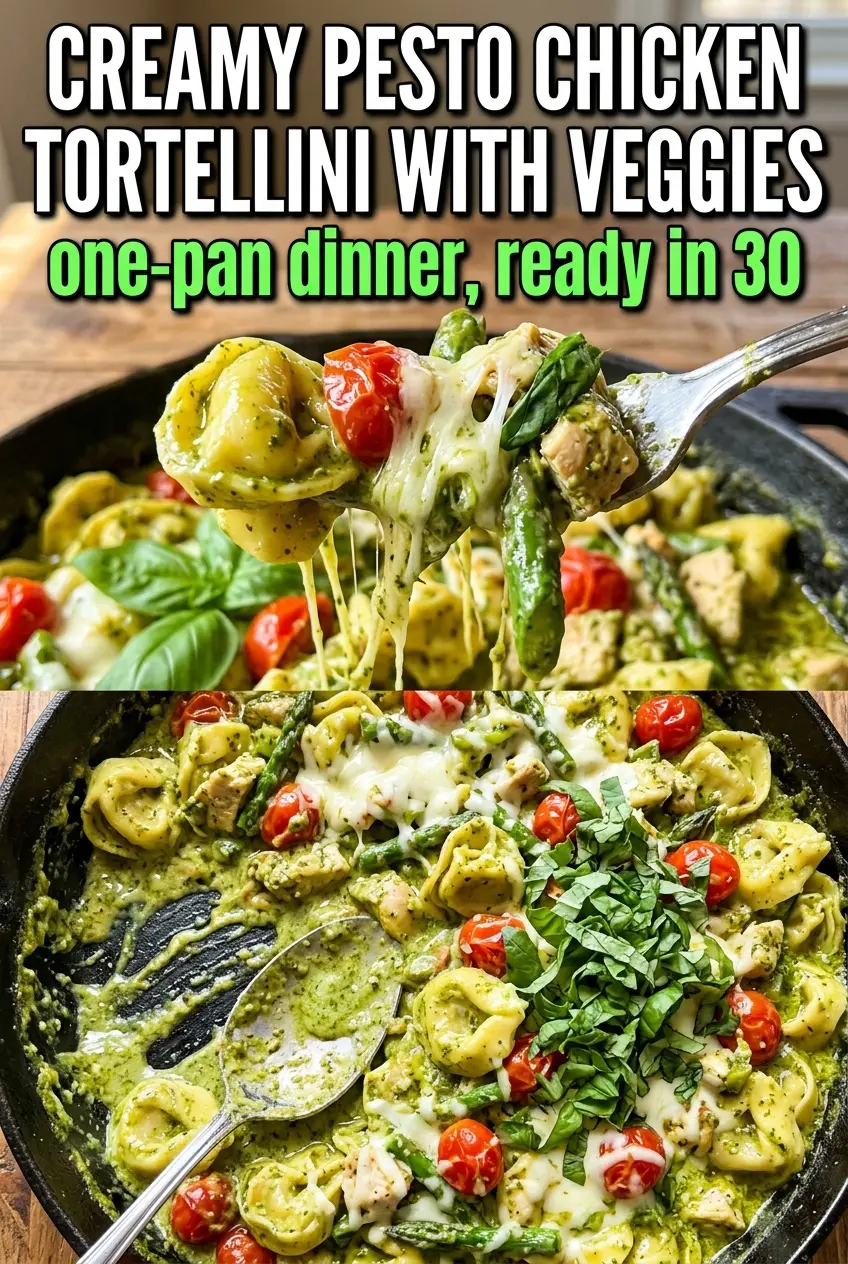
Pesto Chicken with Tortellini and Veggies
Ingredients
Equipment
Method
- Cook the refrigerated cheese tortellini according to package directions until just al dente, then reserve 1/4 cup pasta water before draining and set aside.
- Season the chicken pieces with kosher salt, black pepper, and garlic powder.
- Heat the olive oil in a large skillet over medium-high heat until shimmering, then add the chicken and cook 5–6 minutes, stirring occasionally, until golden and cooked through.
- Transfer the chicken to a plate.
- In the same skillet, add the unsalted butter and asparagus, then cook over medium heat for 3–4 minutes until bright green and just tender.
- Add the minced garlic and cherry tomatoes, cooking 1–2 more minutes until the tomatoes begin to soften.
- Reduce heat to medium-low, then stir in basil pesto, heavy cream, and 2 tablespoons of the reserved pasta water.
- Simmer for 1–2 minutes, stirring until the sauce comes together, adding more pasta water if it becomes too thick.
- Add the chicken, tortellini, and Parmesan back to the pan, then toss gently until everything is coated and heated through for about 2 minutes.
- Serve immediately topped with extra Parmesan and fresh basil.